If you’re thinking about going electric, the biggest question usually isn’t “which car?” it’s “where will I charge it?” The UK’s EV charging infrastructure has grown fast over the past few years, but it can still feel confusing if you’re new to it. Different plug types, different speeds, different apps, different prices.
This guide breaks it all down in plain English. We’ll cover how the network works, what it costs, the problems people run into, and how to plan a stress-free charging routine whether you’re charging at home, at work, or on a motorway trip.
Quick answer: EV charging infrastructure is the network of charge points, cables, connectors and back-office systems that let electric vehicles top up their batteries ranging from a slow 3kW home socket to a 350kW ultra-rapid motorway charger.

1. What Is EV Charging Infrastructure?
Quick answer: It’s the combined system of physical charge points, electrical grid connections, payment networks and software that allows electric vehicles to be charged anywhere from a home driveway to a service station.
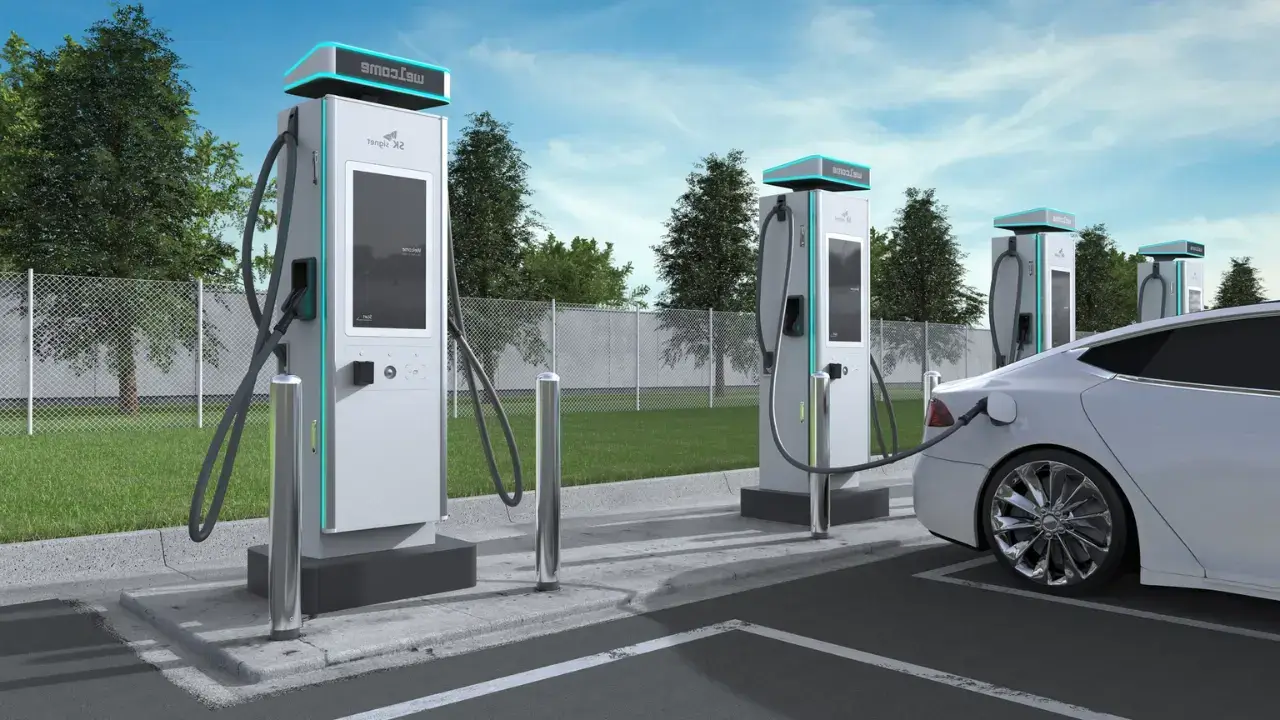
EV charging infrastructure isn’t just the plug on the wall. It includes:
- Charge points the physical units you plug into
- The grid connection the electricity supply behind each charger
- Connectors and cables the physical link between car and charger
- Charging networks and apps companies like Ionity, Osprey, BP Pulse and Instavolt that operate and bill for public chargers
- Payment systems contactless, RFID cards, or app-based billing
In the UK, this network is expanding under government targets and private investment, but coverage still varies a lot by region.
2. How EV Charging Actually Works?
Quick answer: A charger sends electricity to the car’s battery either as AC (alternating current), which the car converts itself, or DC (direct current), which is converted before it reaches the battery DC charging is much faster.
Here’s the simple version:
- You plug the connector into your car’s charging port.
- The car and charger “talk” to each other to agree on a safe charging rate.
- Electricity flows into the battery until it’s full or you stop the session.
- Your car’s onboard software manages the charging speed to protect battery health, especially as it nears 80–100%.
This is why charging slows down noticeably after 80% it’s a deliberate safety feature, not a fault.
3. Types Of EV Chargers Explained

| Charger Type | Power Output | Typical Charging Time (0–80%) | Best Used For |
|---|---|---|---|
| Slow (3-pin plug) | 2.3kW | 24+ hours | Emergency top-ups only |
| Fast (home/work wallbox) | 7–22kW | 4–8 hours | Overnight home charging |
| Rapid (public) | 25–99kW | 30–60 minutes | Shopping trips, top-ups |
| Ultra-rapid (motorway) | 100–350kW | 15–35 minutes | Long journeys |
Connector types you’ll come across:
- Type 2 the UK standard for AC charging (home and most public AC points)
- CCS (Combined Charging System) the standard for DC rapid and ultra-rapid charging
- CHA demo older DC standard, mainly older Nissan and Mitsubishi models
Most new EVs sold in the UK from 2026 onward use Type 2 for AC and CCS for DC, so compatibility issues are becoming rarer.
4. The UK’s Public Charging Network
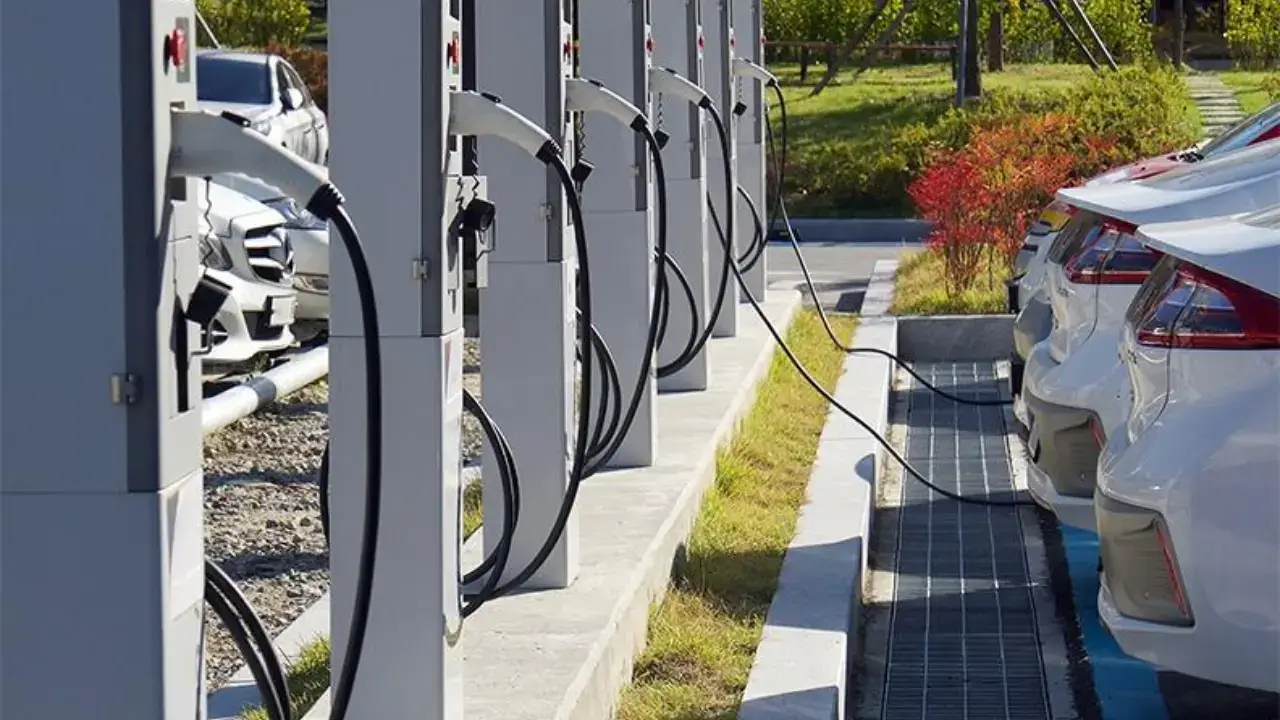
Quick answer: The UK has tens of thousands of public charge points spread across motorway service stations, supermarkets, car parks and on-street locations, run by multiple competing networks rather than one national provider.
Major public charging networks operating in the UK include:
- Instavolt ultra-rapid, contactless-only, no subscription needed
- BP Pulse large network including on-street and rapid chargers
- Ionity ultra-rapid, motorway-focused, often at motorway services
- Osprey Charging rapid and ultra-rapid hubs
- Gridserve Electric Forecourts and motorway rapid hubs
- Pod Point widely used for supermarket and workplace charging
Coverage is strongest along motorway corridors and in and around major cities. Rural areas and some smaller towns still lag behind, which is one of the most common frustrations raised by EV owners.
Regional coverage tends to follow a pattern:
- Best coverage: London, the South East, and major motorway routes
- Growing steadily: the Midlands, North West, and Scotland’s central belt
- Still catching up: rural Wales, the Scottish Highlands, and parts of Northern Ireland
5. Home Charging: What You Need to Know?

Quick answer: Around 80% of UK EV charging happens at home overnight, using a dedicated wallbox charger installed by a certified electrician, typically rated at 7kW.
If you have off-street parking, a home charger is almost always the cheapest and most convenient option. Key points:
- A 7kW home charger can add roughly 25–30 miles of range per hour
- Installation usually takes half a day and must be done by an approved installer
- Smart chargers let you schedule charging during cheaper overnight electricity rates
- Some energy suppliers offer EV-specific tariffs with much lower overnight unit rates
If you don’t have a driveway or garage, you’ll rely more heavily on public charging worth factoring in before buying an EV.
6. How Much Does EV Charging Cost In the UK?

Quick answer: Home charging typically costs between 7p and 30p per kWh depending on your tariff and time of day, while public rapid and ultra-rapid charging usually costs 55p to 85p per kWh.
| Charging Type | Typical Cost per kWh | Cost to Add ~150 Miles* |
|---|---|---|
| Home (standard tariff) | 25–30p | £11–£14 |
| Home (EV overnight tariff) | 7–12p | £3–£5 |
| Public slow/fast | 40–55p | £18–£24 |
| Public rapid/ultra-rapid | 55–85p | £24–£37 |
*Based on an average EV using roughly 3.5–4 miles per kWh. Actual costs vary by vehicle efficiency and supplier.
Cost-saving tips:
- Charge overnight on an EV tariff whenever possible
- Use supermarket or workplace chargers, which are sometimes free or discounted
- Compare per-kWh public network prices they vary more than people expect
- Avoid relying solely on the most expensive ultra-rapid motorway chargers
7. Common Charging Problems and How to Fix Them
Quick answer: The most common issues are broken or occupied chargers, slow charging speeds in cold weather, app or payment failures, and cable compatibility confusion.
| Problem | Likely Cause | Solution |
|---|---|---|
| Charger won’t start | Faulty connector, app glitch | Try a different payment method or restart the app |
| Slower than expected charging | Cold battery, shared power at hub | Precondition battery before arrival if your car supports it |
| Charger reported “in use” but empty | App not updated in real time | Check a second app or call the operator’s helpline |
| Cable won’t release | Software lock, car still “charging” in system | Use the car’s app to end the session first |
| Card/app payment declined | Network issue, insufficient funds flag | Use a backup RFID card or contactless where supported |
8. EV Charging Safety Tips
- Never use a damaged or frayed charging cable
- Avoid charging in standing water or during severe storms with an outdoor unregulated setup
- Use a certified installer for any home charger never a DIY installation
- Keep the charging port cover closed when not in use to prevent dirt or moisture ingress
- Don’t use extension leads with a 3-pin “granny charger” for regular, sustained charging
9. Maintenance Tips for Home Chargers
- Have your home charger inspected annually by a qualified electrician
- Keep the unit and cable clean and dry
- Check for firmware updates via the manufacturer’s app
- Report any error codes rather than ignoring repeated faults
- Avoid coiling the cable too tightly, which can damage internal wiring over time
10. Buying Guide: Choosing a Home Charger
Quick answer: Look for a 7kW smart charger with tethered cable, app control, and compatibility with your energy supplier’s EV tariff.
What to check before buying:
- Power rating 7kW suits most homes; 22kW usually needs a three-phase supply, rare in UK homes
- Tethered vs untethered tethered (built-in cable) is more convenient; untethered is more flexible
- Smart features scheduling, app monitoring, solar integration if you have panels
- Warranty and support look for at least 3 years’ warranty
- OZEV-approved installer needed if you want to access any available government grant
11. Mistakes to Avoid
- Assuming every public charger will be working when you arrive
- Not checking connector compatibility before a long trip
- Ignoring overnight tariffs and paying full daytime rates for home charging
- Choosing a charger power rating your home’s electrical supply can’t actually support
- Skipping professional installation to save money
12. Pros and Cons of the Current UK Network
Pros:
- Motorway coverage has improved significantly in recent years
- Multiple competing networks keep innovation and pricing pressure up
- Home charging is genuinely cheap on the right tariff
- Ultra-rapid chargers make long journeys far more practical than a few years ago
Cons:
- Coverage is still uneven, especially in rural areas
- Pricing between networks can be inconsistent and hard to compare
- Reliability varies by operator and location
- Renters and flat-dwellers without off-street parking are underserved
13. Myths vs Facts
| Myth | Fact |
|---|---|
| “EVs always take hours to charge” | Ultra-rapid chargers can add 100+ miles in around 15–20 minutes |
| “You need a special licence to install a home charger” | No licence needed, but it must be fitted by a qualified electrician |
| “Public charging is always expensive” | Off-peak home charging is often far cheaper; public rates vary widely |
| “Cold weather ruins EV batteries” | Cold weather reduces range and charging speed temporarily, but doesn’t damage a well-managed battery |
| “All chargers use the same plug” | The UK uses several connector standards Type 2, CCS and CHA demo |
14. Charging Checklist for New EV Owners
- Confirm your home has suitable off-street parking for a wallbox
- Check your car’s connector type (Type 2 / CCS / CHAdeMO)
- Compare EV-specific energy tariffs before installing a home charger
- Download at least two public charging network apps as backups
- Sign up for an RFID card in case of app or signal issues
- Plan long journeys around ultra-rapid charging hubs
- Book an OZEV-approved installer if you want grant eligibility
- Set a charging schedule to take advantage of off-peak rates
Conclusion
EV charging infrastructure in the UK has come a long way, and for most drivers especially those who can charge at home it’s now a genuinely practical part of daily life. The main things to get right are picking the correct home charger, understanding your connector type, and knowing which public networks actually cover your regular routes. Once that’s sorted, charging becomes far less of a hassle than most new EV owners expect.
Call to Action: Thinking about making the switch to electric? Explore our latest EV reviews and buying guides to find the right model for your charging setup and budget.
Frequently Asked Questions
What is EV charging infrastructure?
EV charging infrastructure refers to the network of charging stations and equipment that allows electric vehicles to recharge their batteries. It includes home charging units, public charging stations, fast chargers, and the networks that operate them.
Why is EV charging infrastructure important?
A comprehensive charging network reduces range anxiety and is one of the strongest predictors of continued EV adoption, alongside vehicle price and model availability.
How many EV charging points are there in the US, UK, Canada, and Australia in 2026?
US: 85,000+ station locations (~249,000 ports). UK: 121,262 public chargers. Canada: ~39,650 public ports. Australia: 5,000+ public sites.
What are the main types of EV chargers?
Level 1 uses a standard home outlet (slowest). Level 2 uses a 240V outlet for faster home and public charging. DC Fast Charging can add significant range in 20–40 minutes and is used mainly at public and highway locations.
Is the US federal government still targeting 50% EV sales by 2030?
No. That Biden-era target was formally revoked by the Trump administration in January 2025, and federal NEVI charging infrastructure funding was paused around the same time. EV growth in the US is now driven mainly by state programs and consumer demand.
How fast can EVs charge in 2026?
It depends on the charger type and vehicle: Level 1 adds roughly 2–5 miles of range per hour, Level 2 adds roughly 10–60 miles per hour, and DC fast charging can typically add 150+ miles in 20–30 minutes on compatible vehicles.
Can I charge my EV at home?
Yes. Most EV owners install a Level 2 home charger for faster overnight charging. If you live in an apartment or lack access to private parking, public charging becomes the primary option.
Does cold weather affect EV charging?
Yes, cold temperatures can reduce charging speed and range temporarily, but they don’t cause long-term battery damage if the car is looked after properly.
What’s the difference between fast, rapid and ultra-rapid charging?
Fast chargers (7–22kW) suit overnight home charging, rapid (25–99kW) suit top-ups, and ultra-rapid (100kW+) are designed for quick motorway stops.