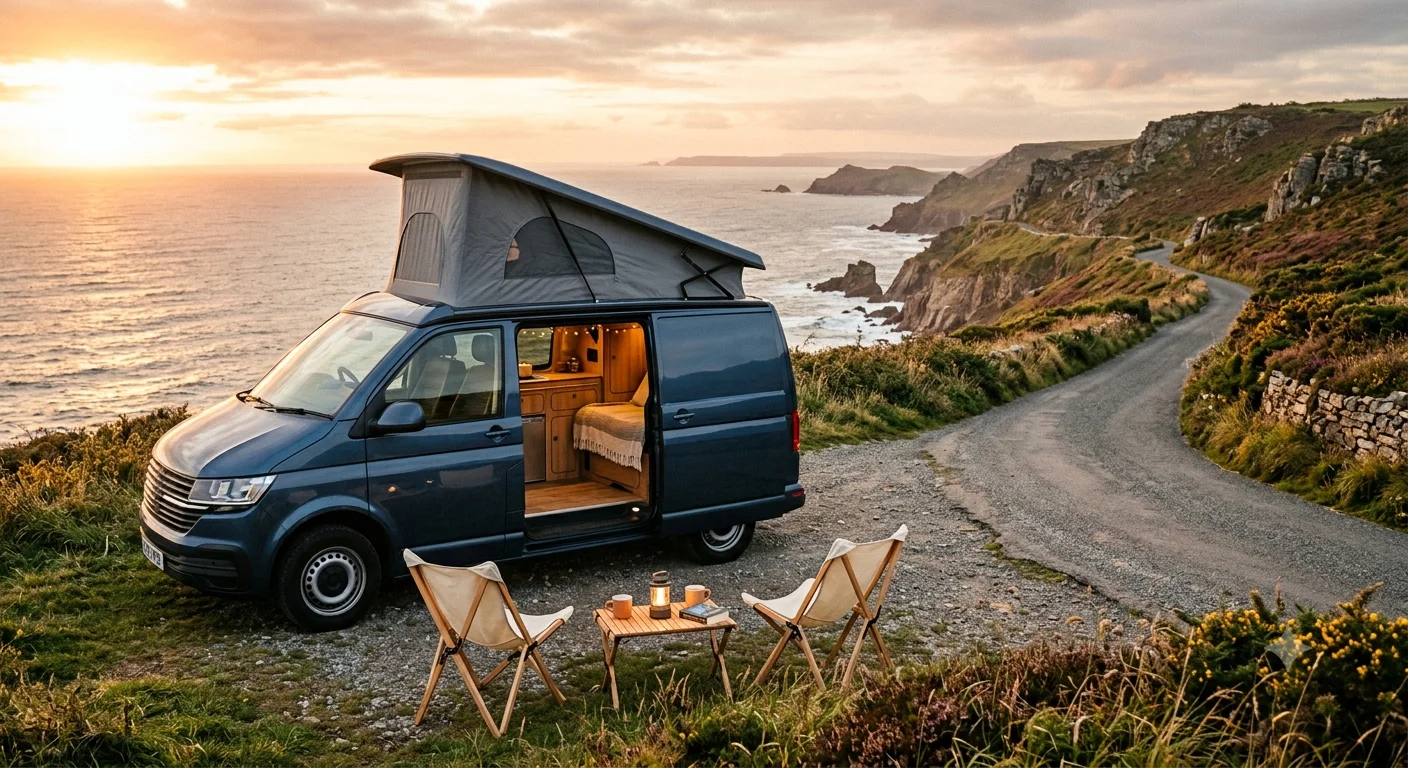
Fancy waking up by a Cornish beach or a Scottish loch without booking a hotel? That’s the pull of a camper. It’s part vehicle, part tiny home, and it’s become one of the most popular ways for Brits to holiday since 2020.
This guide explains what a camper actually is, the different types you’ll find on UK roads, what they cost to buy and run, and how to avoid the mistakes that catch out first-time owners. Everything here is written for someone who’s never owned one before, so we’ll keep the jargon to a minimum.
What Is A Camper?

A camper is a vehicle that’s been built or converted to include sleeping, cooking, and living space, allowing you to travel and stay overnight without a separate tent or hotel.
The word covers a wide range of vehicles in the UK from a small converted van with a rock-and-roll bed, right up to a coach-built motorhome with a fixed double bed, shower, and kitchen. What they all share is the same basic idea: your transport and your accommodation are the same vehicle.
Campers became especially popular with UK buyers after 2020, when many people chose staycations over flights. That demand hasn’t really dropped off, and the used market has stayed busy ever since.
How A Camper Works?
A camper works by combining a vehicle chassis with a habitation area that includes a bed, storage, and usually a small kitchen, all powered by a leisure battery separate from the engine battery.
Here’s the basic setup most campers share.
- Engine battery – starts the vehicle, same as any car or van
- Leisure battery – runs the lights, water pump, and any 12V sockets while you’re parked up
- Fresh and waste water tanks – for the sink and, in bigger models, a shower
- Gas or electric hook-up – powers the hob and sometimes the heating
- Habitation area – the bed, seating, and storage built into the back
Smaller campers rely on gas canisters and a leisure battery alone. Larger motorhomes often have mains hook-up points so you can plug into a campsite’s electricity supply.
Types Of Campers

There’s no single “correct” camper the right one depends on how you’ll use it. Here’s a breakdown of the main types on UK roads.
| Type | Typical Base Vehicle | Sleeps | Best For |
|---|---|---|---|
| Campervan (panel van conversion) | VW Transporter, Ford Transit Custom | 2–4 | Couples, weekend trips, easy parking |
| Pop-top campervan | VW California, converted Transit | 2–4 | Extra headroom without losing the compact size |
| Coach-built motorhome | Fiat Ducato, Peugeot Boxer base | 4–6 | Families, longer holidays, more comfort |
| A-Class motorhome | Purpose-built chassis | 4–6 | Full-time or long-term touring |
| Static/classic camper (e.g. VW T2) | Vintage van bodies | 2–4 | Enthusiasts wanting a classic look |
Campervan
A campervan is usually built on a mid-size van, like a Transit Custom or VW Transporter, and keeps the original van shape. It’s the easiest type to drive and park, which makes it a popular first choice.
Motorhome
A motorhome has a purpose-built living area attached to, or built onto, a van chassis. It’s bigger than a campervan, with more headroom, a fixed bed, and often a bathroom with a shower and toilet.
Pop-top Camper
This is a campervan with a roof that lifts up, giving you standing height inside and sometimes an extra sleeping berth up top. It’s a good middle ground between a compact van and a full-height motorhome.
Benefits Of Owning a Camper
- Freedom to travel without booking accommodation in advance
- Lower holiday costs over time compared with hotels or flights, especially for regular trips
- Flexibility to change your route or stay longer somewhere you like
- Everyday usability many campervans double as a family runaround or work van
- Access to nature makes it easier to reach national parks, coastlines, and campsites away from towns
Common Problems and How To Spot Them
Buying a camper, especially a used one, comes with a few risks that are worth checking for.
Signs of damp:
- Soft or spongy flooring near windows and the bathroom
- A musty smell inside
- Discoloured or bubbling wall panels
- Ask the seller for a recent damp meter reading many UK dealers provide one as standard
Electrical faults:
- Leisure battery not holding charge overnight
- Lights or the water pump not working
- Ask to see the battery age and whether it’s been replaced recently
Gas system issues:
- Hob not lighting properly
- Gas smell inside the cabin this should be treated as urgent and checked by a qualified engineer before use
Mechanical wear (on the base vehicle)
- Higher-than-expected mileage for the vehicle’s age
- No service history, particularly for cambelt or timing chain work
Camper Costs In The UK
A campervan conversion typically costs between £25,000 and £55,000 to buy in the UK, while a coach-built motorhome ranges from £45,000 to £90,000 or more, depending on age, brand, and specification.
| Cost Type | Typical UK Price (2026) |
|---|---|
| Used campervan (5+ years old) | £20,000 – £40,000 |
| New campervan conversion | £45,000 – £70,000 |
| Used motorhome | £35,000 – £60,000 |
| New coach-built motorhome | £60,000 – £100,000+ |
| Annual insurance | £300 – £800 |
| Annual servicing | £200 – £500 |
| Campsite pitch (per night) | £15 – £45 |
| MOT test (if over 3 years old) | Up to £54.85 (class 4/7 depending on weight) |
Running costs also depend heavily on fuel type and how often you travel. Diesel remains the most common fuel for campers due to towing and load capacity, though smaller campervans on efficient van platforms can return reasonable fuel economy for their size.
Buying Guide: New vs Used

New Camper
Pros:
- Full manufacturer warranty
- Latest safety and technology features
- No hidden history to worry about
Cons:
- Higher upfront cost
- Faster depreciation in the first few years
- Often a wait of several months for a custom build
Used Camper
Pros:
- Lower purchase price
- Slower depreciation from this point onward
- Wider choice of layouts and conversions
Cons:
- Risk of damp or electrical issues if not properly checked
- Shorter or no warranty remaining
- May need servicing or upgrades soon after purchase
Expert tip: Whether new or used, get a professional habitation check (separate from a standard vehicle inspection) before buying. This checks the living area specifically damp, gas, and electrics not just the engine and bodywork.
Insurance and Legal Requirements
Every camper used on UK roads needs.
- Valid motor insurance specialist camper/motorhome insurance is usually better value than standard van insurance, as it accounts for the habitation contents
- MOT test if the vehicle is over three years old
- Valid road tax (VED) rates depend on the vehicle’s weight and CO2 emissions
- A driving license that covers the vehicle’s weight most cars licenses (category B) cover vehicles up to 3,500kg; anything heavier may need a category C1 license, which mainly affects drivers who passed their test after 1997
If you’re planning to convert a van yourself, you’ll also need to notify the DVLA once the vehicle is finished, as it will need to be reclassified from “van” to “motor caravan.”
Maintenance Tips

- Service the base vehicle on the manufacturer’s schedule, just as you would a car or van
- Check the leisure battery every few months, especially if the camper sits unused over winter
- Re-seal the roof and window joints annually to prevent water ingress this is the single biggest cause of damp
- Empty the waste water tank after every trip to avoid smells and freezing damage in winter
- Service the gas system yearly by a Gas Safe registered engineer
- Run the water system through before and after storage to stop pipes drying out or freezing
Maintenance Schedule
| Task | Frequency |
|---|---|
| Engine service | As per manufacturer schedule (usually annual or 10,000–20,000 miles) |
| Habitation check | Annually |
| Roof/seal inspection | Annually, ideally before winter |
| Gas system check | Annually |
| Leisure battery check | Every 2–3 months, especially in storage |
| Damp check | Annually, or before buying used |
Mistakes to Avoid
- Skipping the damp check on a used camper this is the most expensive problem to fix later
- Underestimating running costs insurance, campsite fees, and servicing add up
- Buying based on looks alone a camper needs to suit your actual travel style, not just look good online
- Ignoring payload limits every camper has a maximum weight it can legally carry, including passengers, water, and gear
- Not checking driving license categories some larger motorhomes exceed what a standard car license covers
Myths vs Facts
| Myth | Fact |
|---|---|
| “All campers need a special licence” | Most campers under 3,500kg are covered by a standard category B car licence |
| “New campers never get damp” | Damp can affect any camper if seals aren’t maintained, regardless of age |
| “Campers are only for retirees” | UK camper ownership spans all ages, with a large rise in younger and family buyers since 2020 |
| “You can’t use a campervan as a daily vehicle” | Many campervans are used as everyday transport as well as for trips away |
Camper vs Motorhome vs Caravan

| Feature | Campervan | Motorhome | Caravan |
|---|---|---|---|
| Self-propelled | Yes | Yes | No — needs towing |
| Typical size | Compact | Medium to large | Varies |
| Ease of parking | Easy | Moderate | Depends on tow vehicle |
| Living space | Basic to moderate | Spacious | Spacious |
| Needs a separate car | No | No | Yes |
| Typical UK price | £20,000–£70,000 | £35,000–£100,000+ | £10,000–£40,000 |
Buying Checklist
- Set a realistic budget, including insurance and running costs
- Decide between campervan, motorhome, or caravan based on how you’ll use it
- Check payload capacity against how many people and how much gear you’ll carry
- Get a professional habitation check on any used camper
- Confirm your driving licence category covers the vehicle’s weight
- Check service history and cambelt/timing chain records
- Test the gas, water, and electrical systems in person
- Compare specialist camper insurance quotes before buying
Frequently Asked Questions
What is a camper?
A camper is a vehicle converted or built to include sleeping and living space, so you can travel and stay overnight without needing separate accommodation.
How much does a camper cost in the UK?
Prices typically range from around £20,000 for a used campervan to over £90,000 for a new coach-built motorhome, depending on size, age, and specification.
Is a camper worth buying?
For people who holiday regularly in the UK or Europe, a camper can be worth it over time, as it cuts accommodation costs and adds flexibility to travel plans.
Do I need a special license to drive a camper?
Most campers weighing under 3,500kg can be driven on a standard category B car license. Heavier motorhomes may need a category C1 license, mainly affecting those who passed their test after 1997.
What’s the difference between a camper and a motorhome?
“Camper” is often used loosely to describe both, but a campervan is typically a converted van, while a motorhome usually has a larger, purpose-built living area.
How do I check for damp in a used camper?
Look for soft flooring, a musty smell, or discolored wall panels, and ask the seller for a recent damp meter reading before buying.
Can I use a campervan as my everyday vehicle?
Yes, many owners use a campervan as daily transport as well as for trips away, particularly compact panel van conversions.
What insurance do I need for a camper?
Specialist camper or motorhome insurance is recommended, as it covers the habitation area and contents, not just the vehicle itself like standard van insurance.
Do campers need an MOT?
Yes, any camper over three years old needs a valid MOT test, the same as a car or van.
How often should I service a camper’s gas system?
It should be checked annually by a Gas Safe registered engineer to make sure it’s safe to use.
What’s the best type of camper for a family?
A coach-built motorhome usually suits families best, as it offers more sleeping space, storage, and often a separate bathroom.
Can I convert a van into a camper myself?
Yes, self-conversions are common in the UK, but the vehicle must be reclassified with the DVLA once finished, and it should still meet safety standards for gas and electrics.
How long do campers typically last?
With regular servicing and proper damp prevention, a well-maintained camper can last 15–20 years or more, though the base vehicle’s condition matters most.
Is it cheaper to hire or buy a camper?
Hiring makes sense for occasional trips, while buying tends to work out cheaper for anyone planning several trips a year over multiple years.
What should I check before buying a used camper?
Check for damp, test the gas and electrical systems, review the service history, and confirm the payload capacity matches your needs.
Conclusion
A camper can be one of the most flexible ways to holiday in the UK, but it’s a big purchase that rewards a bit of homework. Know which type suits your travel style, budget properly for running costs, and never skip a proper damp and habitation check on a used vehicle. Get those basics right, and a camper can pay for itself in holidays for years to come.
Call to Action
Ready to compare campervans, motorhomes, and running costs side by side? Browse our latest UK vehicle guides and reviews to find the right fit for your next trip.