UK MOT test is the UK’s legally required annual safety and emissions inspection for vehicles over three years old. In 2026, the core test itself hasn’t changed, but DVSA has introduced stricter rules for testers and garages, new equipment standards for heavier vehicles, and expanded anti-fraud measures. Understanding these changes helps owners avoid failures, fines, and invalid insurance.
When Do You Need an MOT? The 3-1-1 Frequency Rule?

Most cars, vans, and motorcycles need their first MOT three years after registration, then every year after that for as long as the vehicle is on the road. This “3-1-1” pattern 3 years, then 1 year, then 1 year, repeating remains unchanged for 2026, despite past speculation that the first test might move to four years.
There’s been ongoing discussion in the industry about whether the first MOT should shift from three years to four, in line with some other countries. As things currently stand, no such change has been confirmed for 2026, and the three-year rule stays in place.
You can check any UK vehicle’s MOT history and exact due date free of charge on the official GOV.UK “Check the MOT history of a vehicle” service.
A few exceptions worth knowing:
- Vehicles registered as historic (typically 40+ years old) are automatically exempt, though many owners still book a voluntary MOT for safety and insurance reassurance.
- Some agricultural and specialist vehicles have different rules.
- You can book an MOT up to one month (minus a day) before it expires without losing any time on your renewal date always worth doing to avoid a gap in cover.
What’s Actually New for MOTs in 2026?
The 2026 changes focus on who is allowed to carry out MOT tests and how garages are equipped, rather than on new test items for drivers. Key updates include tighter bans on testers with disciplinary cessations (from 9 January 2026), stricter jacking and lifting equipment standards for test centres handling heavier vehicles (from 1 April 2026), and expanded anti-fraud measures targeting “ghost MOTs.”
1. Tougher Rules on Who Can Carry Out Testing
From 9 January 2026, DVSA closed a long-standing loophole. Previously, an MOT tester or Authorized Examiner Principal (AEP) who received a 2-year or 5-year disciplinary cessation for serious misconduct could sometimes still work indirectly through another garage.
Under the new rules, they’re banned from holding any MOT-related role directly or indirectly for the full duration of that ban. This applies to both single-site and multi-site testing centers, and offences resulting in incarceration have been added to the list of serious breaches that trigger these penalties.
For drivers, this isn’t a change to the test you sit through it’s a change to the accountability of the people running it. In practice, it means fewer routes back into the system for testers found guilty of fraud, dishonesty, or falsifying documents.
2. New Equipment Standards for Heavier Vehicles
From 1 April 2026, any test center opening for the first time, or making significant changes to its Class 4 testing operation (cars and light vans), must meet updated jacking and lifting equipment specifications.
This is a direct response to a real shift in vehicle weight: modern EVs and hybrids routinely carry battery packs weighing several hundred kilograms, and older hydraulic lifts weren’t designed with that mass or that underbody geometry in mind.
From a workshop perspective, this matters. Undersized or worn lifting equipment struggling with a heavy EV isn’t just an inconvenience it’s a genuine safety risk during inspection. This rule mainly affects garages that are newly opening or expanding, rather than every existing test center overnight, but it signals where DVSA expects the industry to move.
3. Stronger Anti-Fraud Measures
Ghost MOTs where a pass certificate is issued for a vehicle that was never actually tested remain a real problem. According to DVSA, ghost MOTs account for the large majority of fraudulent MOT certificates issued in the UK.
To tackle this, DVSA has been trialling a system requiring testers to photograph the vehicle in the testing bay and submit it alongside the certificate, allowing the agency to cross-check that the car was genuinely present. This is being rolled out gradually rather than mandated everywhere at once, but it’s part of a clear direction of travel toward tighter verification.
What this means for you as an owner: if you ever suspect a garage has issued an MOT certificate without properly testing your vehicle, you can report it to DVSA anonymously, by phone, post, or email.
4. EV-Specific Checks: What’s Confirmed and What Isn’t
It’s worth being precise here, because there’s a lot of speculation online. As of 2026, electric vehicles undergo the standard MOT with some items simply not applicable no exhaust emissions test, no fuel system check.
Battery health and high-voltage system checks have been discussed and consulted on by the Department for Transport and DVSA, but a mandatory high-voltage battery capacity or degradation test has not been confirmed as part of the standard MOT.
Any such addition would require significant investment in tester training and testing infrastructure first, so don’t expect it to appear on your test sheet this year but it’s worth watching, given how fast the EV perc is growing.
What is already tested on EVs: brakes, suspension, tyres, steering, lights, seatbelts, and the general electrical and safety systems exactly as with a petrol or diesel car.
Common Real-World Failure Points Mechanics Sees
The most frequent MOT failures aren’t exotic faults they’re tyres below the legal tread limit, worn brake components, faulty lights, and, on diesel cars, blocked or removed Diesel Particulate Filters (DPFs). On EVs, failures increasingly involve tyre wear from instant torque and heavier kerb weight, plus corroded brake discs from underuse.
A few patterns that come up again and again on the workshop floor:
- Diesel Particulate Filters (DPFs): A missing, damaged, or deliberately removed DPF has been an automatic failure since 2014, and it’s still one of the most common reasons diesel cars fail. Short journeys that never let the DPF regenerate properly are usually the root cause, and by the time smoke is visible, the filter is often already compromised.
- EV and hybrid tyre wear: The instant torque and extra weight of battery packs wear front tyres noticeably faster than on equivalent petrol cars. Owners are often surprised how quickly tread depth drops below the 1.6mm legal minimum.
- Corroded discs and sticking calipers on EVs: Because regenerative braking does much of the day-to-day slowing down, the physical brakes on many EVs get used far less which sounds good, but can lead to rust building up on discs and calipers seizing slightly from lack of use. This shows up as uneven braking or noise during the test.
- Lighting faults: Still one of the single most common fail points across all vehicle types a blown bulb, cracked lens, or misaligned headlight is a cheap, avoidable fail.
- Windscreen chips in the driver’s line of sight: Anything larger than 10mm in the critical viewing area, or 40mm anywhere else on the swept area, is an automatic fail.
Consequences of Driving Without a Valid MOT
Driving without a valid MOT when one is legally required can result in a fine of up to £1,000, and your car insurance may be invalidated entirely meaning you could be personally liable for damages or injuries in an accident.
Unlike some offences, an expired MOT typically doesn’t add penalty points directly, but the knock-on effects can be far more costly than the test fee itself.
Breaking this down:
- Fines: Driving a vehicle without a valid MOT (when required) carries a fine of up to £1,000. If the vehicle is also found to be in a dangerous condition, the maximum penalty rises significantly.
- Insurance implications: Most UK motor insurance policies require a valid MOT as a condition of cover. If your MOT has lapsed and you’re involved in an accident, your insurer can refuse to pay out leaving you to cover repair costs, medical claims, or third-party damages yourself.
- Points and licence impact: An expired MOT alone doesn’t usually attract penalty points, but if the underlying reason is that the car is genuinely unsafe (e.g. dangerous tyres or defective brakes), you could be prosecuted separately for those specific defects, which can carry points as well as fines.
- Selling or scrapping: You’re allowed to drive a car without a valid MOT to a pre-booked MOT appointment or to a garage for repairs necessary to pass, but not for general use.
How To Prepare: A Practical Pre-MOT Checklist?
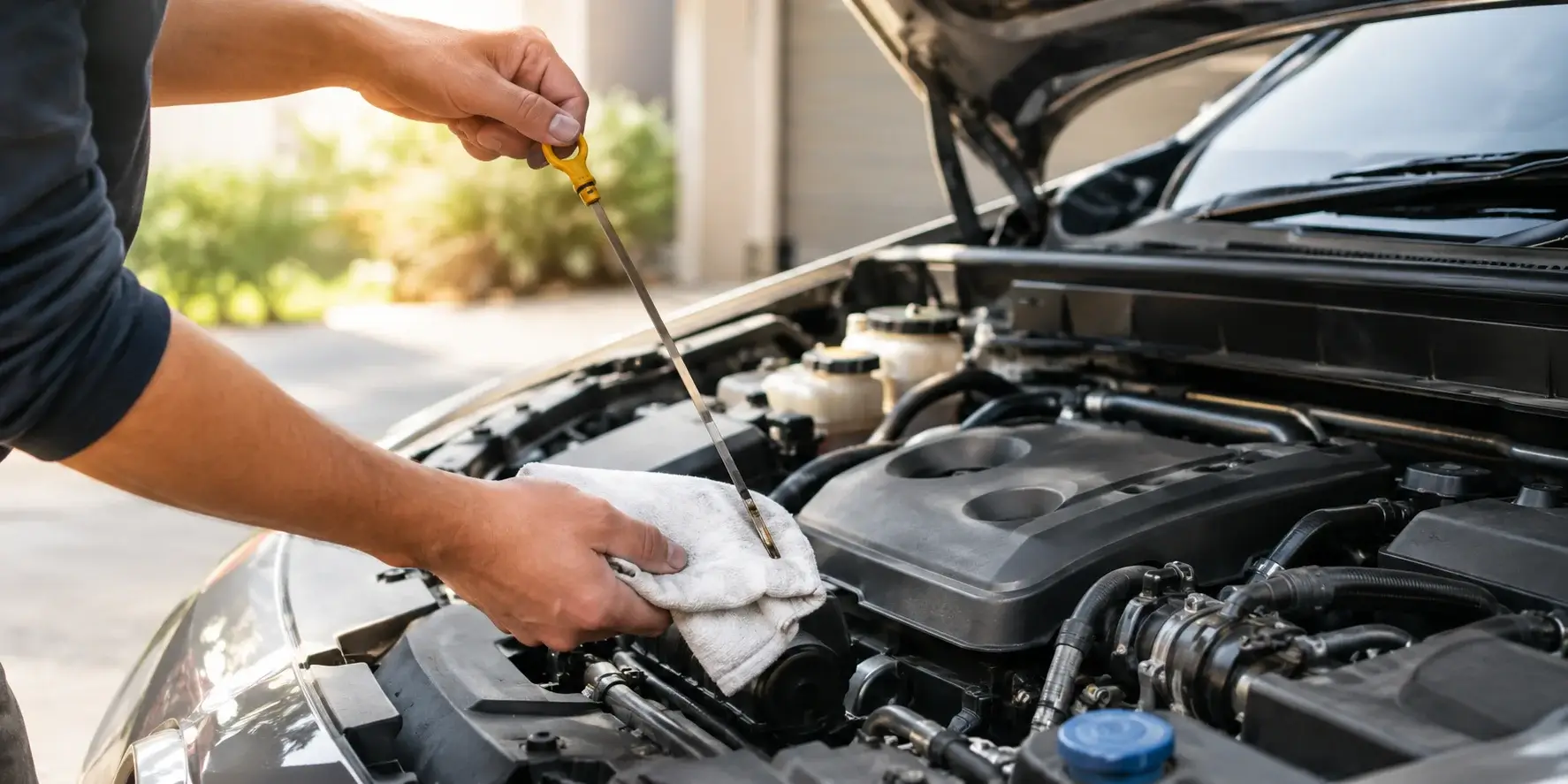
Most MOT failures involve simple, preventable issues. Spending 20 minutes checking tyres, lights, fluid levels, and the windscreen before your test appointment meaningfully reduces the chance of a failed test and a return trip.
Before you drop your car off:
- Check tyre tread depth across the central three-quarters of the tyres legal minimum is 1.6mm, but anything close to that is worth replacing pre-test. Check the sidewall date code too; tyres over 10 years old are a common concern, even with plenty of visible tread.
- Test every light headlights (dip and main beam), indicators, brake lights, fog lights, and number plate light. Get a second person to check while you operate the pedals and switches.
- Top up screen wash an empty reservoir is a surprisingly common, entirely avoidable fail point.
- Inspect the windscreen for chips or cracks, especially in the driver’s direct line of sight.
- Check the horn works and listen for anything unusual.
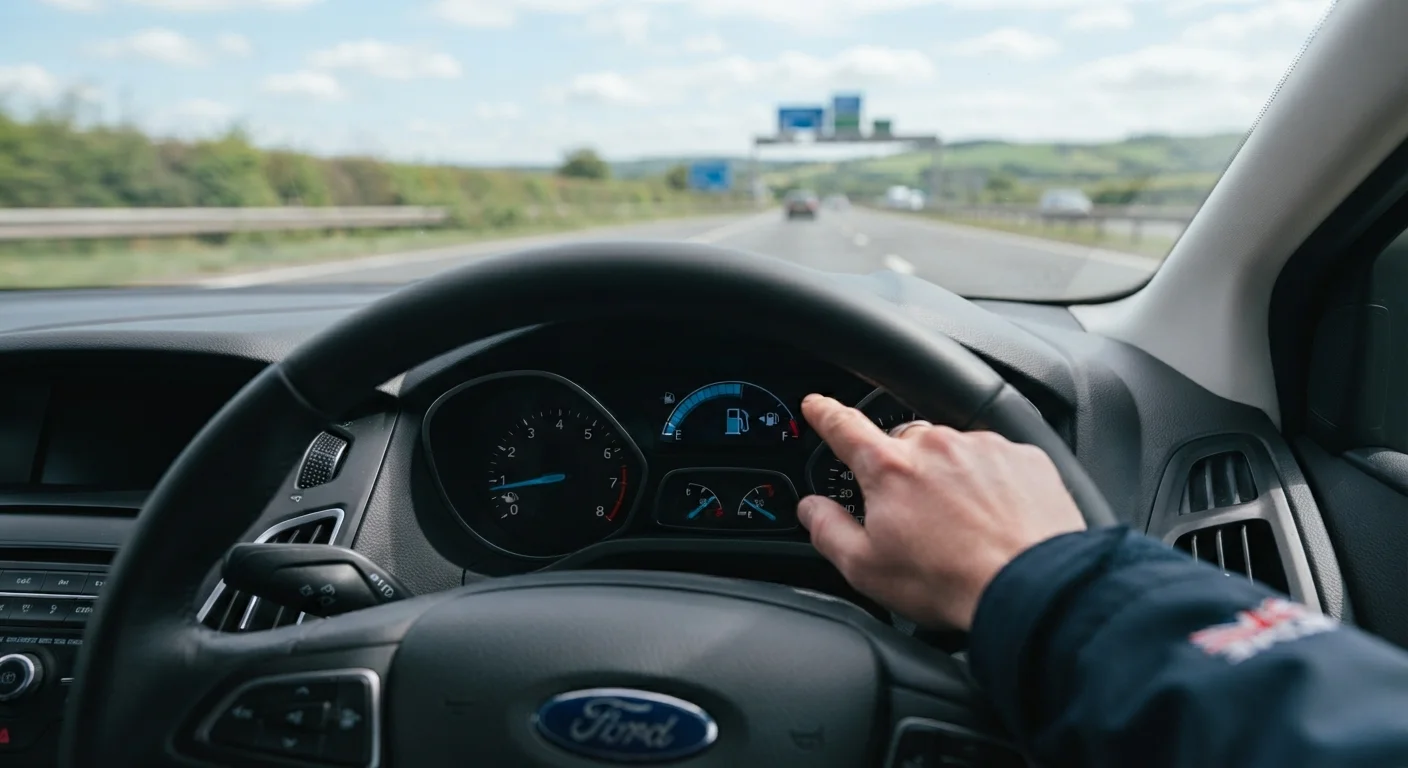
- Look for dashboard warning lights, particularly the airbag, ABS, and (for diesels) DPF warning lights these often indicate a fault the tester will pick up on immediately.
- Make sure the number plate is clean, undamaged, and legible, front and back.
- Check seatbelts click in firmly and retract smoothly with no fraying.
- For diesel owners, take the car on a longer motorway-speed run before the test if it’s mostly done short journeys this helps the DPF regenerate and clears excess soot that could otherwise trigger a fail.
- Book with a DVSA-approved test centre and, if you’ve had any warning lights or unusual noises recently, mention them a quick pre-test look can save a wasted trip.
Frequently Asked Questions
Is the MOT test changing in 2026?
The core test items brakes, tyres, lights, steering, suspension, seatbelts, and emissions remain the same in 2026. The changes that have taken effect relate to tester conduct rules (from 9 January 2026) and garage equipment standards (from 1 April 2026), not to what’s checked on your car.
Will the first MOT move from three years to four?
No. Despite ongoing discussion, this hasn’t been confirmed for 2026. The first MOT is still required three years after a vehicle’s initial registration.
Do electric vehicles get a different MOT?
No separate MOT exists for EVs. They undergo the standard test with irrelevant items (like exhaust emissions) removed, and their brakes, tyres, suspension, steering, and safety systems are inspected exactly as with any other car.
What happens if my car fails its MOT?
You’ll receive a list of the faults, categorized as Dangerous, Major, or Minor. Dangerous or Major faults mean the car fails and, in the case of Dangerous faults, shouldn’t be driven at all except directly to a garage for repair. You then have the faults fixed and book a retest, which is often free or discounted if done at the same center within 10 working days.
Can I drive my car if the MOT has expired?
Only to a pre-booked MOT test appointment, or to or from a garage for repairs needed to pass the test. Using it for anything else without a valid MOT is illegal and can invalidate your insurance.
How do I check my car’s MOT history?
You can check any UK vehicle’s MOT history, expiry date, and past test results for free using the official GOV.UK MOT history checker just search “check MOT history GOV.UK.”
Can a mobile mechanic fix MOT failures?
Yes. Mobile mechanics can typically repair common MOT failure points such as brake pads, bulbs, wiper blades, and battery issues on-site. For structural or emissions-related failures, you may still need a full garage visit. See our mobile mechanic guide for what they can and can’t fix.