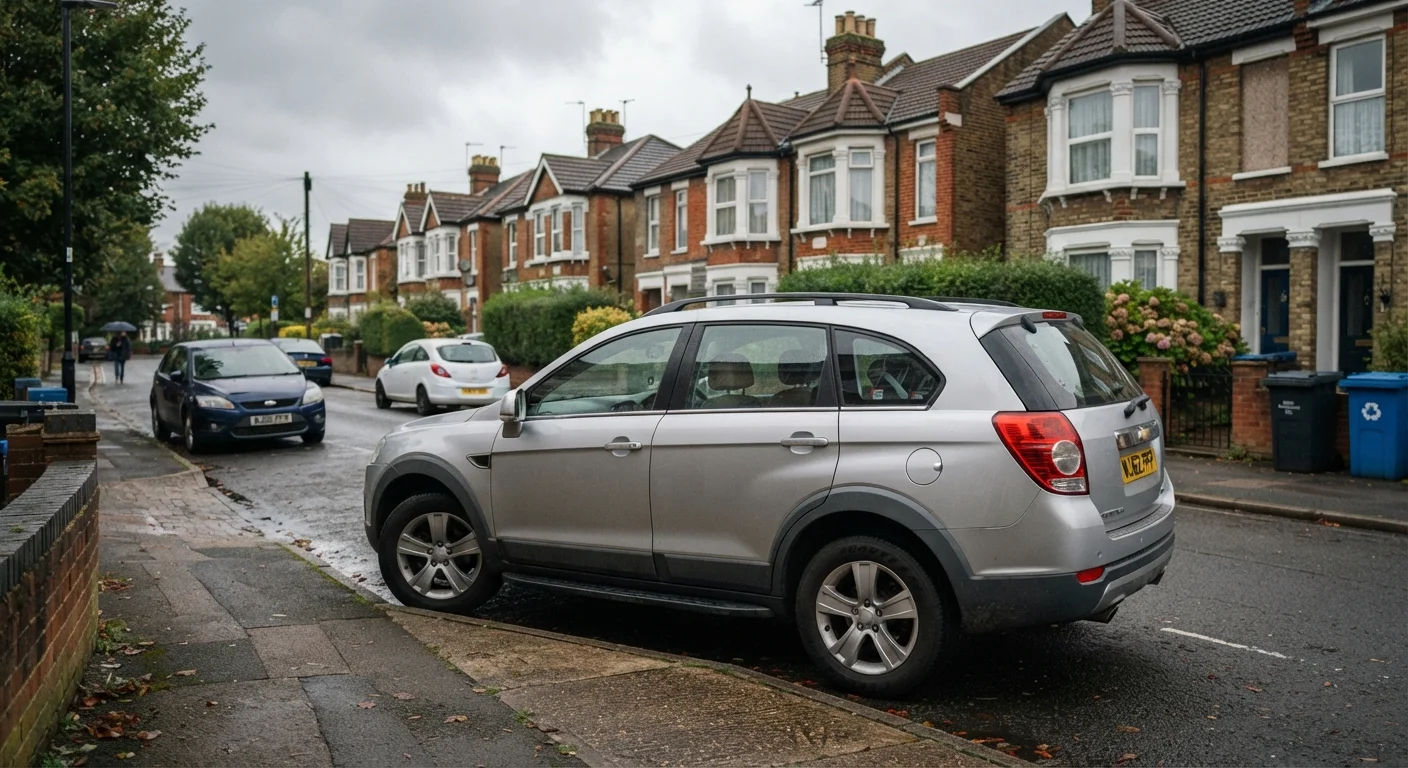
Auto Chevrolet Captiva stopped selling new cars in the UK back in 2015, but the auto Chevrolet Captiva never really left our roads. Thousands of these seven-seat SUVs are still doing the school run, the caravan tow, and the long motorway commute mostly because they’re cheap to buy and roomy enough for a growing family.
This guide pulls together everything a UK buyer or owner actually needs to know: what breaks, what it costs to fix, what to check before handing over cash, and whether it’s still worth buying in 2026.
What Is the Auto Chevrolet Captiva?
Quick answer: The auto Chevrolet Captiva is a mid-size, seven-seat SUV built by GM Korea and sold in the UK between 2006 and 2015. It shares its underpinnings with the Vauxhall/Opel Antara.
The Captiva was designed as an affordable family alternative to pricier SUVs like the Land Rover Freelander or Toyota RAV4. It offered a high driving position, a flexible three-row seating layout, and diesel engines suited to UK motorway driving.
Two generations were sold globally, but only the first-generation Captiva (2006 onwards, facelifted in 2011) was officially sold new in the UK, right up until Chevrolet withdrew from the European passenger car market at the end of 2015.
Because new sales stopped almost a decade ago, every Captiva on UK roads today is a used buy which is exactly why reliability and running costs matter so much to anyone considering one.
How The Auto Chevrolet Captiva Works: Engines & Drivetrains

Quick answer: UK Captivas were sold with a 2.4-litre petrol engine or, far more commonly, a 2.0-litre and later 2.2-litre diesel, paired with front-wheel drive or four-wheel drive.
| Engine | Fuel | Drive | Typical Use Case |
|---|---|---|---|
| 2.4 petrol | Petrol | FWD/AWD | Lower mileage, town-biased drivers |
| 2.0 VCDi diesel (pre-2011) | Diesel | FWD/AWD | Most common early UK spec |
| 2.2 VCDi diesel (2011 on) | Diesel | FWD/AWD | Facelifted, more refined, better towing |
Most UK examples are diesel-automatic, seven-seat, four-wheel-drive models the configuration that suited families wanting extra towing capacity and confidence in poor weather. The 2.2-litre diesel introduced in the 2011 facelift is generally considered the stronger, more usable engine, with a smoother automatic gearbox than the earlier cars.
Auto Chevrolet Captiva UK Timeline
Quick answer: The Captiva launched in the UK in 2006, was facelifted in 2011, and Chevrolet withdrew from UK new-car sales at the end of 2015.
- 2006–2008: First UK sales, initial engine range, early recalls on ignition switch wear
- 2009–2011: Minor updates, continued diesel-heavy UK sales
- 2011: Major facelift revised styling, new 2.2 diesel, improved interior
- 2013–2015: GM announces Chevrolet’s exit from the European passenger car market
- End of 2015: Chevrolet stops selling new cars in the UK; Captiva sales end
- Today: Only used examples available, typically aged 10–20 years old
Is the Chevrolet Captiva Reliable?
Quick answer: The Captiva has a mixed reliability reputation mechanically it can be a durable, high-mileage workhorse, but electrical faults and gearbox issues are common enough that a pre-purchase inspection is essential.
Owner experiences vary a lot with the Captiva, and that’s typical of a budget SUV that’s now well into its second decade of life. Many owners report six-figure mileages with only routine servicing, particularly on well-maintained diesel automatics. Others report recurring electrical gremlins, dashboard warning lights with no clear cause, and gearbox linkage failures.
The honest summary: the Captiva was never class-leading for reliability when new, and because most UK cars are now old and have often passed through several owners, condition and service history matter far more than the badge itself.
Common Problems & Warning Signs

Quick answer: The most frequently reported Captiva issues are automatic gearbox faults, electrical/wiring problems, turbo and DPF issues on diesels, and interior trim wear.
Signs & Symptoms to Watch For
- Rough or delayed gear changes points to worn transmission components or low/degraded gearbox oil
- Dashboard warning lights that reappear after clearing often wiring corrosion or a failing sensor rather than a major fault
- Clunking from the steering or front suspension common on higher-mileage cars, usually bushes or track rod ends
- Engine warning light with diesels frequently DPF-related, especially on cars used mostly for short journeys
- Non-functioning power windows, locks or infotainment a well-documented weak point across the range
- Oil level appearing higher than expected on the dipstick can indicate unburned fuel washing past the pistons on DPF-heavy diesel use
Causes
Most of these issues trace back to two things: age-related wear (wiring corrosion, worn bushes, tired seals) and poor ownership habits (short journeys that clog the DPF, missed gearbox oil changes, or overdue cambelt/timing chain servicing).
Known Recalls
UK-registered Captivas have been subject to official recalls, including an early ignition switch wear issue on 2006–2011 cars and a fuel-related recall affecting certain 2.0-litre diesel models. Always check a car’s recall history against its registration before buying.
Solutions & Repair Options
| Problem | Typical Fix | Approx. UK Cost |
|---|---|---|
| Gearbox linkage/shifting fault | Repair or replace linkage/solenoids | £150–£600 |
| DPF blockage | Forced regeneration or DPF clean | £80–£350 |
| Electrical/wiring corrosion | Diagnose and repair affected loom section | £100–£400 |
| Turbo fault | Repair or replacement turbo | £500–£1,200 |
| Suspension bushes/track rod ends | Replace worn parts | £120–£350 |
| Timing chain/belt issues | Full replacement | £400–£900 |
Costs are UK estimates for independent garages in 2026 and will vary by region and vehicle condition.
Auto Chevrolet Captiva Running Costs In The UK
Quick answer: A used Chevrolet Captiva is cheap to buy but sits in the “budget” running-cost bracket, with fuel economy, insurance and parts availability all weaker than modern rivals.
- Purchase price: Most UK examples now sell from roughly £1,500 to £5,500 depending on age, mileage and condition
- Fuel economy: Diesel models typically return 35–42mpg in real-world UK driving; petrol models are thirstier
- Insurance: Mid-range groups, generally comparable to other seven-seat SUVs of similar age
- Road tax (VED): Based on CO2 emissions at first registration diesels generally sit in a lower band than gas
- Servicing: Independent garages are usually far cheaper than a main dealer, and strongly recommended given Chevrolet’s reduced UK dealer network
- Parts availability: Reasonable, since the Captiva shares many parts with the Vauxhall/Opel Antara, but some Chevrolet-specific trim and electrical parts can be harder to source
Maintenance Schedule

Quick answer: Sticking to a disciplined maintenance schedule is the single biggest factor in keeping an older Captiva reliable.
| Interval | Task |
|---|---|
| Every 10,000 miles or annually | Engine oil and filter change |
| Every 40,000 miles | Automatic gearbox oil change |
| Every 30,000–40,000 miles | DPF inspection/clean (diesel) |
| Every 2 years | Coolant system flush |
| Every major service | Turbo feed line and hose inspection |
| Annually | Air conditioning system check |
| As per manufacturer schedule | Timing chain/belt inspection or replacement |
Buying Guide: What To Check Before You Buy
Quick answer: Prioritise full service history, a clean gearbox operation, no unresolved recalls, and a pre-purchase inspection over low price alone.
Step-by-Step: Inspecting a Used Captiva
- Check the service history look for regular oil changes and, ideally, evidence of gearbox oil changes
- Verify recall status ross-check the registration against manufacturer recall records
- Test the automatic gearbox thoroughly drive it from cold, and again once warm, checking for hesitation or clunks
- Inspect the third-row seats cycle them through their full range to rule out mechanical or electrical faults
- Look for corrosion around wiring connectors a torch and a careful look under the bonnet and boot area pays off
- Check for consistent oil colour and level anything unusually high or milky is a red flag
- Get a professional pre-purchase inspection well worth the cost on a car this age
- Run an HPI/vehicle history check confirms mileage, outstanding finance and previous write-off status
Mistakes To Avoid
- Buying on price alone without checking service history
- Ignoring a dashboard warning light “because the seller said it’s nothing”
- Skipping a pre-purchase inspection to save money upfront
- Assuming all engine variants perform the same the 2.2 facelift diesel is generally the stronger choice
- Overlooking gearbox oil changes once you own the car
- Using the car mostly for short trips without occasional longer runs to help the DPF clear itself
Auto Chevrolet Captiva vs Rivals
| Model | Reliability Reputation | Running Costs | Seven Seats | UK Parts Support |
|---|---|---|---|---|
| Chevrolet Captiva | Mixed | Budget | Yes | Moderate (shared with Antara) |
| Toyota RAV4 (equivalent era) | Strong | Moderate | No (5-seat) | Excellent |
| Hyundai Santa Fe | Good | Moderate | Yes | Good |
| Kia Sorento | Good | Moderate | Yes | Good |
| Nissan X-Trail | Good, some CVT issues | Moderate | Optional | Good |
Pros & Cons
Pros:
- Very affordable purchase price on the used market
- Spacious, practical seven-seat interior
- Diesel automatics suit motorway and towing use
- High driving position and decent visibility
- Parts commonality with Vauxhall/Opel Antara helps availability
Cons:
- Chevrolet no longer sells new cars or officially supports the UK market
- Electrical faults are a recurring theme in owner reports
- Automatic gearbox issues appear on higher-mileage cars
- Weaker resale value than mainstream rivals
- Fewer specialist Chevrolet garages remain in the UK
Myths vs Facts
| Myth | Fact |
|---|---|
| “You can’t get parts for a Captiva in the UK anymore.” | Many mechanical parts are shared with the Vauxhall/Opel Antara and remain readily available. |
| “All Captivas have the same reliability issues.” | Reliability varies significantly by engine, model year, and how well the car was maintained. |
| “A Captiva isn’t worth buying because Chevrolet left the UK.” | It can still be a sound, cheap family SUV if bought carefully with a full history and inspection. |
| “Diesel and petrol Captivas cost the same to run.” | Diesel models generally return better real-world fuel economy for UK motorway driving. |
Expert Tips
- Favour the post-2011 facelift 2.2-litre diesel where possible it’s generally regarded as the more refined, better-sorted engine
- Ask any seller directly whether the gearbox oil has ever been changed many owners never think to do it
- Budget for a pre-purchase inspection as a fixed cost of buying, not an optional extra
- Keep a longer motorway run in your regular routine if you do a lot of short journeys, to help the DPF self-clean
- Join an owners’ forum before you buy real owner experience is one of the best free diagnostic tools available
Pre-Purchase Checklist
- Full service history available
- No outstanding recalls
- Gearbox shifts smoothly, cold and warm
- No warning lights on the dashboard
- Third-row seats operate correctly
- No corrosion visible around wiring or underbody
- Clean HPI/vehicle history check
- Independent pre-purchase inspection completed
- Realistic budget set aside for early servicing
Conclusion
Auto Chevrolet Captiva isn’t a car you’ll find on a main dealer forecourt in the UK anymore, but as a used buy it still has a genuine place for families wanting seven seats and diesel towing ability on a tight budget.
The key to a good ownership experience isn’t the badge it’s condition, service history, and being realistic about the checks and running costs involved. Buy carefully, inspect thoroughly, and a Captiva can still be several more years of dependable family transport.
Frequently Asked Questions Auto Chevrolet Captiva UK
What is an Auto Chevrolet Captiva?
The auto Chevrolet Captiva is a mid-size, seven-seat SUV sold new in the UK from 2006 to 2015, built by GM Korea and closely related to the Vauxhall/Opel Antara.
How much does a Chevrolet Captiva cost in the UK?
Used prices generally range from around £1,500 to £5,500 depending on age, mileage, engine and condition.
Is the Chevrolet Captiva worth buying in 2026?
Yes, if you’re after a cheap, spacious seven-seat SUV and are prepared to check service history carefully and budget for a pre-purchase inspection.
Is the Chevrolet Captiva reliable?
It has a mixed reputation many owners report high mileages with few issues, while others encounter gearbox or electrical faults, so individual car condition matters more than the model as a whole.
Are parts still available for the Chevrolet Captiva in the UK?
Yes, largely because many mechanical components are shared with the Vauxhall/Opel Antara, which remains well supported by independent garages.
What engines were available in the UK Chevrolet Captiva?
A 2.4-litre petrol and 2.0-litre diesel were offered from 2006, with a 2.2-litre diesel introduced in the 2011 facelift.
Does the Chevrolet Captiva have seven seats?
Most UK models were sold with seven seats across three rows, though some lower-spec five-seat versions also existed.
What are the most common Chevrolet Captiva problems?
Automatic gearbox faults, electrical/wiring issues, DPF problems on diesels, and worn suspension components are the most frequently reported issues.
Is the diesel or petrol Chevrolet Captiva better?
The diesel is generally preferred by UK buyers for its better real-world fuel economy and towing performance, particularly the post-2011 2.2-litre version.
How often should a Chevrolet Captiva be serviced?
Annually or every 10,000 miles for oil changes, with gearbox oil changes recommended around every 40,000 miles.
Can you still buy a new Chevrolet Captiva in the UK?
No. Chevrolet withdrew from the UK new-car market at the end of 2015, so all UK Captivas today are used vehicles.
What is the fuel economy of a Chevrolet Captiva?
Diesel models typically return around 35–42mpg in real-world UK driving, with petrol variants returning less.
Does the Chevrolet Captiva have four-wheel drive?
Both front-wheel-drive and four-wheel-drive variants were sold in the UK, with four-wheel drive common on higher-spec diesel automatics.
How do I check if my Chevrolet Captiva has an open recall?
Check the vehicle’s registration against the DVSA and manufacturer recall databases before buying or continuing to drive it.
Is the Chevrolet Captiva a good tow car?
The diesel automatic, particularly the 2.2-litre facelift version, is a reasonably capable tow car for its class, though always check the specific model’s towing capacity.
Call to Action
Considering a used Chevrolet Captiva? Get a full vehicle history check and book an independent pre-purchase inspection before you commit it’s the cheapest insurance policy you’ll ever buy for a used car.