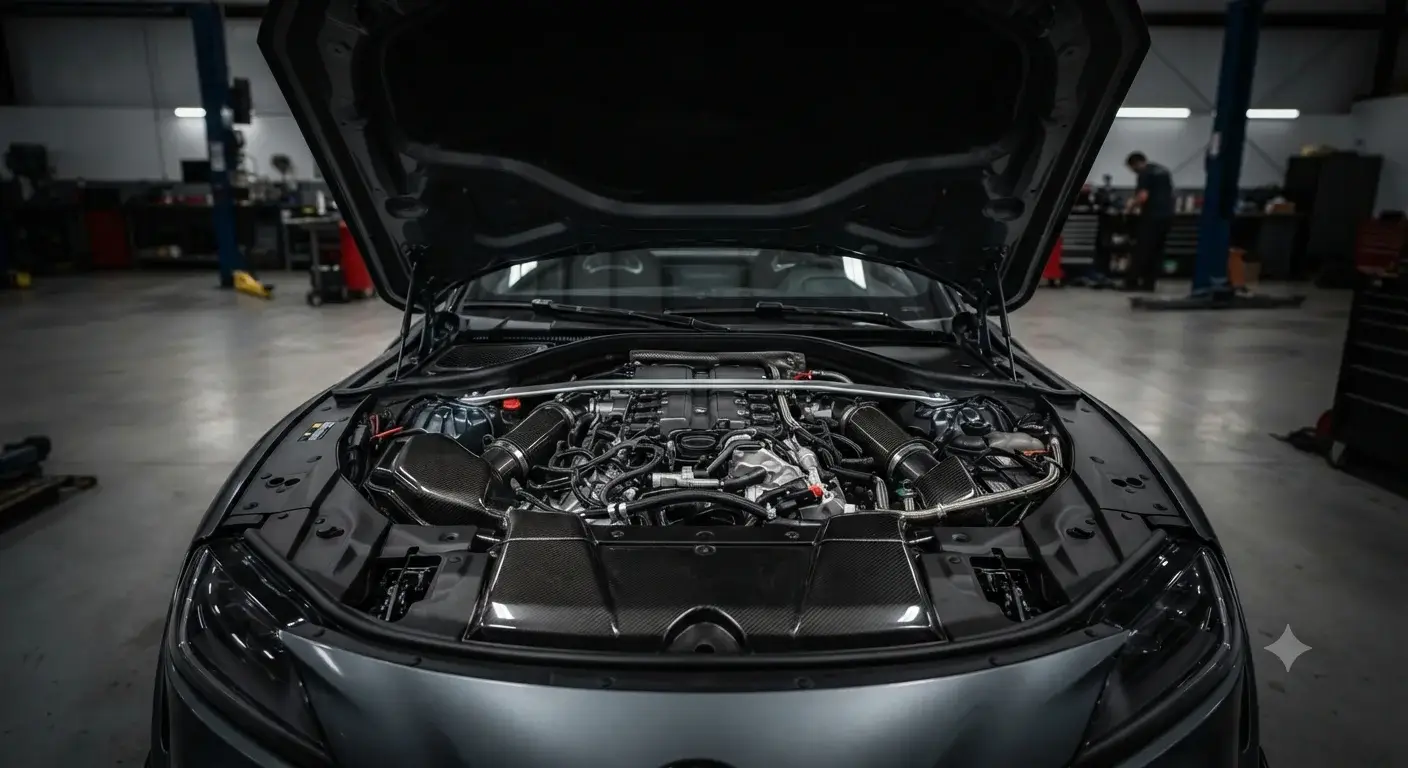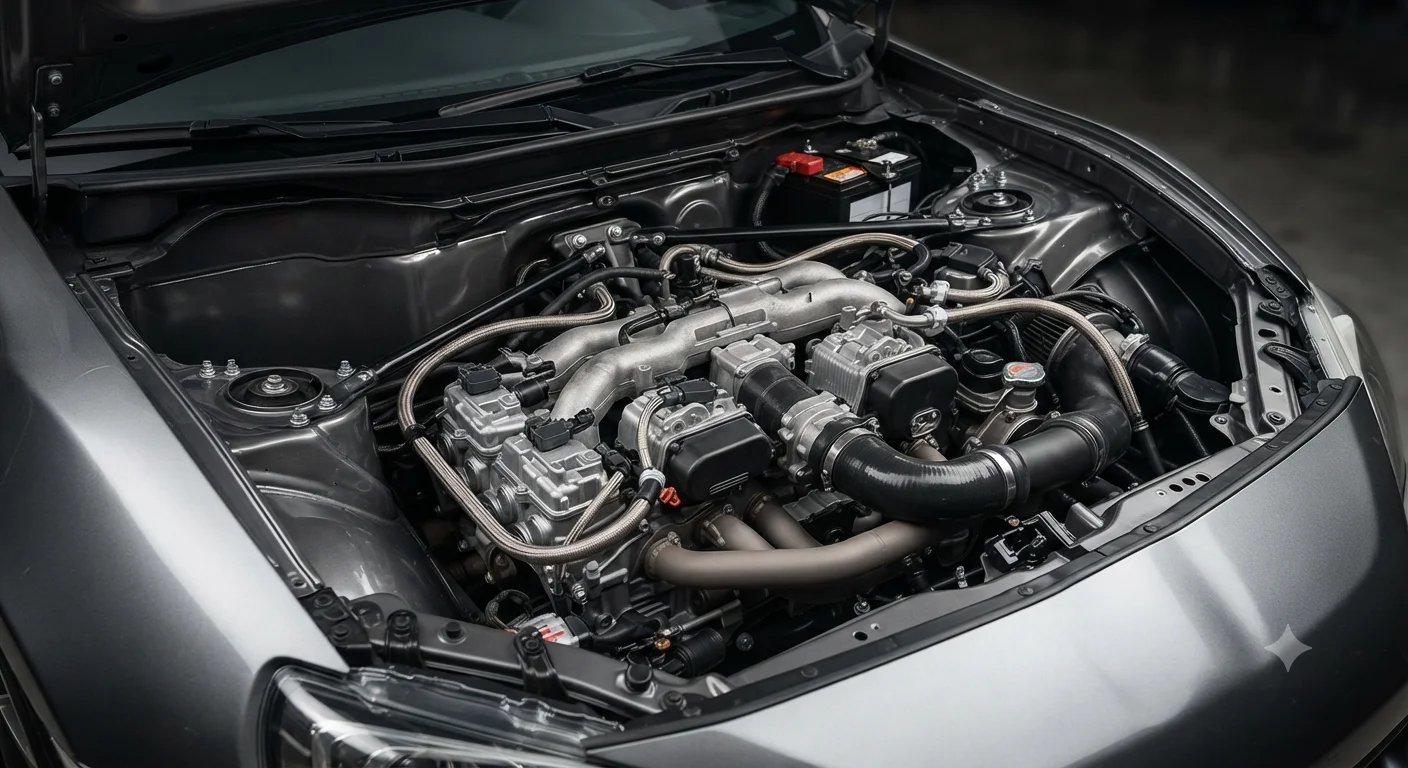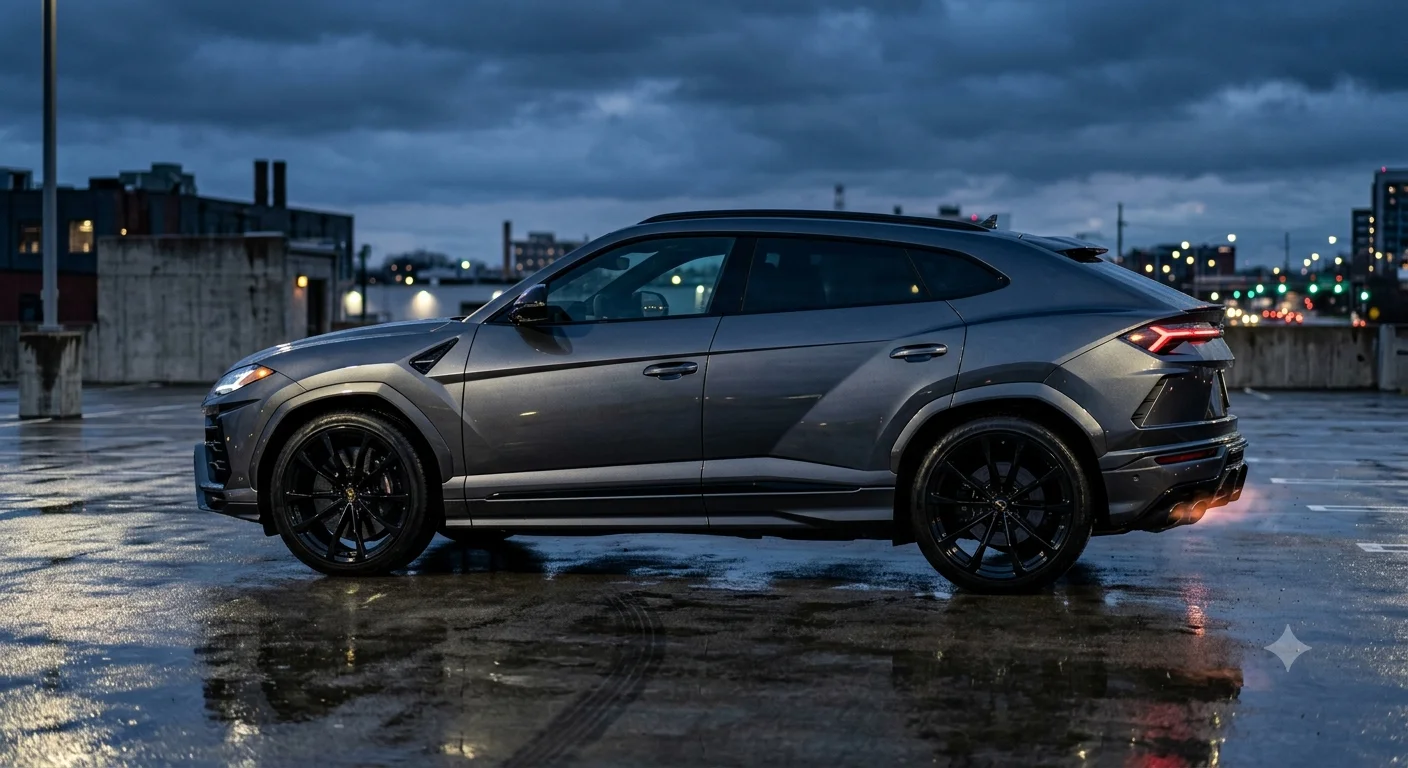
If you want a real-world example of what a Roots-type supercharger can do in a modern performance car, the Range Rover Sport SVR is one of the best in the UK market. It pairs a hand-built supercharged V8 with genuine off-road ability, making it one of the few performance SUVs that’s as happy on a track day as it is towing a horsebox.
This guide breaks down how the SVR’s supercharged engine works, its real performance figures, common problems UK owners report, running costs, and what to check before buying one.
What Engine Does the Range Rover Sport SVR Use?
Quick answer: The Range Rover Sport SVR (2014–2022) uses a 5.0-litre supercharged V8, badged AJ133, shared with the Jaguar F-Type, driving all four wheels through an eight-speed automatic gearbox.
Built by Jaguar Land Rover’s Special Vehicle Operations division, the SVR was designed to be the fastest and most powerful Range Rover Sport of its generation. The SUV’s signature component is the 5.0-litre AJ133 supercharged V8, an engine shared with the Jaguar F-Type.
Rather than switching to twin-turbocharging like most rivals, JLR stuck with a supercharger specifically for its instant, predictable throttle response useful both for spirited road driving and for precise low-speed control off-road.
How the SVR’s Supercharger Works?

The SVR uses a Roots-type twin-vortex supercharger, mounted directly on top of the V8 and driven by a belt connected to the crankshaft. As covered in our Roots vs Centrifugal supercharger guide, Roots units deliver strong boost from very low RPM, which suits a heavy SUV that needs usable torque as soon as you touch the throttle rather than power that builds progressively like a centrifugal or turbocharged setup.
This is why the SVR feels immediately responsive at low revs, even though it weighs over two tonnes.
Range Rover Sport SVR Performance Specs
| Spec | Pre-facelift (2014–2017) | Facelift (2018–2022) |
|---|---|---|
| Engine | 5.0L supercharged V8 (AJ133) | 5.0L supercharged V8 (AJ133) |
| Power | 550 hp and 502 lb-ft of torque | 575 hp and 516 lb-ft of torque |
| 0–60 mph | 4.5 seconds | 4.3 seconds |
| Top speed | 162 mph | 176 mph |
| Transmission | 8-speed automatic, 4WD | 8-speed automatic, 4WD |
| Fuel economy | Around 14 mpg city, 19 mpg highway | Similar, around 14–20 mpg combined |
Note: US mpg figures cited above are close to UK real-world equivalents but not identical to official WLTP figures always check a specific vehicle’s V5C and independent economy data before buying.

SVR vs Later Range Rover Sport SV: Supercharger to Twin-Turbo

Quick answer: From 2023, Land Rover replaced the supercharged V8 with a twin-turbocharged 4.4-litre V8 in the renamed Range Rover Sport SV, producing far more power but losing the instant throttle response the supercharger was known for.
The current Range Rover Sport SV uses a specially-tuned 635 PS twin-turbocharged 4.4-litre V8 mild hybrid engine, the most powerful ever fitted to a Range Rover, capable of 0–60 mph in as little as 3.6 seconds with the right options fitted.
This is a useful real-world illustration of the wider turbo vs supercharger shift covered in our main forced induction guide: even a manufacturer that championed supercharging for nearly two decades has now moved to turbocharging for outright power and efficiency, while the supercharged SVR remains valued specifically for its old-school immediacy.
Common Problems and Reliability

Quick answer: The SVR’s supercharged V8 is generally considered reliable, but early models are known for cooling system failures, supercharger belt wear, and oil leaks, most of which were addressed in later production years.
Reported issues include:
- Cooling system failures – thermostat, water pump, and supercharger intercooler leaks are recurring weak points, since the supercharged V8 generates significant heat under load
- Supercharger belt wear – a faulty supercharger belt is one of the most commonly reported issues on earlier cars
- Oil leaks – reported on pre-facelift models, particularly around high-mileage examples
- Timing chain wear – a recurring issue on high-mileage examples of the 5.0-litre V8
Owner experiences vary significantly by model year. Long-term owners on UK forums report the engine itself is fundamentally sound, with issues more often linked to skipped servicing than to the supercharger’s basic design.
UK Running Costs
| Item | Typical UK Range |
|---|---|
| Supercharger belt replacement | £80–£250 |
| Cooling system repair (water pump/thermostat) | £300–£800 |
| Supercharger rebuild | £500–£1,500 |
| Insurance group | High-performance group, specialist insurer recommended |
| Fuel economy | Roughly 14–20 mpg depending on driving style |
As with any supercharged performance model, insurance and servicing costs sit well above a standard Range Rover Sport diesel, reflecting both the performance and the specialist parts involved.
Buying Guide: What to Check
Before buying a used Range Rover Sport SVR, check.
- Full service history, with particular attention to cooling system maintenance
- Supercharger drive belt condition and any replacement history
- Any oil leaks around the supercharger housing or timing chain area
- Whether the car has had any performance remaps, which can add extra stress to the supercharger and drivetrain
- A specialist Range Rover pre-purchase inspection, given the complexity and cost of major repairs
Buyers should also compare pre-facelift (550 hp) and facelift (575 hp) models carefully, since the facelift brought both more power and a number of reliability fixes.
Frequently Asked Questions
What engine is in the Range Rover Sport SVR?
A 5.0-litre supercharged V8, badged AJ133, producing between 550 hp and 575 hp depending on model year.
Does the Range Rover Sport SVR have a turbo or supercharger?
It uses a Roots-type supercharger, not a turbocharger, chosen for instant throttle response rather than the slight delay associated with turbo lag.
Is the Range Rover Sport SVR’s supercharged engine reliable?
Generally yes with proper maintenance, though early models are known for cooling system and supercharger belt issues that were largely resolved in later production years.
How fast is the Range Rover Sport SVR 0–60 mph?
4.5 seconds for pre-facelift models and 4.3 seconds for facelift models (2018 onward).
Why did Land Rover switch from a supercharger to a twin-turbo V8 for the newer SV?
To increase peak power and improve efficiency the newer twin-turbo V8 produces 635 PS, well above the supercharged SVR’s 575 hp maximum.
What common problems should I check on a used SVR?
Cooling system faults, supercharger belt wear, oil leaks, and timing chain wear on higher-mileage examples.