Turbocharged engines are now the norm on UK roads, found in everything from small city cars to high-performance saloons. But most drivers have never had it properly explained how a turbocharger works, why some cars use twin turbo setups, or why that brief hesitation known as turbo lag happens at all.
This guide walks through the mechanics in plain English, compares single and twin turbo setups, and covers the costs, common problems, and buying advice UK drivers need to know.
How Forced Induction Works: Turbochargers vs Superchargers
What Is a Turbocharger?
Quick answer: A turbocharger is a forced induction device that uses exhaust gas energy to compress air and force it into an engine’s cylinders, allowing more fuel to be burned for greater power without increasing engine size.
Rather than relying purely on atmospheric pressure to draw air in, a turbocharger recycles energy that would otherwise be lost through the exhaust. This makes it one of the most efficient ways to boost power, which is why turbocharging has become standard across most new UK petrol and diesel engines.
Naturally Aspirated Engines: Why Car Purists Still Love Them
How a Turbocharger Works?

Quick answer: A turbocharger works by using exhaust gas to spin a turbine, which drives a connected compressor wheel that forces extra air into the engine, increasing power output.
Here’s the process step by step:
- Exhaust gases exit the engine – As the engine runs, hot exhaust gases flow out through the exhaust manifold.
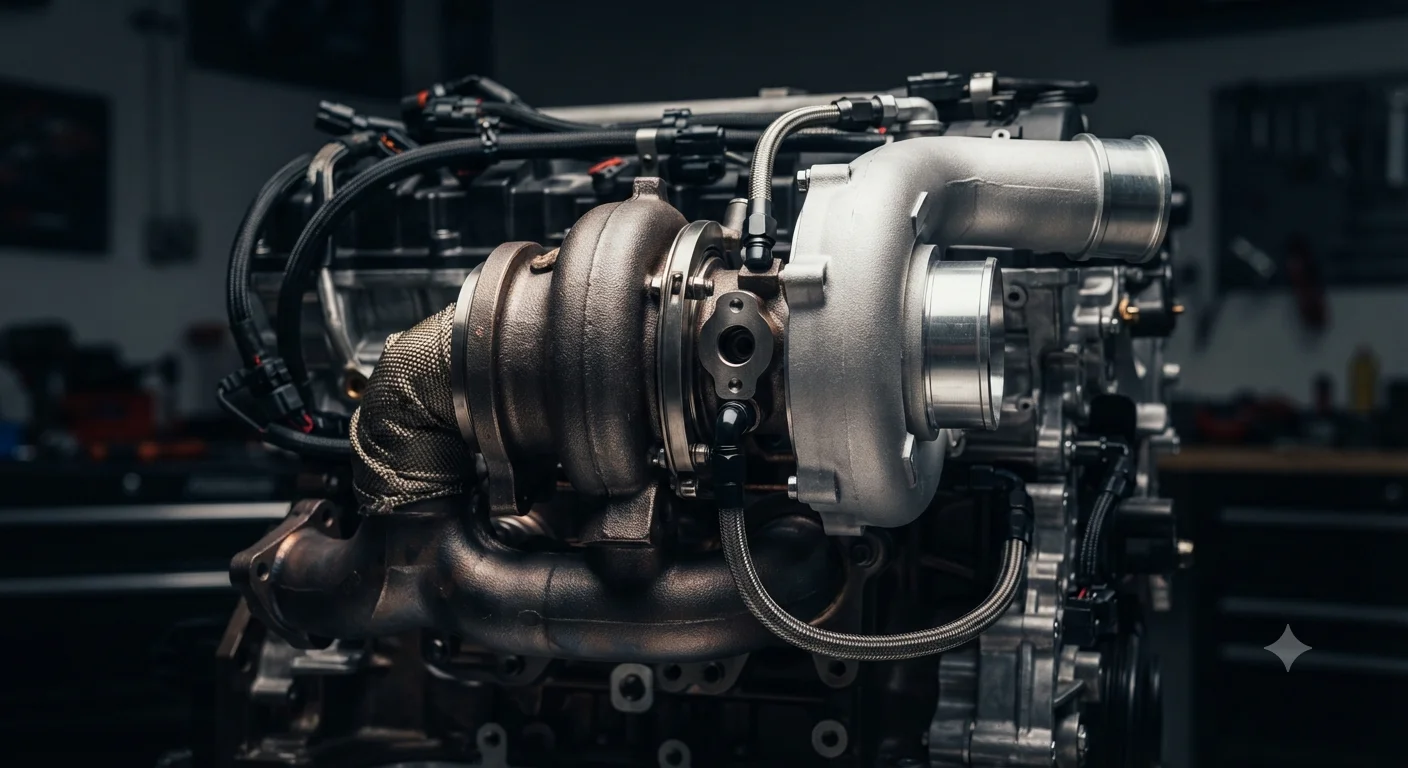
- Gases spin the turbine – These gases pass through the turbo housing, spinning a small turbine wheel at extremely high speed, often over 100,000 RPM.
- Compressor wheel spins on the same shaft – The turbine is connected via a shaft to a compressor wheel on the intake side.
- Air is compressed – The spinning compressor pulls in fresh air and compresses it before sending it toward the engine.
- Intercooling – The compressed, heated air passes through an intercooler, which cools it to increase density.
- Denser air enters the cylinders – This oxygen-rich air combines with more fuel, producing significantly more power per combustion cycle.
- Wastegate regulates pressure – A wastegate valve releases excess exhaust gas to prevent the turbo from over-boosting.
Key Components
| Component | Role |
|---|---|
| Turbine wheel | Spun by exhaust gases |
| Compressor wheel | Forces fresh air into the engine |
| Shared shaft/bearing | Connects turbine and compressor |
| Intercooler | Cools compressed air before combustion |
| Wastegate | Controls boost pressure |
| Blow-off/diverter valve | Releases pressure safely when throttle closes |
Types of Turbocharger Setups

Quick answer: The main setups are single turbo, twin turbo (parallel or sequential), and variable geometry turbochargers, each designed to balance power delivery, response, and efficiency differently.
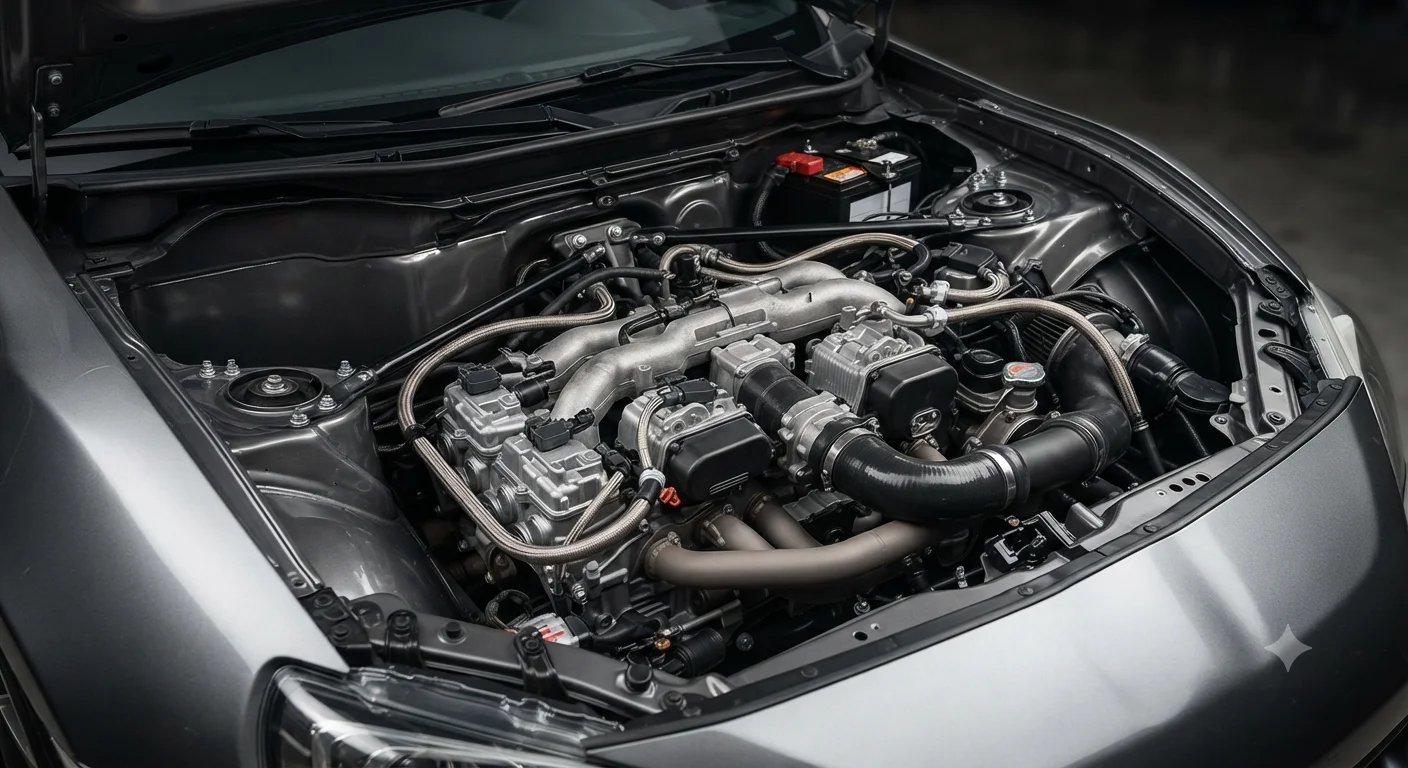
- Single Turbo: One turbocharger handling all boost duties; simple, cost-effective, and common on most mainstream cars.
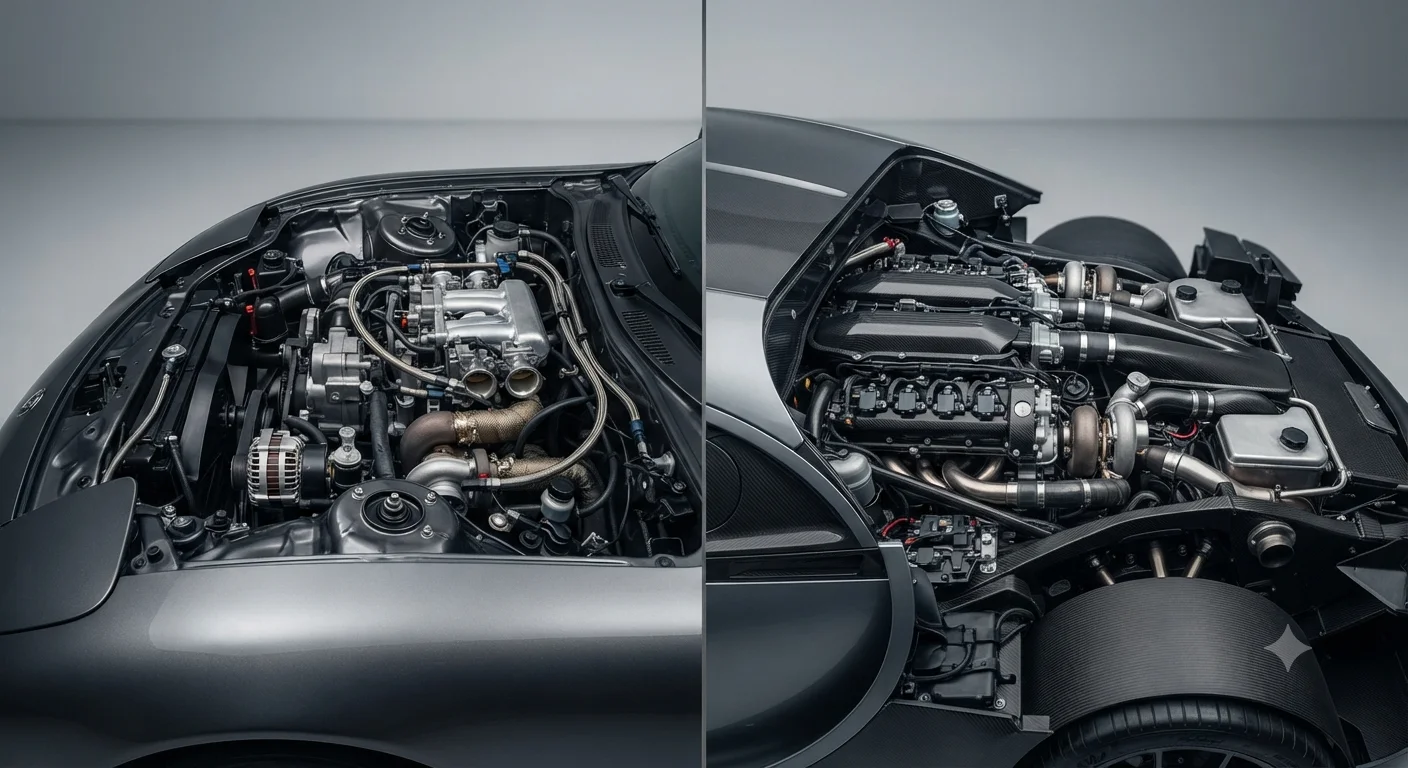
- Twin Turbo (Parallel): Two identical turbos, each fed by half the engine’s cylinders, working together for higher total airflow.
- Twin Turbo (Sequential): A small turbo for quick low-end response and a larger turbo for high-end power, working in stages.
- Variable Geometry Turbo (VGT): Adjustable vanes alter airflow angle to reduce lag across a wider rev range, common on modern diesels.
Single Turbo vs Twin Turbo: The Full Comparison
Quick answer: A single turbo setup is simpler and cheaper, while a twin turbo setup particularly sequential systems reduces turbo lag and improves power delivery across a wider rev range, at the cost of added complexity.
| Feature | Single Turbo | Twin Turbo |
|---|---|---|
| Complexity | Simpler, fewer parts | More complex plumbing and control |
| Turbo lag | More noticeable, especially on larger turbos | Reduced, particularly with sequential setups |
| Power delivery | Peaks later in the rev range | Smoother, more linear across the range |
| Cost to repair | Generally lower | Higher, due to two units and more components |
| Common use | Everyday petrol/diesel cars | Performance and premium models |
| Packaging | Easier to fit | Requires more space and engineering |
In short: if you want simplicity and lower repair costs, a single turbo is usually sufficient. If you want stronger, more linear power delivery with reduced lag, a well-engineered twin turbo setup delivers a noticeably different driving experience at a higher cost if things go wrong.

What Is Turbo Lag and Why Does It Happen?

Quick answer: Turbo lag is the brief delay between pressing the accelerator and feeling the full effect of boost, caused by the time it takes exhaust gases to build up enough flow to spin the turbine to an effective speed.
Why it happens:
- At low RPM, exhaust gas flow is limited, so the turbine spins slowly
- The compressor can’t generate meaningful boost until the turbine reaches sufficient speed
- Larger turbos take longer to spool than smaller ones, increasing lag
- Turbo lag is most noticeable when accelerating from low revs, such as pulling away from a junction
How manufacturers reduce turbo lag:
- Using smaller, lighter turbine wheels that spool faster
- Fitting twin-scroll or sequential twin turbo setups
- Adding electric turbochargers or hybrid assistance in some newer models
- Using variable geometry turbines that adjust airflow angle dynamically
Benefits of Turbocharging
- More power from a smaller engine, reducing weight and improving handling balance
- Better fuel efficiency compared with a larger naturally aspirated engine producing similar power
- Lower emissions per unit of power, helping manufacturers meet UK and EU regulations
- Strong motorway performance, particularly useful for overtaking
- Widely supported technology, with parts and specialist knowledge easy to find across the UK
Common Turbo Problems and Warning Signs
Quick answer: Common turbocharger problems include whining or grinding noises, loss of boost pressure, blue or grey exhaust smoke, reduced power, and dashboard warning lights.
Signs to watch for:
- Whining, whistling, or grinding noise, especially under acceleration
- Blue or grey smoke from the exhaust (often oil burning)
- Noticeable loss of power or delayed boost
- Engine management or emissions warning light
- Excessive oil consumption between services
- Whistling that changes with engine revs
Causes of Turbo Faults
- Oil starvation – insufficient lubrication causes rapid bearing wear
- Contaminated or old oil – reduces protection for fast-spinning turbo bearings
- Worn seals – allow oil to leak into the intake or exhaust
- Carbon build-up – common in direct-injection turbocharged engines
- Overboost or aggressive driving – increases stress on turbo components
- Failing wastegate or actuator – leads to incorrect, inconsistent boost pressure
Solutions and Repair Options
| Problem | Typical Solution | UK Cost Estimate |
|---|---|---|
| Turbo bearing wear | Turbo rebuild or replacement | £400–£1,200 |
| Twin turbo unit failure (one side) | Individual or matched-pair replacement | £800–£2,000 |
| Wastegate/actuator fault | Repair or replacement | £150–£450 |
| Oil seal leak | Seal replacement (often with turbo rebuild) | £300–£800 |
| Intercooler fault | Repair or replacement | £150–£500 |
Costs vary by make, model, and whether a specialist or main dealer carries out the work. Always get a proper diagnostic before agreeing to a full turbo replacement.
Turbo Costs in the UK
Quick answer: Turbocharged cars generally offer better fuel economy than naturally aspirated equivalents, but servicing and repair costs can be higher, particularly for twin turbo setups with two units to maintain.
- Fuel economy: Turbocharged engines typically outperform larger naturally aspirated engines of similar power.
- Servicing: Regular oil changes are essential turbo bearings rely on clean, correctly specified oil.
- Insurance: Turbocharged performance models, especially twin turbo variants, can sit in higher insurance groups.
- Repairs: Twin turbo repairs tend to cost more due to the extra components and labour involved.
Maintenance Tips
- Use the manufacturer-recommended oil grade and change interval this is the single biggest factor in turbo longevity
- Allow the engine to idle briefly before switching off after hard, sustained driving, where the manufacturer recommends it
- Avoid harsh acceleration on a cold engine let oil circulate fully first
- Listen for unusual noises and get them checked promptly
- Check for oil leaks around the turbo housing during routine servicing
- Service on schedule, particularly oil and filter changes
- Use a specialist for diagnostics if you notice reduced power or delayed boost
Buying Guide
Quick answer: When buying a turbocharged car in the UK, check for a full service history with correct oil changes, listen for unusual turbo noise on a test drive, and ask whether the car uses a single or twin turbo setup.
Key questions to ask before buying:
- Has the car had regular oil changes with the correct specification oil?
- Is there any whining noise, smoke, or hesitation under acceleration?
- Is it a single or twin turbo setup, and has either turbo been replaced before?
- Has the car been remapped or modified, which can add extra strain on the turbo?
- Does the model have a strong reliability reputation for its turbo system?
Mistakes to Avoid
- Skipping oil changes on a turbocharged engine
- Driving hard immediately after a cold start
- Ignoring early warning signs like whining noises or smoke
- Buying a heavily remapped twin turbo car without checking maintenance history
- Not checking insurance costs before buying a turbocharged performance model
Myths vs Facts
| Myth | Fact |
|---|---|
| All turbo lag is a fault | Some turbo lag is a normal characteristic of the design, especially on larger single turbos |
| Twin turbo always means more lag | Sequential twin turbo setups are specifically designed to reduce lag, not increase it |
| Turbos always fail early | With proper maintenance, turbos commonly last well beyond 100,000 miles |
| Turbocharging always increases fuel consumption | Turbocharging often improves fuel economy compared to a larger naturally aspirated engine |
| You can’t do anything to reduce turbo lag | Driving style, engine warm-up, and vehicle design all influence how noticeable lag is |
Expert Tips
- If you want strong, linear power delivery with minimal lag, look for cars with a sequential twin turbo or variable geometry turbo setup.
- Always priorities oil quality and change intervals it’s the leading cause of preventable turbo failure.
- Get a pre-purchase inspection on any turbocharged used car, especially twin turbo performance models.
- If buying a remapped turbo car, ask for evidence of professional tuning and consistent maintenance afterward.
Turbocharger Checklist
- Confirm full service history with correct oil specification
- Listen for unusual turbo noise on test drive
- Check for smoke on start-up and under load
- Confirm whether the car has single or twin turbo setup
- Ask if the car has been remapped or modified
- Check insurance group before purchase
- Get a pre-purchase inspection for used performance models
Frequently Asked Questions
How does a turbocharger work?
A turbocharger uses exhaust gas to spin a turbine, which drives a compressor that forces extra air into the engine, increasing power output.
What is turbo lag and why does it happen?
Turbo lag is the delay between pressing the accelerator and feeling full boost, caused by the time it takes exhaust flow to spin the turbine up to speed.
What’s the difference between single and twin turbo setups?
A single turbo is simpler and cheaper, while a twin turbo setup, especially sequential systems, delivers smoother power and reduced lag at a higher complexity and cost.
Does a twin turbo setup reduce turbo lag?
Yes, particularly sequential twin turbo systems, which use a small turbo for quick response and a larger one for high-end power.
How much does turbo repair cost in the UK?
Typically £400–£1,200 for a single turbo rebuild or replacement, and £800–£2,000 for twin turbo repairs.
Can turbo lag be eliminated completely?
Not entirely, but it can be significantly reduced through smaller turbines, twin turbo setups, variable geometry designs, or electric turbo assistance.
Do turbocharged cars need special maintenance?
Yes regular, high-quality oil changes are essential to protect the turbo’s bearings and seals from premature wear.
How long do turbochargers typically last?
With proper maintenance, most turbochargers last well over 100,000 miles, often for the life of the car.
What does a whining turbo noise mean?
It can indicate bearing wear, a boost leak, or a failing wastegate, and should be checked by a specialist promptly.
Is a twin turbo car more expensive to insure?
Often yes, since twin turbo setups are typically found on higher-performance models that sit in higher insurance groups.
Can I reduce turbo lag through driving style?
Yes keeping revs in the turbo’s effective range and avoiding sudden throttle changes from very low RPM can reduce how noticeable lag feels.
Is it worth buying a remapped turbo car?
It depends on how the remap was carried out and maintained; a well-documented, professionally tuned car can be fine, but added strain on components is a risk to weigh up.
Why do some diesel cars use variable geometry turbos?
Variable geometry turbos adjust airflow angle to reduce lag and improve efficiency across a wide range of engine speeds, which suits diesel engines’ torque characteristics well.
What’s the difference between a twin-scroll and twin turbo setup?
A twin-scroll turbo uses one turbocharger with separate exhaust gas paths, while a twin turbo setup uses two separate turbochargers entirely.
Are turbocharged engines reliable in the UK’s climate?
Yes, modern turbocharged engines are well suited to UK conditions, provided servicing and oil changes are kept up to date.
Conclusion
Understanding how a turbocharger works makes it much easier to see why turbo lag happens and why manufacturers increasingly turn to twin turbo setups to smooth out power delivery. Single turbos remain a cost-effective, reliable choice for everyday driving, while twin turbo systems offer stronger, more linear performance for those willing to pay a little more to maintain them.
Whichever setup your car uses, consistent oil changes and early attention to warning signs are what keep a turbocharged engine running reliably for years.
Call to Action
If you’re buying or maintaining a turbocharged car, check the service history carefully, listen for warning signs on a test drive, and consider a specialist inspection before committing it could save you a significant repair bill down the line.