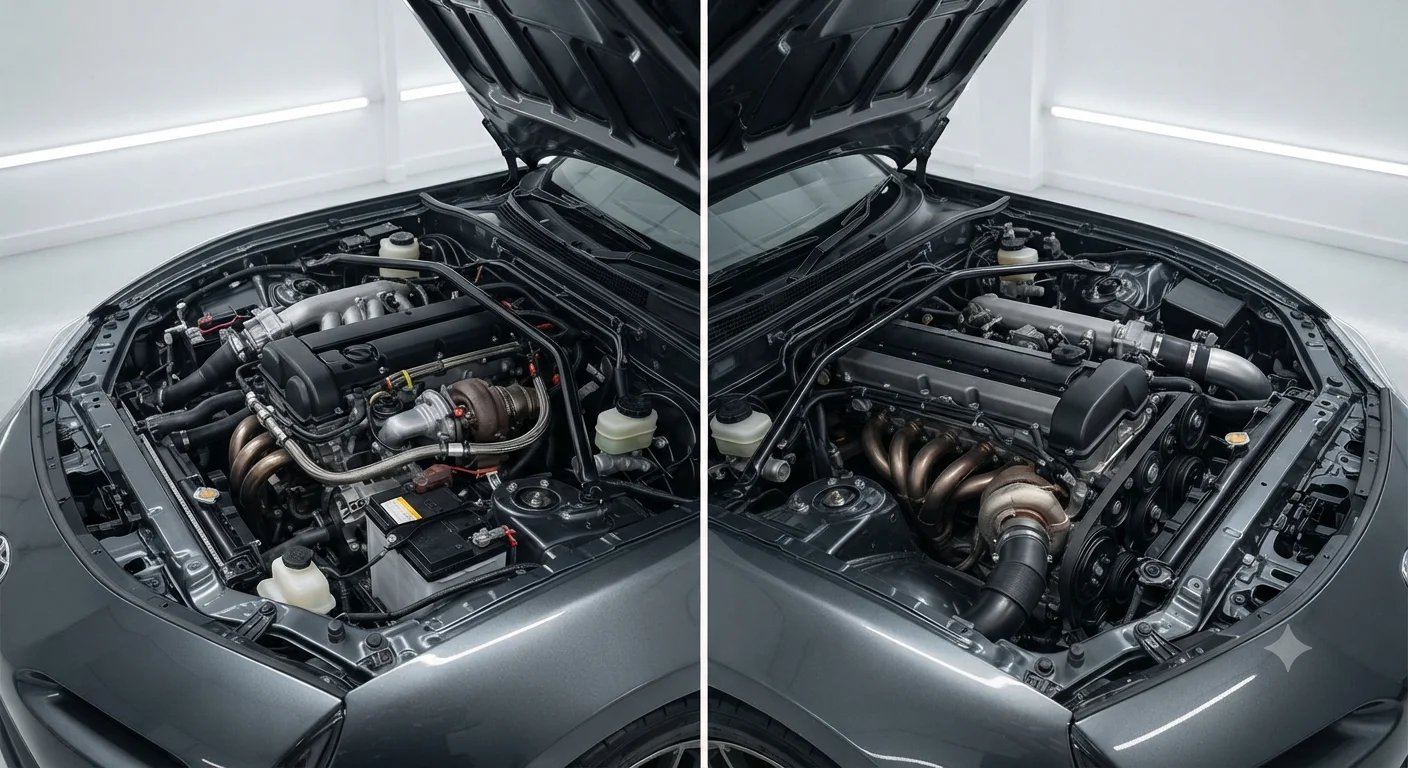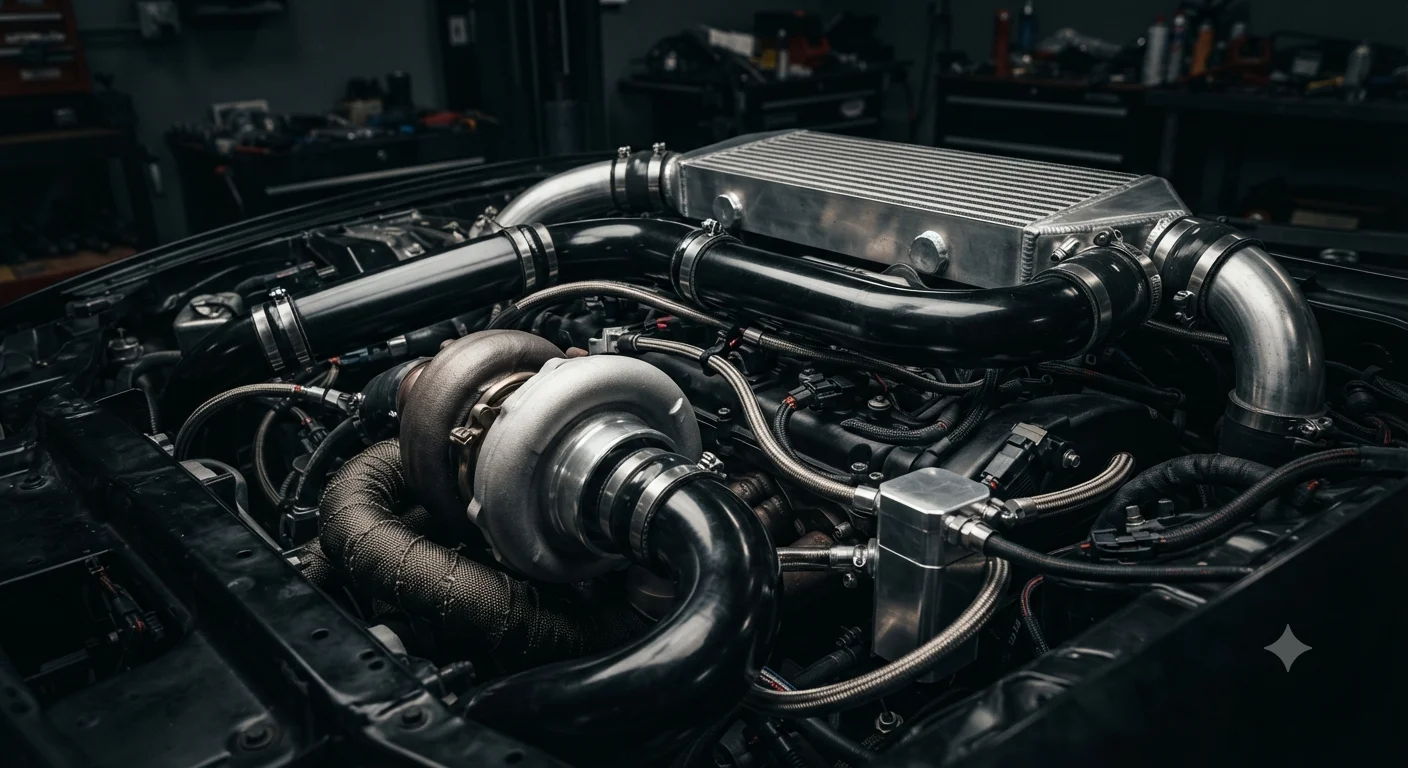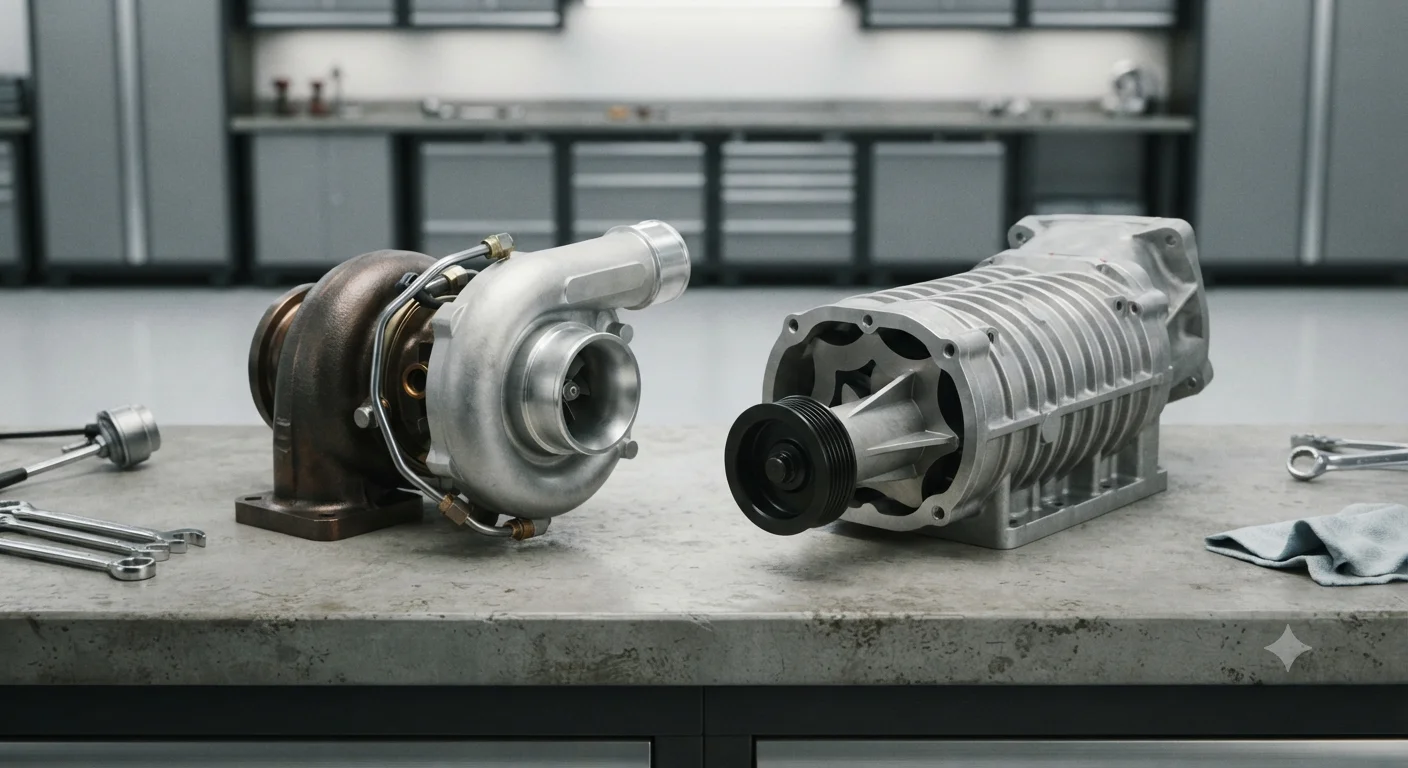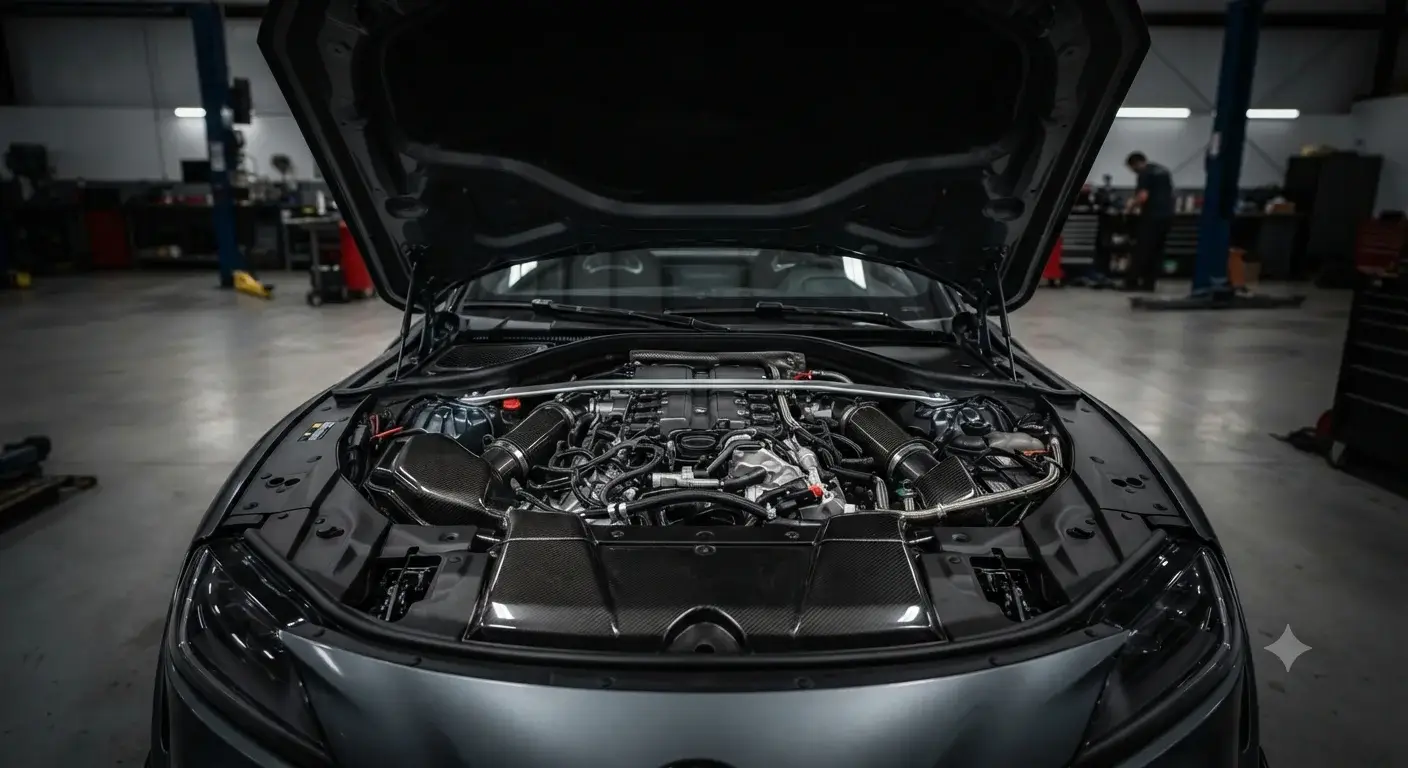
Pop the bonnet on any car and you’re looking at one of a handful of car engine layouts that engineers have refined over more than a century. Whether you’re comparing a Ford Focus to a BMW 3 Series, or simply wondering why your mechanic mentioned a “flat-four,” understanding types of car engines helps you make smarter buying, maintenance, and repair decisions.
This guide covers every major layout on UK roads today, with a detailed inline vs V engine comparison, real-world reliability notes, UK-specific costs, and practical advice you can actually use.
What Is a Car Engine Layout?
Quick answer: A car engine layout describes how the cylinders are arranged inside the engine block in a straight line (inline), in two angled banks (V), horizontally opposed (flat/boxer), or in a rotating triangular configuration (rotary). The layout affects size, smoothness, power delivery, and where the engine can physically fit in the car.
The layout isn’t just an engineering curiosity. It influences.
- Bonnet height and vehicle design inline engines are tall; V engines are wide but shorter
- Smoothness and vibration cylinder arrangement affects how evenly forces balance out
- Weight distribution this changes handling, especially in sportier cars
- Servicing access some layouts are far easier (and cheaper) to work on than others
Most UK family cars use inline three or four-cylinder engines, while performance and luxury vehicles often use V6 or V8 layouts. Understanding this distinction is the foundation for everything else in this guide.
How Engine Layouts Work?
Quick answer: In any layout, pistons move up and down (or side to side) inside cylinders, driving a crankshaft that converts that motion into rotational force to turn the wheels. The layout determines how many cylinders sit in a row and at what angle.
In an inline engine, all cylinders sit in a single row, sharing one cylinder head. In a V engine, cylinders are split into two banks set at an angle (commonly 60°, 90°, or narrower “VR” angles), sharing one crankshaft but usually two cylinder heads. In a flat (boxer) engine, the two banks lie flat at 180°, with pistons moving horizontally rather than vertically.
The number of cylinders and their arrangement determines the engine’s firing order the sequence in which cylinders ignite fuel which directly affects smoothness and the characteristic sound of the engine.
Types Of Car Engines (Full Breakdown)
Quick answer: The main types of car engines on UK roads are inline (straight) engines, V engines, flat (boxer) engines, and rarely today rotary (Wankel) engines. Each is available in petrol, diesel, or hybrid form.
1. Inline Engines (Straight Engines)

Inline engines, often labelled I3, I4, I5, or I6, arrange all cylinders in a single row. They’re the most common layout in the UK, found in everything from the Vauxhall Corsa to the BMW 3 Series (which famously uses an inline-six).
Key characteristics:
- Simpler construction with fewer moving parts than a V engine
- Generally cheaper to manufacture and service
- Compact width, but taller under the bonnet
- Inline-four is the UK’s most common family car engine
- Inline-six is prized for natural smoothness without a balance shaft
2. V Engines

V engines split cylinders into two angled banks, commonly seen as V6, V8, V10, or V12. You’ll find these in performance and luxury models such as Audi’s V6-powered A6 or Jaguar’s V8 F-Type.
Key characteristics:
- Shorter engine length, which suits larger cylinder counts
- Lower bonnet line, useful for sports car design
- More complex, with two cylinder heads and often two exhaust systems
- Typically heavier and costlier to maintain than an equivalent inline engine
3. Flat (Boxer) Engines

Flat engines lay two cylinder banks horizontally opposite each other. Subaru and Porsche are the best-known users, with models like the Subaru Impreza and Porsche 911.
Key characteristics:
- Very low centre of gravity, improving handling balance
- Naturally smooth due to opposing piston movement
- Wider than inline or V engines, which can limit engine bay packaging
- Less common, so specialist knowledge may be needed for repairs
4. Rotary (Wankel) Engines

Rotary engines use a triangular rotor spinning inside an oval housing instead of pistons. Mazda’s RX-8 is the last mainstream UK example, though the technology is largely discontinued for road cars.
Key characteristics:
- Extremely compact and lightweight for the power produced
- Very smooth, high-revving character
- Higher fuel and oil consumption than piston engines
- Rare and increasingly difficult to get serviced in the UK
Types of Car Engines: Quick Comparison Table
| Engine Type | Common Cylinder Counts | Typical UK Examples | Best Known For |
|---|---|---|---|
| Inline | 3, 4, 5, 6 | Ford Focus, BMW 3 Series | Simplicity, low running costs |
| V | 6, 8, 10, 12 | Audi A6, Jaguar F-Type | Compact length, power, prestige |
| Flat (Boxer) | 4, 6 | Subaru Impreza, Porsche 911 | Low centre of gravity, balance |
| Rotary | N/A (rotor-based) | Mazda RX-8 (discontinued) | Compact size, high revs |
Inline-4 vs Inline-6: Which Straight Engine Is Better?
Quick answer: An inline-4 (I4) is smaller, lighter, and cheaper to run, making it the default choice for UK hatchbacks and family cars, while an inline-6 (I6) is naturally smoother and more powerful but longer, heavier, and pricier to buy and maintain.
The I4 vs I6 debate comes up constantly among UK buyers comparing models like a Ford Focus (I4) against a BMW 320i or 330i (historically I6, now mostly I4 turbo in smaller BMWs, with I6 reserved for larger models like the 3 Series’ M340i and the 5 Series).
Inline-4 (I4):
- Most common engine in the UK, found in the vast majority of hatchbacks, superminis, and family saloons
- Lighter, which helps fuel economy and front-end handling balance
- Slightly less smooth than an I6 at idle, though modern balance shafts largely solve this
- Cheaper to insure, tax, and service
Inline-6 (I6):
- Naturally balanced without extra components, giving a distinctive smoothness enthusiasts love.
- Longer engine block, which limits which cars it can practically fit into (usually rear or longitudinally mounted layouts).
- Higher purchase price and running costs, including insurance groups.
- Associated with premium models BMW’s inline-six is a signature feature of its performance and luxury range.
I4 vs I6 Comparison Table
| Factor | Inline-4 | Inline-6 |
|---|---|---|
| Smoothness | Good (often needs balance shafts) | Excellent (naturally balanced) |
| Weight | Lighter | Heavier |
| Length | Shorter | Longer |
| Typical use | Hatchbacks, family cars | Premium saloons, performance cars |
| UK running costs | Lower | Higher |
| Common examples | Ford Focus, VW Golf | BMW 3 Series (M340i), BMW 5 Series |
Which should you choose? If you want the cheapest running costs and don’t mind a slightly less refined feel, an I4 is the sensible choice. If refinement and that classic “silky smooth” straight-six character matter more than cost, an I6 is worth the premium provided your budget stretches to the higher servicing and insurance costs.
Types Of V Engines: V6, V8, V10, V12 And Beyond
Quick answer: V engines come in several configurations V6, V8, V10, V12, and even W-shaped variants like the W16 with cylinder count generally increasing power potential and smoothness, but also increasing size, weight, and running costs.
| V Engine Type | Typical Bank Angle | Common UK Examples | Typical Use |
|---|---|---|---|
| V6 | 60° or 90° | Audi A6, Ford Ranger | Executive cars, SUVs, pickups |
| V8 | 90° | Jaguar F-Type, Range Rover | Performance and luxury SUVs |
| V10 | 72° or 90° | Audi R8, (historically) BMW M5 | High-performance sports cars |
| V12 | 60° | Aston Martin DB12, Rolls-Royce Phantom | Ultra-luxury and flagship performance cars |
| W16 | Two VR8 banks combined | Bugatti Chiron/Veyron | Extreme hypercar performance |
As cylinder count rises, engines generally become smoother and more powerful, but also heavier, thirstier, and more complex to manufacture which is why V10 and V12 engines are almost exclusively reserved for premium and performance models rather than everyday cars.
V6 Vs V8: Key Differences Explained
Quick answer: A V6 is smaller, lighter, and more fuel-efficient, making it common in executive cars and SUVs, while a V8 offers stronger low-end torque and a more distinctive exhaust note, but at the cost of higher fuel consumption and higher UK road tax.
This is one of the most searched comparisons in the “types of V engines” cluster, so it deserves a direct answer.
V6 engines:
- Typically 2.5–3.5 litres in mainstream applications.
- Better fuel economy than an equivalent V8.
- Common in executive saloons, SUVs, and some pickups.
- Usually lower insurance group and VED (road tax) banding.
V8 engines:
- Typically 4.0 liters and above.
- Stronger torque delivery, favored in performance and luxury SUVs.
- More distinctive sound, often a selling point in itself (e.g., Jaguar F-Type V8).
- Higher fuel consumption and higher UK road tax due to larger displacement and emissions.
V6 Vs V8 Comparison Table
| Factor | V6 | V8 |
|---|---|---|
| Typical displacement | 2.5–3.5L | 4.0L+ |
| Fuel economy | Better | Worse |
| UK road tax (VED) | Generally lower | Generally higher |
| Torque character | Moderate, linear | Strong, low-end |
| Sound | Refined | Distinctive, deeper |
| Common UK examples | Audi A6, Ford Ranger | Range Rover, Jaguar F-Type |
Practical takeaway for UK buyers: A V6 suits those wanting a balance of performance and running costs, while a V8 suits buyers prioritising character and performance who’ve budgeted for higher fuel and tax bills.
A Brief History Of The V8 Engine
Quick answer: The V8 engine layout dates back to the early 20th century, gained mass popularity in American cars from the 1930s onwards, and became a fixture of British performance and luxury motoring through marques like Jaguar, Aston Martin, and Rover.
Early V8 development happened in France and the United States in the 1900s–1910s, but it was Ford’s mass-produced flathead V8 in 1932 that made the layout genuinely affordable and popular. In the UK, the V8 found a long-term home in performance and luxury brands:
- Rover famously adopted a lightweight aluminium V8 (originally derived from a Buick design) that powered everything from Land Rovers to TVRs for decades.
- Jaguar built its reputation partly on smooth, powerful V8s in models like the XK and later the F-Type.
- Aston Martin has long paired V8 (and V12) engines with its GT car heritage.
Today, V8s remain popular in performance SUVs and sports cars, though many manufacturers are downsizing to turbocharged V6s or hybrid powertrains to meet emissions targets meaning the traditional naturally aspirated V8 is becoming less common in new UK models.
The Bugatti W16: The Most Extreme Engine Layout Ever Made
Quick answer: The Bugatti W16 engine, used in the Veyron and Chiron, combines two narrow-angle VR8 engine banks into a single W-shaped block with 16 cylinders and four turbochargers, producing extraordinary power in an exceptionally compact space for its output.
The Bugatti W16 engine is often cited as one of the most remarkable examples of engine layout engineering in automotive history. Rather than a conventional V16, Bugatti effectively fused two VR8 engines (themselves a narrow-angle V design pioneered by Volkswagen Group) together at a shared crankshaft, creating a “W” shape when viewed from the front.
Why it matters in the context of engine layouts:
- It demonstrates how far manufacturers can push the W-engine concept first seen in more modest form in cars like the Volkswagen Phaeton (W8) and Bentley Continental GT (W12)
- Despite having 16 cylinders, the W16’s compact width (thanks to the narrow VR bank angle) allowed it to fit in a mid-engine supercar layout
- It required extensive quad-turbocharging and cooling engineering to manage the extreme power and heat output
While a W16 will never appear in a mainstream UK family car, it’s a genuinely useful reference point for understanding just how flexible the “V” and “W” engine concept can be when pushed to its engineering limits.
Flat-4 Engines: What Makes Them Different
Quick answer: A flat-4 (or boxer-4) engine has four cylinders arranged in two horizontally opposed pairs of two, giving a very low centre of gravity and a naturally smooth, distinctive engine note most associated in the UK with Subaru’s mainstream models.
Unlike a V engine, where the two banks meet at an angle above the crankshaft, a flat-4’s pistons move directly toward and away from each other on the same horizontal plane, with opposing pistons reaching top-dead-centre at the same time. This “boxing” motion is where the boxer engine name comes from.
Key flat-4 characteristics:
- Very low engine height, lowering the car’s centre of gravity and benefiting handling
- Distinctive off-beat exhaust note, especially noticeable in turbocharged Subaru models like the WRX
- Wider packaging than an inline-4, which can complicate engine bay design in smaller cars
- Historically used by Subaru across most of its mainstream range, and by early Volkswagen Beetles (air-cooled flat-4)
Subaru Boxer Engine Reliability: What Owners Should Know?
Quick answer: Modern Subaru boxer engines are generally reliable with proper maintenance, but certain older models (particularly early-to-mid 2000s EJ25 engines) developed a reputation for head gasket failures, which later revisions largely addressed.
Subaru boxer reliability is a frequently searched topic because the brand’s reputation has been mixed depending on the era and engine code:
- Older EJ-series engines (widely used through the 1990s and 2000s) were prone to head gasket failures, largely linked to the engine’s specific head design and heat distribution across the horizontally opposed layout
- Later FA and FB-series engines (used from the early 2010s onwards) addressed many of these issues, with improved cooling and gasket design
- Timing chain (rather than belt) designs in newer models reduced one common maintenance cost seen in older belt-driven boxer engines
- Oil consumption between services is still worth monitoring on any boxer engine, as horizontally opposed designs can be marginally more prone to this than upright inline or V layouts
Practical advice for buyers: If you’re considering a used Subaru, ask specifically about head gasket history on older models, and check for a full service history that confirms recommended maintenance intervals were followed this is the single biggest factor in long-term boxer engine reliability.
Rotary Engine Cars: A Short History And List
Quick answer: Rotary (Wankel) engines have appeared in a small number of production cars over the decades, most notably from Mazda and NSU, with Mazda’s RX-8 (discontinued in 2012) being the last widely available example on UK roads.
Notable rotary engine cars:
- NSU Ro80 (1967) — one of the earliest production cars to use a Wankel rotary engine
- Mazda Cosmo (1967) — Mazda’s first rotary-engined production car
- Mazda RX-7 (1978–2002) — a long-running rotary sports car popular with UK enthusiasts and still seen at classic car meets
- Mazda RX-8 (2003–2012) — the last mainstream rotary car sold new in the UK, known for its high-revving character and distinctive engine note
- Mazda’s more recent rotary range-extender concept — used as a small onboard generator in some hybrid concept and limited-production vehicles rather than as the primary drive engine
Rotary engines never achieved mass-market success due to higher fuel and oil consumption, emissions challenges, and apex seal durability concerns, but they retain a dedicated following in the UK classic and modified car scene.
Inline Vs V Engine: The Complete Comparison
Quick answer: Inline engines are simpler, cheaper to build and service, and naturally balanced in four and six-cylinder form, while V engines are more compact lengthwise, suit higher cylinder counts, and are common in performance and luxury cars but cost more to maintain due to their added complexity.
This is the comparison most UK buyers actually search for, so let’s break it down properly.
Design And Packaging
An inline engine is tall and narrow, which works well in family hatchbacks and saloons where engine bay width is limited. A V engine is shorter but wider, which suits cars where a low bonnet line matters more than width — think sports cars and performance saloons.
Smoothness And Refinement
An inline-six is often described by engineers as “perfectly balanced” without extra components, which is why BMW has used the layout for decades in its 3 and 5 Series models. V6 engines, by contrast, typically need balance shafts to smooth out vibration, adding cost and complexity.
Servicing And Running Costs
Inline engines generally have a single cylinder head, a single exhaust manifold, and easier access to spark plugs and other components. V engines often require removing more parts to reach rear-facing spark plugs or coolant hoses, which increases labour time and, therefore, your bill at the garage.
Power And Performance
V engines allow manufacturers to fit more cylinders into a shorter space, which is why high-cylinder-count engines (V8, V10, V12) are almost always V-shaped rather than inline. If you want raw power in a compact footprint, V engines have the edge.
Inline Vs V Engine Comparison Table
| Factor | Inline Engine | V Engine |
|---|---|---|
| Complexity | Lower | Higher |
| Manufacturing cost | Lower | Higher |
| Servicing cost | Generally lower | Generally higher |
| Length | Longer | Shorter |
| Width | Narrower | Wider |
| Smoothness (6-cyl) | Naturally balanced | Needs balance shafts |
| Common in UK | Family cars, hatchbacks | Performance and luxury cars |
| Max practical cylinders | Usually up to 6 | Up to 12+ |
Other Layouts You Might Encounter
Quick answer: Beyond inline and V, you may also come across W engines (used in some Volkswagen Group performance cars) and horizontally opposed engines in specialist or classic vehicles.
- W engines combine two narrow-angle V banks into a compact block, historically used in cars like the Bentley Continental GT
- Classic and specialist layouts, including older opposed-piston or radial designs, are rare on UK roads but occasionally seen in classic car circles
Pros And Cons Of Each Layout
Quick answer: Inline engines win on simplicity and cost, V engines win on power-to-size ratio, and flat engines win on handling balance each trade-off suits a different type of driver.
Inline Engine: Pros and Cons
Pros:
- Lower manufacturing and servicing costs
- Fewer parts to fail
- Naturally smooth in four and six-cylinder form
- Easier for independent garages to work on
Cons:
- Takes up more length under the bonnet
- Limited practicality above six cylinders
- Taller engine can raise bonnet height, affecting aerodynamics
V Engine: Pros and Cons
Pros:
- Compact length suits high cylinder counts
- Lower bonnet line for sportier styling
- Strong power delivery in performance applications
Cons:
- More expensive to service, with harder-to-reach components
- Heavier overall due to two cylinder heads
- More complex cooling and exhaust systems
Flat (Boxer) Engine: Pros and Cons
Pros:
- Lowest centre of gravity of the main layouts
- Naturally smooth due to opposing piston motion
- Excellent handling balance in performance cars
Cons:
- Wider packaging can complicate engine bay design
- Fewer specialist mechanics familiar with the layout
- Historically associated with higher oil consumption in some models
Common Problems By Engine Layout
Quick answer: Inline engines commonly suffer from timing chain wear and cambelt issues, V engines are prone to coolant leaks from harder-to-access hoses, and flat engines have a reputation for head gasket problems in certain older Subaru models.
| Engine Type | Common Issues | Typical Cause |
|---|---|---|
| Inline | Timing chain rattle, cambelt failure | Age, missed service intervals |
| V | Coolant leaks, uneven bank wear | Complex hose routing, heat cycling |
| Flat (Boxer) | Head gasket failure (older models) | Design-specific heat distribution |
| Rotary | Apex seal wear, high oil use | High-rev operation, seal design |
Signs, Symptoms and Causes Of Engine Layout-Related Issues
Quick answer: Unusual noises, rough idling, warning lights, or fluid leaks are the clearest signs something needs attention, regardless of engine layout but where the fault typically appears can hint at the underlying layout-specific cause.
Common warning signs across all layouts:
- Rattling or ticking noise on startup (often timing components)
- Uneven idle or vibration through the cabin
- Coolant or oil residue under the car
- Dashboard warning lights, particularly engine management or temperature warnings
- Reduced power or poor fuel economy
Layout-specific pointers:
- Inline engines: A rattle from the front of the engine often points to timing chain stretch
- V engines: A coolant smell with no visible puddle can indicate a leak hidden between the cylinder banks
- Flat engines: White, milky oil on the dipstick can be an early sign of head gasket trouble
If you notice any of these signs, it’s worth booking a diagnostic check promptly catching issues early is almost always cheaper than waiting.
Repair Options And UK Costs
Quick answer: Typical UK repair costs range from around £150–£400 for straightforward inline engine work like a timing chain tensioner, to £800–£2,000+ for V engine jobs involving harder-to-reach components always get a written quote before authorising work.
| Repair Type | Inline Engine (Approx. UK Cost) | V Engine (Approx. UK Cost) |
|---|---|---|
| Spark plug replacement | £80–£150 | £150–£350 |
| Timing chain/belt | £300–£700 | £600–£1,200 |
| Head gasket replacement | £400–£800 | £800–£1,800 |
| Coolant leak repair | £100–£300 | £250–£600 |
These figures are general UK estimates and vary by make, model, and garage. Always request a detailed quote, and consider an independent specialist for older or less common layouts like flat and rotary engines.
Maintenance Tips by Engine Type
Quick answer: Stick to the manufacturer’s service schedule, use the correct oil grade, and pay particular attention to cambelt or timing chain intervals these are the single biggest factor in long-term engine reliability across every layout.
General maintenance tips:
- Follow your manufacturer’s service intervals exactly don’t stretch them to save money short-term
- Use the correct oil specification, not just the correct viscosity
- Address warning lights promptly rather than waiting for the next service
- Keep coolant levels topped up and check for leaks, especially on V engines
- Listen for unusual noises on cold starts, a common early warning sign
- Inline engine specifics: Timing chains are designed to last the engine’s life but can stretch with poor maintenance don’t skip oil changes.
- V engine specifics: Ask your garage to check both cylinder banks evenly during servicing, as wear can occur unevenly.
- Flat engine specifics: Monitor oil consumption between services, particularly on higher-mileage examples.
Buying Guide: Choosing the Right Layout
Quick answer: Choose an inline engine for lower running costs and everyday reliability, a V engine if you want power and prestige and can afford higher servicing costs, and a flat engine if handling balance and driving feel matter most to you.
Consider an inline engine if you:
- Want the lowest overall running and repair costs
- Drive mostly in urban or mixed UK conditions
- Prefer a wide choice of independent garages for servicing
Consider a V engine if you:
- Want stronger performance in a compact package
- Are buying a premium or performance model
- Can budget for higher servicing costs
Consider a flat engine if you:
- Prioritise handling and low centre of gravity
- Are considering a Subaru or Porsche specifically
- Don’t mind seeking out a specialist for certain repairs
Mistakes to Avoid
Quick answer: The biggest mistakes buyers make are ignoring cambelt/timing chain history, assuming all engines have the same service intervals, and choosing a V or flat engine without budgeting for higher long-term running costs.
- Don’t assume a used car’s timing belt has been changed always check the service history
- Don’t judge running costs on fuel economy alone; factor in servicing complexity
- Don’t ignore minor noises, especially on inline engines where chain wear can worsen quickly
- Don’t buy a rare layout (like rotary or flat) without confirming a specialist garage is nearby
- Don’t skip a pre-purchase inspection, particularly on higher-mileage V engine cars
Myths vs Facts
Quick answer: A common myth is that V engines are always more powerful than inline engines in reality, power depends on displacement, tuning, and technology, not the layout itself.
| Myth | Fact |
|---|---|
| V engines are always more powerful | Power depends on displacement and tuning, not layout alone |
| Inline engines can’t be smooth | Inline-six engines are naturally well balanced without extra parts |
| Flat engines are only for sports cars | Flat engines have also been used in some everyday Subaru models |
| More cylinders always means better fuel economy | More cylinders often means higher fuel consumption, not lower |
Checklist: Assessing An Engine Before You Buy
Use this quick checklist when viewing a used car.
- Confirm the engine layout and cylinder count match the listing
- Check full service history, especially cambelt/timing chain records
- Look for coolant or oil residue around the engine bay
- Start the engine cold and listen for unusual noises
- Check the dipstick for milky or discoloured oil
- Ask whether a specialist garage is available locally for that layout
- Get a pre-purchase inspection from an independent mechanic
Frequently Asked Questions
What is a car engine layout?
A car engine layout is the physical arrangement of cylinders inside the engine block for example, in a straight line (inline) or in two angled banks (V).
What’s the difference between inline and V engines?
Inline engines arrange cylinders in a single row and are simpler and generally cheaper to service, while V engines split cylinders into two banks, allowing a shorter engine that suits higher cylinder counts but costs more to maintain.
Which is better, inline or V engine?
Neither is universally “better” inline engines suit everyday, cost-conscious driving, while V engines suit performance and luxury applications where compact length and power matter more than running costs.
Are inline engines cheaper to service?
Generally, yes. Inline engines have a single cylinder head and simpler access to components, which typically reduces labor time and cost compared with an equivalent V engine.
Why do BMW use inline-six engines?
BMW favors the inline-six because it’s naturally well balanced without needing extra components like balance shafts, giving smooth, refined performance.
What is a flat or boxer engine?
A flat engine, also called a boxer engine, has two cylinder banks laid horizontally opposite each other, giving a low center of gravity used notably by Subaru and Porsche.
Are rotary engines still used in cars?
Rotary (Wankel) engines are largely discontinued in mainstream road cars, with Mazda’s RX-8 being the last well-known UK example, though the technology occasionally appears in range-extender concepts.
Do more cylinders mean better performance?
Not necessarily more cylinders can add smoothness and top-end power, but factors like turbocharging, displacement, and tuning often matter more than cylinder count alone.
How much does it cost to fix a timing chain in the UK?
Timing chain repairs typically cost between £300 and £700 for inline engines, and £600 to £1,200 for V engines, depending on the make, model, and garage.
Is a V6 more reliable than an inline-four?
Not automatically reliability depends more on build quality, maintenance history, and specific engine design than on the number of cylinders or layout.
Why are V engines used in sports cars?
V engines allow a shorter overall length, enabling a lower bonnet line and better weight distribution, both of which suit sports car design and handling.
What engine layout is most common in UK family cars?
The inline-four is by far the most common layout in UK family cars, offering a good balance of cost, efficiency, and reliability.
Can I get any engine layout serviced at a normal garage?
Most inline and V engines are serviced easily by general garages, but rarer layouts like flat or rotary engines may need a specialist familiar with their specific quirks.
Is it worth buying a car with a rare engine layout?
It can be, if you’re specifically after the handling or driving characteristics it offers, but check that specialist parts and servicing are realistically available near you first.
What should I check before buying a used car with a V engine?
Check the full service history, inspect for coolant leaks between the cylinder banks, and consider a pre-purchase inspection, since V engine repairs are typically more labour-intensive and costly.
Conclusion
Understanding car engine layouts from inline and V engines to flat and rotary designs helps you make a more informed decision, whether you’re buying your next car or simply trying to understand a strange noise under the bonnet.
In the inline vs V engine debate, there’s no single winner: inline engines offer simplicity and lower running costs, while V engines deliver compact power for performance and luxury applications. The right choice comes down to your budget, driving needs, and how much you value refinement versus outright power.
Call to Action
Thinking about your next car, or wondering what’s really going on under your current bonnet? Book a pre-purchase inspection or a diagnostic check with a trusted UK garage before you commit it’s the easiest way to avoid costly surprises down the road.