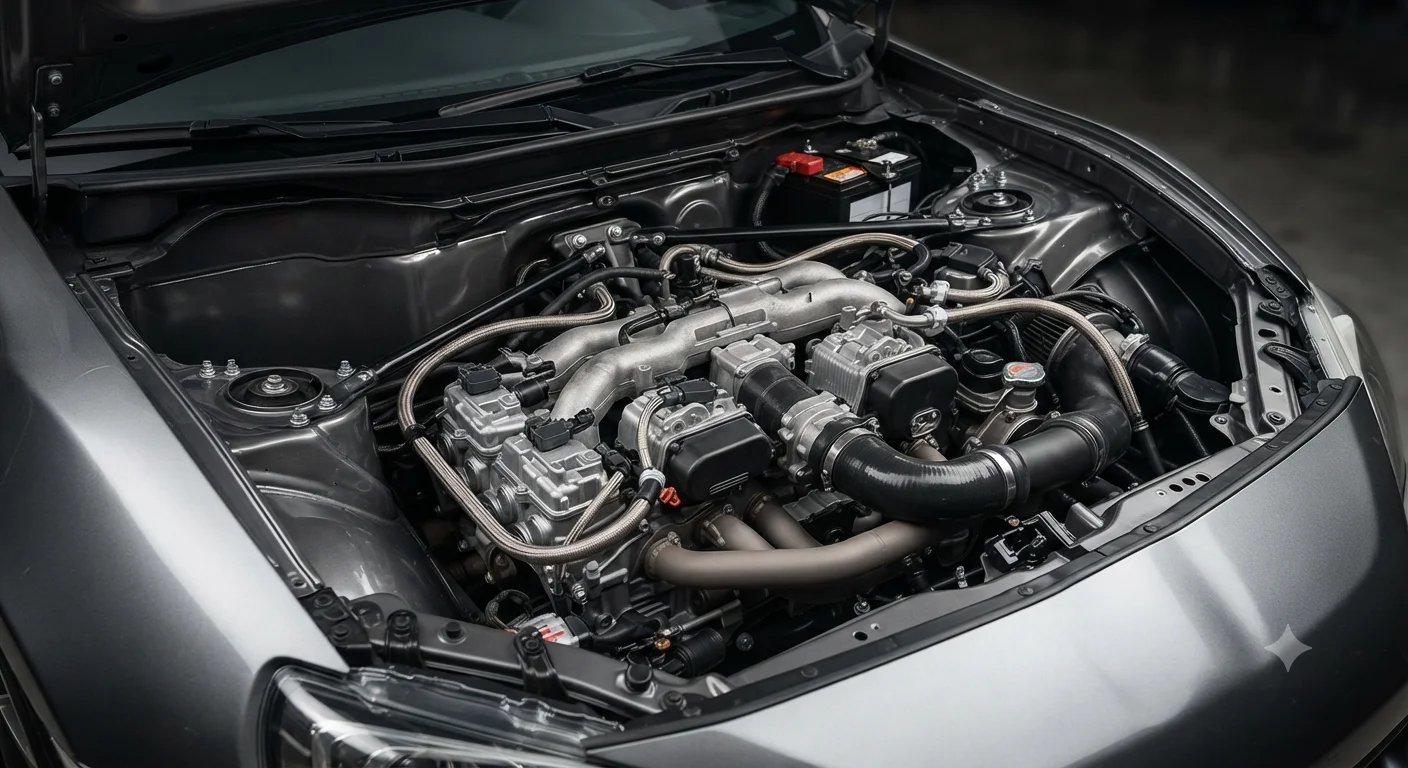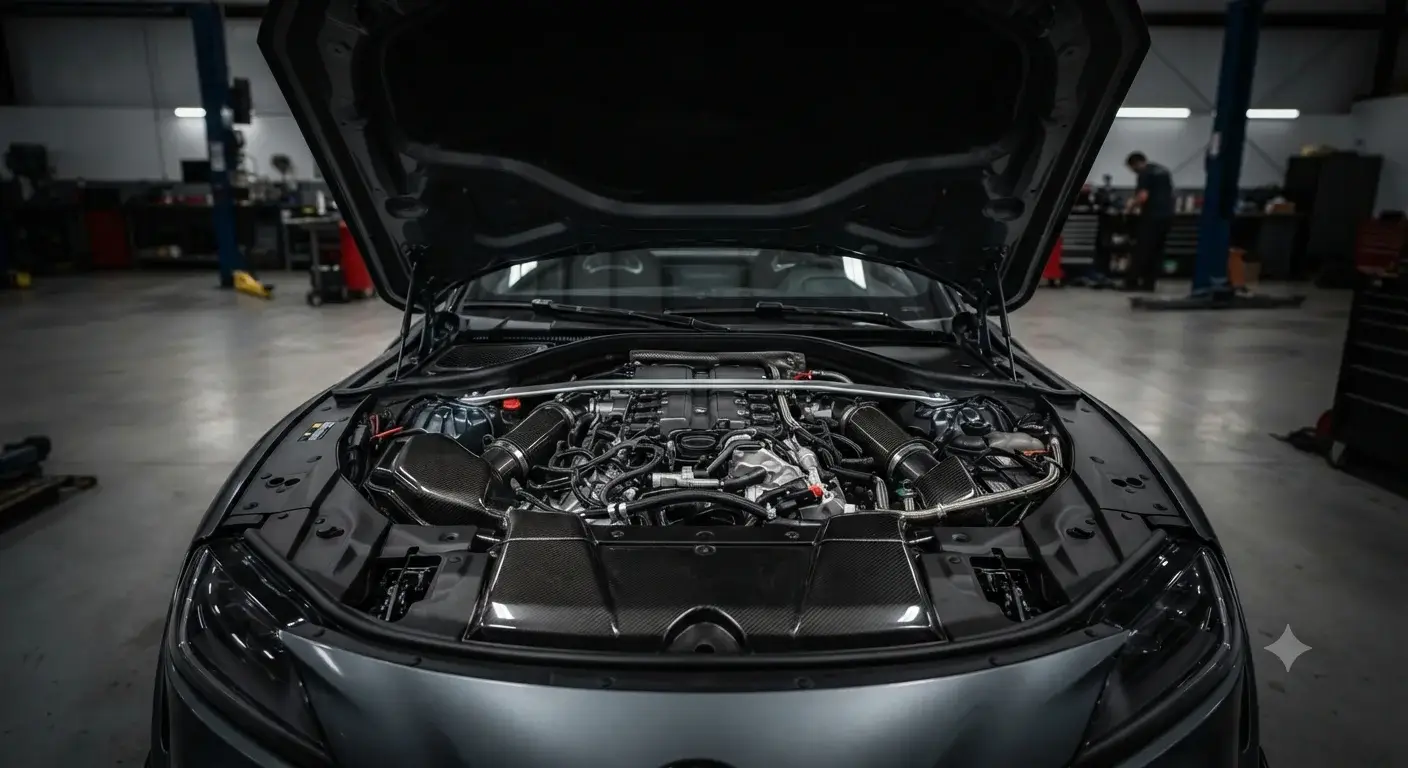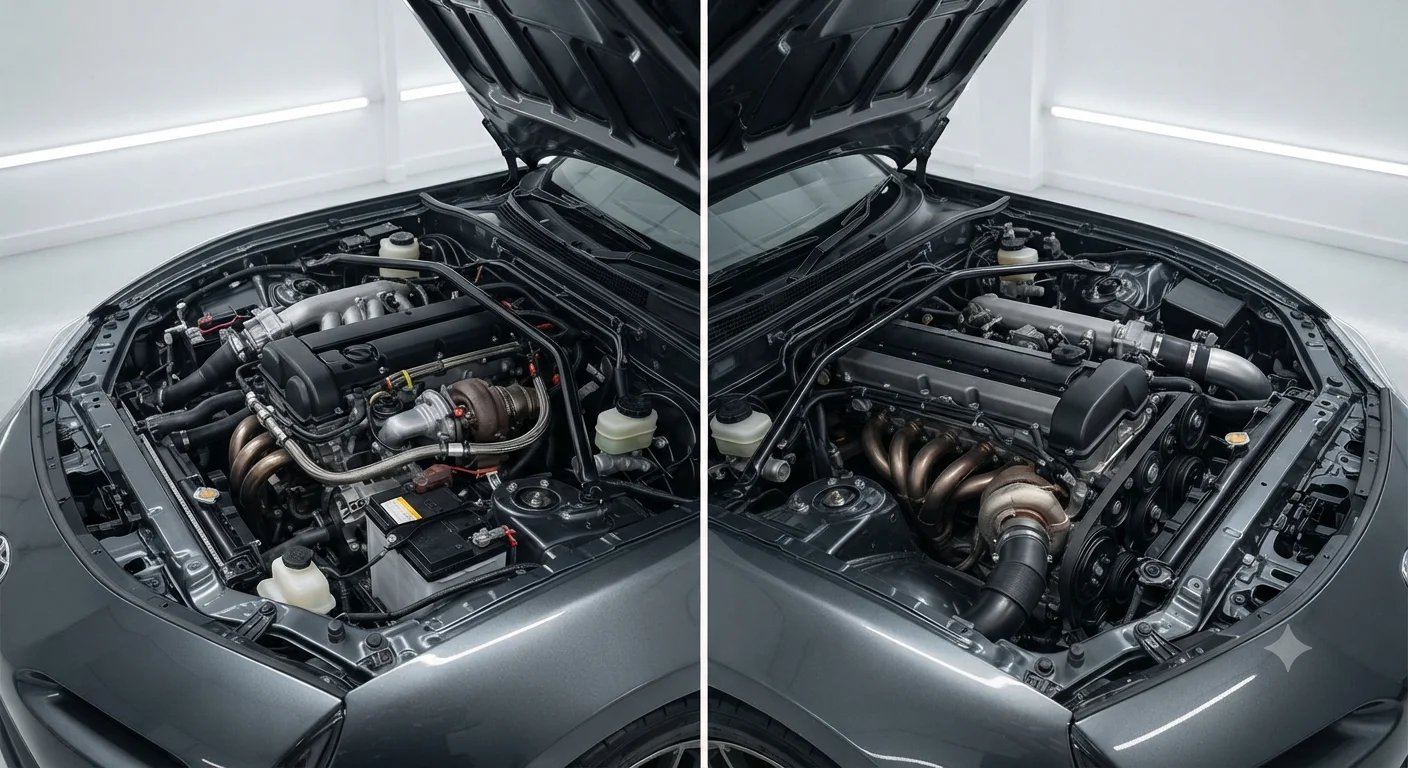
Inline-4 Vs Inline-6 engine, If you’ve been comparing trim levels on a BMW, Toyota, or Mercedes and noticed some versions run an inline 4 engine while pricier models get a straight six engine, you’re not alone in wondering what the real difference is. This is one of the most searched engine comparisons in the UK, and for good reason it affects everything from smoothness and sound to your monthly running costs.
This guide breaks down i4 vs i6 in full: how each layout works, which is smoother, which costs less to own, and which makes sense for your driving needs. This article is part of our wider guide to car engine layouts and types of car engines, which covers V engines, boxer engines, and rotary engines too.
What Is An Inline-4 Engine?

Quick answer: An inline-4 (I4) engine has four cylinders arranged in a single straight row, sharing one cylinder head it’s the most common engine layout on UK roads, found in the vast majority of hatchbacks, superminis, and family cars.
The inline-4 is the default engine layout for everyday UK motoring. Its compact width, straightforward construction, and low manufacturing cost make it the natural choice for cars like the Ford Focus, Volkswagen Golf, and Vauxhall Astra. Most inline-4 engines in modern UK cars are turbocharged to boost power and torque without increasing displacement, helping manufacturers meet fuel economy and emissions targets.
Typical inline-4 characteristics:
- Displacement usually between 1.0 and 2.5 litres in mainstream cars
- Compact under the bonnet, suiting front-wheel-drive layouts
- Lower manufacturing and servicing costs than six-cylinder alternatives
- Can feel slightly less smooth at idle than an inline-6, though modern balance shafts largely offset this
What Is A Straight-Six (Inline-6) Engine?

Quick answer: A straight-six (inline-6) engine has six cylinders arranged in a single row, and is prized by engineers for being naturally balanced without needing extra components BMW is the UK’s best-known user of this layout, fitting it to models like the 3 Series M340i and the 5 Series.
The straight six engine has a reputation among enthusiasts as one of the smoothest, most refined layouts ever designed. Unlike a V6, which typically needs balance shafts to cancel out vibration, an inline-6’s firing order naturally cancels out primary and secondary forces, giving it an inherently smooth character straight out of the factory.
Typical straight-six characteristics:
- Displacement usually between 2.0 and 3.5 litres, often turbocharged in modern applications
- Longer engine block than an I4, which limits which cars it can practically fit into
- Associated with premium and performance models due to higher production cost
- Delivers strong, linear power delivery, especially prized in performance driving
How Inline Engines Work?

Quick answer: In both inline-4 and inline-6 engines, all cylinders sit in a single row and share one crankshaft and cylinder head, with pistons firing in a specific sequence (firing order) to keep the crankshaft turning smoothly.
The key engineering difference between the two comes down to how well the layout balances the forces created by moving pistons. In an inline-4, the pistons’ up-and-down motion creates what engineers call “secondary imbalance forces,” which is why some I4 engines feel slightly buzzier at certain revs unless fitted with a balance shaft.
In an inline-6, the extra two cylinders and their firing order cancel out both primary and secondary forces naturally, which is the main reason straight-six engines have such a smooth reputation.
I4 Vs I6: The Complete Comparison
Quick answer: An inline-4 is smaller, lighter, and cheaper to buy and run, while an inline-6 is naturally smoother, more powerful, and better suited to premium or performance driving but costs more across purchase price, servicing, and insurance.
I4 vs I6 Comparison Table
| Factor | Inline-4 (I4) | Inline-6 (I6) |
|---|---|---|
| Cylinder count | 4 | 6 |
| Typical displacement | 1.0–2.5L | 2.0–3.5L |
| Smoothness | Good (may need balance shaft) | Excellent (naturally balanced) |
| Weight | Lighter | Heavier |
| Engine length | Shorter | Longer |
| Purchase price | Lower | Higher |
| Servicing cost | Lower | Higher |
| Insurance group | Generally lower | Generally higher |
| Common UK examples | Ford Focus, VW Golf, Toyota Corolla | BMW 3 Series (M340i), BMW 5 Series, Toyota Supra |
| Best suited to | Everyday, cost-conscious driving | Premium, performance-focused driving |
Power And Refinement
A straight-six will typically produce more power and torque than a same-generation inline-4 of similar technology, simply because it has more cylinders and greater total displacement. But modern turbocharged inline-4 engines have closed much of this gap many hot hatches now produce power figures that would have needed a six-cylinder engine a decade ago.
Cost Of Ownership
This is often the deciding factor for UK buyers. An inline-4 will almost always cost less to insure, tax, and service than an equivalent inline-6, purely because of its simpler construction and lower parts cost. If you’re budgeting carefully, this difference adds up significantly over a typical ownership period.
Benefits Of An Inline-4 Engine
Quick answer: The inline-4’s biggest benefits are lower running costs, compact packaging, and wide availability of parts and specialist knowledge across UK garages.
- Lower purchase price across most model ranges
- Cheaper insurance and road tax in most cases
- Compact size suits smaller, front-wheel-drive cars
- Easier and cheaper to service, with parts widely available
- Good fuel economy, especially in modern turbocharged forms
Benefits Of A Straight-Six Engine

Quick answer: The straight-six’s biggest benefits are its naturally smooth, refined character, strong linear power delivery, and the prestige associated with the layout in premium models.
- Naturally balanced without extra components
- Distinctive, refined engine note prized by enthusiasts
- Strong, linear power delivery ideal for performance driving
- Associated with premium build quality and driving experience
- Often paired with rear-wheel-drive layouts that enthusiasts favour for handling
Common Problems: Inline-4 vs Inline-6
Quick answer: Inline-4 engines commonly suffer timing chain stretch and turbocharger wear on higher-mileage examples, while inline-6 engines can develop cooling system issues and higher long-term maintenance costs simply due to having more components.
| Engine Type | Common Issues | Typical Cause |
|---|---|---|
| Inline-4 | Timing chain rattle, turbo wear, carbon build-up (direct injection) | Age, missed service intervals, short journeys |
| Inline-6 | Cooling system wear, higher long-term maintenance costs | More components, higher heat cycling over engine length |
Signs, Symptoms And Causes Of Inline Engine Issues
Quick answer: Watch for rattling on cold start, rough idle, reduced power, or dashboard warning lights these apply to both I4 and I6 engines, though the underlying cause can differ by layout.
Common warning signs:
- Rattling or ticking noise on startup, often pointing to timing chain wear
- Rough or uneven idle
- Loss of power or hesitation under acceleration
- Engine management or temperature warning lights
- Increased oil consumption between services
Layout-specific pointers:
- On an inline-4, a whining noise under acceleration can indicate turbocharger wear
- On an inline-6, uneven temperature readings can point to cooling system issues, given the engine’s greater length
If any of these signs appear, book a diagnostic check promptly early intervention is almost always cheaper than waiting for a fault to worsen.
Repair Options And UK Costs
Quick answer: Typical UK repair costs for an inline-4 range from around £80–£700 for common jobs like spark plugs or a timing chain, while inline-6 repairs typically run £150–£1,000 or more for the same jobs, reflecting the extra parts and labour involved.
| Repair Type | Inline-4 (Approx. UK Cost) | Inline-6 (Approx. UK Cost) |
|---|---|---|
| Spark plug replacement | £80–£150 | £150–£280 |
| Timing chain replacement | £300–£700 | £500–£1,000 |
| Turbocharger replacement | £500–£1,200 | £700–£1,500 |
| Cooling system repair | £150–£350 | £250–£550 |
These are general UK estimates and will vary by make, model, and garage. Always request a written quote before authorising work, and consider an independent specialist for premium inline-6 models like BMW.
Maintenance Tips
Quick answer: Stick to manufacturer service intervals, use the correct oil specification, and pay close attention to timing chain health this is the single biggest factor in long-term reliability for both inline-4 and inline-6 engines.
- Follow your manufacturer’s service schedule exactly, particularly oil change intervals
- Use the correct oil grade many modern turbocharged I4 and I6 engines are sensitive to this
- Address unusual noises or warning lights promptly rather than waiting for the next service
- On inline-6 engines, ask your garage to check coolant levels and hoses along the full engine length
- On turbocharged inline-4 engines, allow the engine to idle briefly after hard driving to protect the turbo
Buying Guide: Which Should You Choose?
Quick answer: Choose an inline-4 if low running costs and everyday practicality matter most, and choose an inline-6 if refinement, power, and driving character are worth paying more for.
Consider an inline-4 if you:
- Want the lowest possible running and servicing costs
- Drive mainly in urban or mixed UK conditions
- Prefer a wide choice of independent garages for servicing
Consider a straight-six if you:
- Want a naturally smooth, refined driving experience
- Are buying a premium or performance-focused model
- Can budget for higher servicing, insurance, and fuel costs
Mistakes To Avoid
Quick answer: The most common mistakes are choosing an inline-6 without budgeting for higher running costs, ignoring timing chain history on a used inline-4, and assuming all six-cylinder engines are automatically more reliable.
- Don’t assume a straight-six is always more reliable reliability depends on maintenance history, not cylinder count alone
- Don’t ignore timing chain service history on a used inline-4, especially on high-mileage examples
- Don’t underestimate the ongoing cost difference between I4 and I6 ownership it adds up over several years
- Don’t skip a pre-purchase inspection on a used inline-6, given the higher cost of repairs if something is wrong
Myths Vs Facts
Quick answer: A common myth is that inline-6 engines are always faster than inline-4 engines in reality, modern turbocharged I4 engines often match or exceed the power output of older naturally aspirated I6 engines.
| Myth | Fact |
|---|---|
| Inline-6 is always faster than inline-4 | Turbocharged I4 engines can match or beat older naturally aspirated I6 outputs |
| Inline-4 engines are always rough or unrefined | Modern I4 engines with balance shafts are smooth in everyday driving |
| More cylinders always means better fuel economy | Inline-4 engines are generally more fuel-efficient than inline-6 |
| Straight-six engines are outdated technology | Manufacturers like BMW continue actively developing modern turbocharged I6 engines |
Checklist: Assessing An Inline Engine Before You Buy
- Confirm whether the car is inline-4 or inline-6 (check the exact model and trim, not just the badge)
- Check full service history, especially timing chain records
- Start the engine cold and listen for rattling or ticking
- Check for smooth idle with no unusual vibration
- Ask about turbocharger health on turbocharged I4 models
- Compare insurance quotes before committing, as I6 models can differ significantly
- Get a pre-purchase inspection, especially for higher-mileage inline-6 cars
Frequently Asked Questions
What is an inline-4 engine?
An inline-4 engine has four cylinders arranged in a single straight row sharing one cylinder head, making it the most common engine layout in UK cars today.
What is a straight-six engine?
A straight-six (inline-6) engine has six cylinders in a single row, prized for being naturally balanced and smooth without needing extra components like balance shafts.
Is an inline-6 better than an inline-4?
Neither is universally better an inline-4 suits cost-conscious, everyday driving, while an inline-6 suits buyers who value smoothness, power, and refinement and can afford higher running costs.
Why is a straight-six smoother than an inline-4?
A straight-six’s firing order naturally cancels out primary and secondary vibration forces, whereas an inline-4 can experience secondary imbalance that sometimes requires a balance shaft to smooth out.
Do inline-4 engines need a balance shaft?
Many modern inline-4 engines use a balance shaft to reduce vibration, though not all do it depends on the specific engine design and displacement.
Why does BMW still use inline-6 engines?
m because of their natural smoothness and the strong association with the brand’s performance and luxury identity, particularly in the 3 Series and 5 Series ranges.
Are inline-6 engines more expensive to insure?
Generally, yes inline-6 engines are typically found in higher-power, higher-value models, which usually places them in higher insurance groups than comparable inline-4 cars.
How much does it cost to service an inline-6 engine in the UK?
Servicing an inline-6 typically costs more than an inline-4 due to the extra components and labour time, though exact costs vary by make, model, and garage.
Can an inline-4 be as powerful as an inline-6?
Yes modern turbocharged inline-4 engines can match or exceed the power output of older naturally aspirated inline-6 engines, though a six-cylinder still typically offers smoother delivery.
What cars use an inline-6 engine in the UK?
Notable UK examples include the BMW 3 Series (M340i), BMW 5 Series, Toyota Supra, and Mercedes-Benz models fitted with the brand’s turbocharged straight-six engines.
Is an inline-4 engine reliable?
Yes, when properly maintained inline-4 engines are generally reliable, though turbocharged versions benefit from careful attention to oil quality and cool-down periods after hard driving.
What’s the main disadvantage of a straight-six engine?
The main disadvantages are higher purchase price, higher running costs, and a longer engine block that limits which car layouts it can practically fit into.
Do inline-4 engines use less fuel than inline-6?
Generally, yes inline-4 engines typically offer better fuel economy than inline-6 engines of similar technology, due to lower overall displacement and weight.
Is it worth paying more for a straight-six BMW over a four-cylinder model?
It depends on your priorities if refinement and driving character matter more to you than running costs, many owners find the inline-six upgrade worthwhile.
What should I check before buying a used inline-6 car?
Check the full service history, listen for unusual noises on a cold start, inspect the cooling system, and consider a pre-purchase inspection given the higher cost of repairs if issues are found.
Conclusion
The inline 4 engine and straight six engine each serve a clear purpose in the UK car market. An inline-4 offers practicality, affordability, and reliability for everyday driving, while an inline-6 delivers a naturally smooth, refined experience that enthusiasts and premium buyers are willing to pay more for.
Neither is objectively “better” in the i4 vs i6 debate the right choice depends on your budget, driving priorities, and how much you value that classic straight-six character.
For a broader look at how these layouts compare to V engines, boxer engines, and rotary engines, see our complete guide to car engine layouts and types of car engines.
Call To Action
Weighing up an inline-4 against an inline-6 for your next car? Book a test drive of both where possible, and get a pre-purchase inspection on any used inline-6 model before you commit it’s the best way to confirm you’re getting the smoothness and reliability you’re paying for.