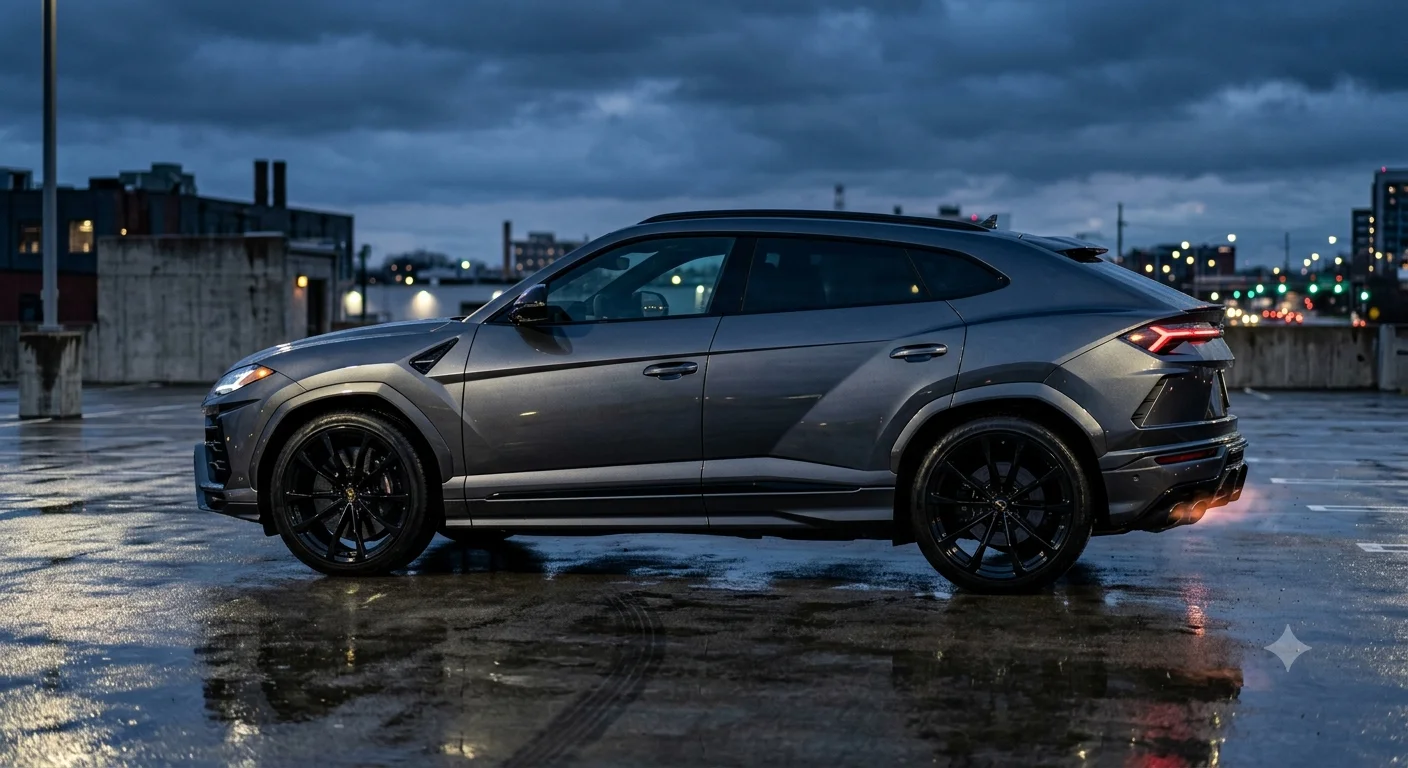
V6 Vs V8 Engine few engine debates get UK car buyers talking quite like V6 vs V8. Whether you’re choosing between trim levels on a Range Rover, comparing a Ford Ranger to a pickup rival, or just curious why V8s sound so different, understanding the types of V engines and where the V8 actually came from helps you make a more informed decision.
This guide covers the full V8 engine history, breaks down every major V engine configuration, and gives you a detailed, UK-specific V6 vs V8 comparison you can actually use. This article is part of our wider guide to car engine layouts and types of car engines, which also covers inline, boxer, and rotary engines.
What Is A V Engine?
Quick answer: A V engine arranges its cylinders into two angled banks that share a single crankshaft, forming a “V” shape when viewed from the front this allows manufacturers to fit more cylinders into a shorter engine than an equivalent inline layout.
V engines are the go-to choice whenever a manufacturer wants strong power output without an excessively long engine block. That’s why V6, V8, V10, and V12 engines dominate performance cars, luxury saloons, and larger SUVs and pickups across the UK market.
How V Engines Work?

Quick answer: In a V engine, two banks of cylinders sit at an angle (commonly 60° or 90°) around a shared crankshaft, usually with two separate cylinder heads and often two exhaust systems one per bank.
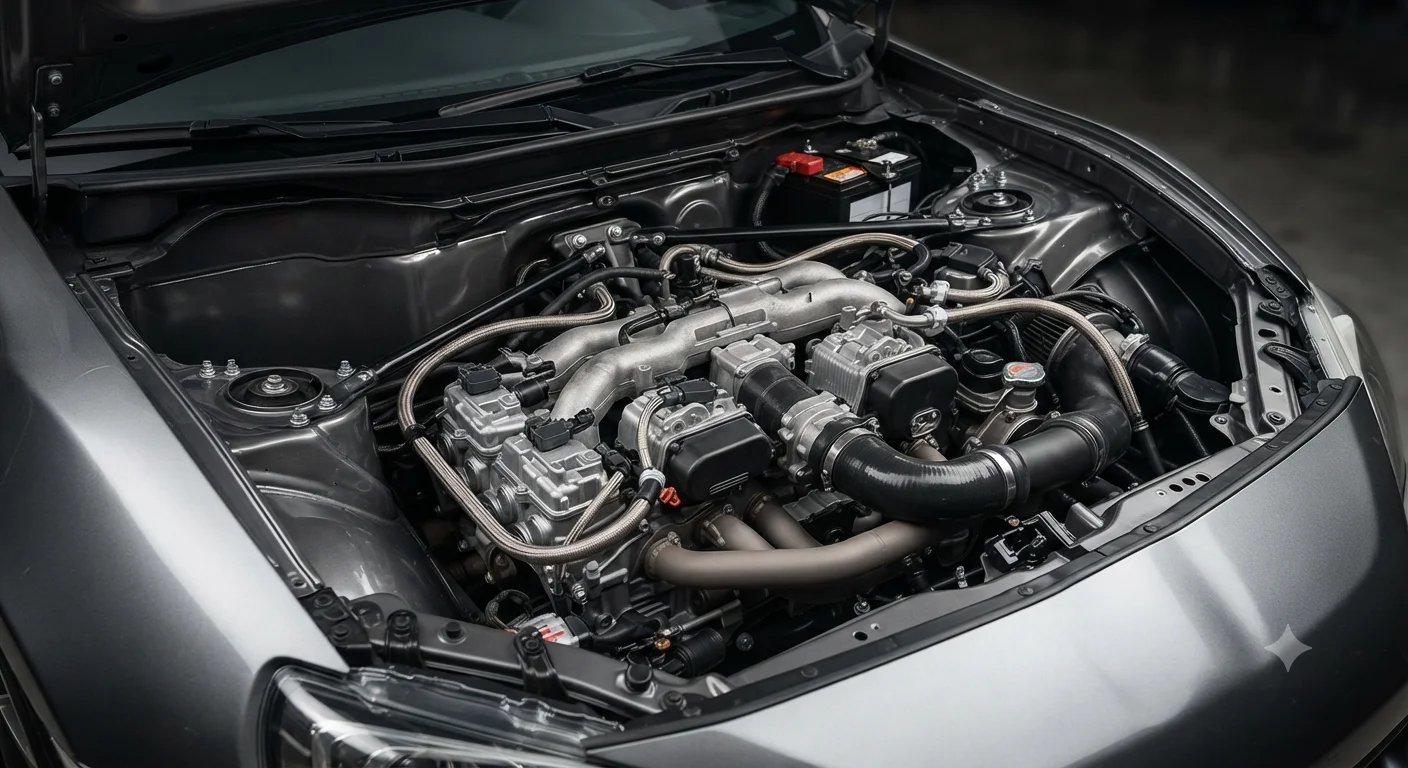
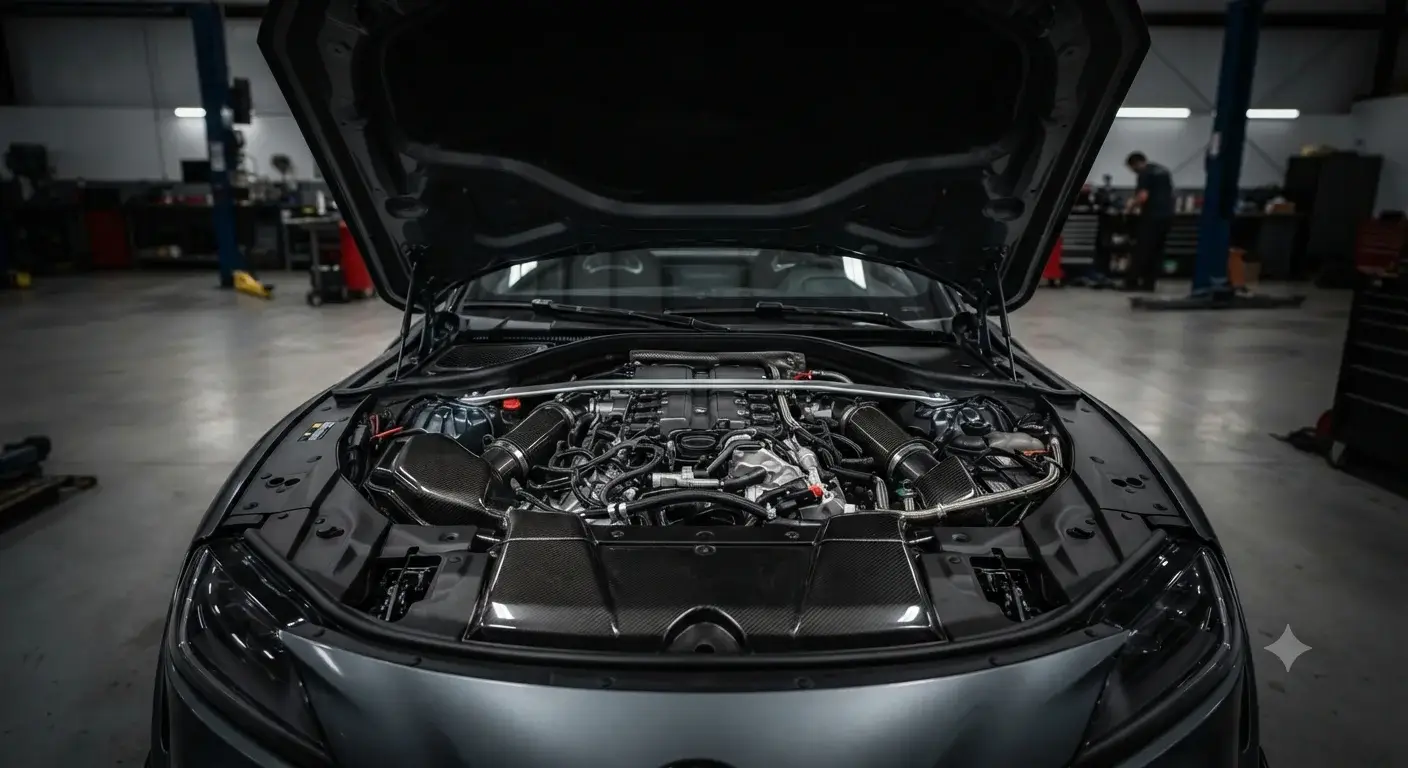
Because the banks are angled rather than in a single line, a V engine’s overall length is shorter than an inline engine with the same cylinder count would be. The trade-off is added width and complexity: two cylinder heads, often two turbochargers on modern performance applications, and more intricate cooling and exhaust routing than a simpler inline design.
Types Of V Engines: V6, V8, V10, V12 And W-Engines

Quick answer: The main types of V engines are V6, V8, V10, and V12, plus the rarer W-engine configuration, which combines two narrow-angle V banks into one compact block each step up in cylinder count generally brings more power and smoothness at the cost of size, weight, and running costs.
Types Of V Engines Comparison Table
| V Engine Type | Typical Bank Angle | Common UK Examples | Typical Use |
|---|---|---|---|
| V6 | 60° or 90° | Audi A6, Ford Ranger | Executive cars, SUVs, pickups |
| V8 | 90° | Jaguar F-Type, Range Rover | Performance and luxury SUVs |
| V10 | 72° or 90° | Audi R8, (historically) BMW M5 | High-performance sports cars |
| V12 | 60° | Aston Martin DB12, Rolls-Royce Phantom | Ultra-luxury and flagship performance cars |
| W16 | Two narrow-angle VR8 banks combined | Bugatti Chiron/Veyron | Extreme hypercar performance |
A quick note on W-engines: Rather than a conventional wide V, a W-engine fuses two narrow-angle “VR” banks together at a shared crankshaft, forming a W-shape. Volkswagen Group pioneered this in more modest form with the W8 and W12, before Bugatti pushed it to its extreme with the 16-cylinder W16 a genuinely unique piece of engine layout engineering that deserves its own deeper look elsewhere in this cluster.
As cylinder count rises through this list, engines generally become smoother and more powerful, but also heavier and thirstier which is exactly why V10 and V12 engines are reserved almost exclusively for premium and performance models rather than everyday cars.
A Brief History Of The V8 Engine

Quick answer: The V8 layout dates back to early 20th-century France and the United States, became mass-market with Ford’s affordable flathead V8 in 1932, and later became a defining feature of British performance and luxury motoring through Rover, Jaguar, and Aston Martin.
The Early Years
Experimental V8 designs appeared in France and the US in the 1900s and 1910s, but they remained expensive, low-volume engines fitted mostly to luxury cars of the era. The real turning point came in 1932, when Ford introduced its affordable flathead V8, putting eight-cylinder power within reach of ordinary buyers for the first time and cementing the V8’s popularity in American motoring for decades.
The V8 Arrives In Britain
The V8 found a particularly long-term home in British car manufacturing:
- Rover adopted a lightweight aluminum V8 originally derived from a Buick design it acquired the rights to that went on to power everything from Land Rovers to TVRs across several decades, becoming one of the most reused engine designs in British motoring history
- Jaguar built much of its performance reputation on smooth, powerful V8s, from the XK series through to the modern F-Type
- Aston Martin paired V8 (and later V12) engines with its GT car heritage, a combination still closely associated with the brand today
The V8 Today
Modern emissions regulations have pushed many manufacturers toward smaller, turbocharged V6 engines or hybrid powertrains in place of traditional naturally aspirated V8s. Even so, the V8 remains a strong seller in performance SUVs and sports cars, where its distinctive sound and low-end torque continue to be a genuine selling point rather than just a spec-sheet number.
V6 vs V8 Engine: The Complete Comparison
Quick answer: A V6 is smaller, lighter, and more fuel-efficient, making it common in executive cars and SUVs, while a V8 delivers stronger low-end torque and a more distinctive exhaust note, but comes with higher fuel consumption and higher UK road tax.
V6 vs V8 Engine Comparison Table
| Factor | V6 | V8 |
|---|---|---|
| Typical displacement | 2.5–3.5L | 4.0L+ |
| Cylinder arrangement | Two banks of three | Two banks of four |
| Fuel economy | Better | Worse |
| UK road tax (VED) | Generally lower | Generally higher |
| Torque character | Moderate, linear | Strong, low-end |
| Sound | Refined | Distinctive, deeper |
| Weight | Lighter | Heavier |
| Common UK examples | Audi A6, Ford Ranger | Range Rover, Jaguar F-Type |
Performance and Character
A V8’s extra two cylinders typically deliver stronger low-end torque, which is why the layout remains popular in larger SUVs, pickups, and GT cars where relaxed, effortless power delivery matters. A V6, by contrast, tends to feel more linear and revs more freely, which suits buyers who prioritise efficiency alongside performance.
Running Costs
This is usually the deciding factor for UK buyers. A V8’s larger displacement generally places it in a higher VED (road tax) band and pushes up fuel costs noticeably compared with a V6 of similar vintage and technology worth factoring in carefully if you’re comparing trim levels on the same model.
Benefits Of A V6 Engine
Quick answer: The V6’s biggest strengths are better fuel economy, lower road tax, and a more compact, lightweight package that suits a wider range of vehicle types.
- Better fuel economy than an equivalent V8
- Generally lower insurance group and VED banding
- Lighter weight, benefiting handling balance
- Widely used across executive cars, SUVs, and pickups
- Often available with hybrid assistance in newer models
Benefits of a V8 Engine
Quick answer: The V8’s biggest strengths are strong low-end torque, a distinctive exhaust note, and the sense of effortless performance that comes with larger displacement.
- Stronger low-end torque, ideal for towing and effortless acceleration
- Distinctive, deeper sound that’s often a key selling point in itself
- Associated with premium and performance model positioning
- Smooth power delivery across a wide rev range
- Strong resale appeal in enthusiast and performance segments
Common Problems: V6 vs V8 Engine
Quick answer: V6 engines commonly develop coolant leaks and uneven bank wear due to their harder-to-reach components, while V8 engines can suffer from higher oil consumption and more expensive cooling system faults simply due to their larger size and greater number of parts.
| Engine Type | Common Issues | Typical Cause |
|---|---|---|
| V6 | Coolant leaks, uneven bank wear | Complex hose routing, heat cycling |
| V8 | Higher oil consumption, costly cooling system faults | Larger displacement, more components, higher heat output |
Signs, Symptoms and Causes of V Engine Issues
Quick answer: Watch for coolant or oil leaks, uneven idle, unusual noises, or dashboard warning lights both V6 and V8 engines can hide leaks between the cylinder banks, making early diagnosis especially important.
Common warning signs:
- Coolant smell inside or around the car with no obvious puddle
- Rough or uneven idle, sometimes more noticeable on one bank
- Reduced power or poor fuel economy compared to normal
- Engine management or temperature warning lights
- Oil residue around the base of the engine
Layout-specific pointers:
- On both V6 and V8 engines, a coolant leak can hide between the two cylinder banks and go unnoticed until levels drop significantly
- On V8 engines specifically, rising oil consumption between services is worth monitoring closely, particularly on higher-mileage examples
If you notice any of these signs, book a diagnostic check as soon as possible catching a V engine issue early is almost always cheaper than waiting.
Repair Options And UK Costs
Quick answer: Typical UK repair costs for a V6 range from around £150–£600 for common jobs, while V8 repairs typically run £250–£1,800 or more for the same jobs, reflecting the larger size, extra components, and harder-to-reach parts involved.
| Repair Type | V6 (Approx. UK Cost) | V8 (Approx. UK Cost) |
|---|---|---|
| Spark plug replacement | £150–£350 | £200–£450 |
| Coolant leak repair | £250–£600 | £350–£800 |
| Timing chain/belt replacement | £600–£1,200 | £800–£1,800 |
| Head gasket replacement | £800–£1,800 | £1,000–£2,200 |
These are general UK estimates and will vary by make, model, and garage. Always request a written quote before authorising work, and consider an independent V6/V8 specialist for premium or performance models.
Maintenance Tips
Quick answer: Stick to manufacturer service intervals, use the correct oil specification, and ask your garage to check both cylinder banks evenly uneven wear between banks is one of the most overlooked issues on V engines.
- Follow your manufacturer’s service schedule exactly, particularly oil and coolant intervals
- Use the correct oil specification many modern V6 and V8 engines are sensitive to this
- Ask your garage to inspect both cylinder banks evenly during servicing, not just the more accessible one
- Address coolant or oil warning signs promptly, as leaks between banks can be harder to spot
- On V8 engines, monitor oil consumption between services, particularly on higher-mileage examples
Buying Guide: Which Should You Choose?

Quick answer: Choose a V6 if fuel economy and lower running costs matter most, and choose a V8 if you want stronger torque, a more distinctive character, and can budget for higher fuel and tax costs.
Consider a V6 if you:
- Want a balance of performance and efficiency
- Are buying an executive car, SUV, or pickup for regular use
- Prefer lower road tax and insurance costs
Consider a V8 if you:
- Want strong, effortless torque, particularly for towing or performance driving
- Value the distinctive sound and character a V8 offers
- Can budget for higher fuel consumption and road tax
Mistakes To Avoid
Quick answer: The most common mistakes are underestimating a V8’s running costs, assuming all V engines have identical service intervals, and skipping a pre-purchase inspection on a higher-mileage V8.
- Don’t underestimate the ongoing fuel and tax cost difference between V6 and V8 ownership
- Don’t assume a used V engine’s cambelt or timing chain has been changed always check the service history
- Don’t ignore a coolant smell just because you can’t see a puddle it may be leaking between the banks
- Don’t skip a pre-purchase inspection on a higher-mileage V8, given the higher cost of major repairs
Myths vs Facts
Quick answer: A common myth is that a V8 is always significantly more powerful than a V6 in reality, modern turbocharged V6 engines often match or exceed the power output of older naturally aspirated V8s.
| Myth | Fact |
|---|---|
| A V8 is always much more powerful than a V6 | Turbocharged V6 engines can match or beat older naturally aspirated V8 outputs |
| V engines are always more powerful than inline engines | Power depends on displacement and tuning, not layout alone |
| All V8s sound the same | Exhaust note varies significantly by manufacturer, bank angle, and exhaust design |
| V8s are always less reliable than V6s | Reliability depends more on maintenance history than cylinder count |
Checklist: Assessing A V Engine Before You Buy
- Confirm whether the car is V6 or V8 (check the exact model and trim, not just the badge)
- Check full service history, especially cambelt/timing chain and coolant records
- Look for coolant or oil residue around the engine bay, particularly between the banks
- Start the engine cold and listen for uneven idle or unusual noise
- Ask whether both cylinder banks were checked at the last service
- Compare fuel and road tax costs between V6 and V8 trims before deciding
- Get a pre-purchase inspection, especially for higher-mileage V8 models
Frequently Asked Questions
What is the difference between a V6 and a V8 engine?
A V6 has six cylinders arranged in two banks of three, while a V8 has eight cylinders in two banks of four the V8 typically offers more power and torque but at the cost of higher fuel consumption and running costs.
When was the V8 engine invented?
Early V8 designs appeared in France and the US in the 1900s and 1910s, but the V8 became genuinely mass-market after Ford introduced its affordable flathead V8 in 1932.
Which British car brands are known for V8 engines?
Rover, Jaguar, and Aston Martin are among the British brands most closely associated with V8 engines, with Rover’s lightweight aluminium V8 used across decades of British-built cars.
Is a V6 or V8 better for towing?
A V8 generally offers stronger low-end torque, making it better suited to towing than a comparable V6, though modern turbocharged V6 engines have narrowed this gap considerably.
Are V8 engines more expensive to run in the UK?
Yes, typically V8 engines usually sit in a higher VED (road tax) band and consume more fuel than an equivalent V6 due to their larger displacement.
What are the main types of V engines?
The main types are V6, V8, V10, and V12, along with the rarer W-engine configuration, which combines two narrow-angle V banks into one compact block.
Do all V engines have two cylinder heads?
Most V engines, including V6 and V8 designs, use two separate cylinder heads one for each bank unlike an inline engine, which typically uses a single shared cylinder head.
Why do V8 engines sound different from V6 engines?
The firing order and exhaust configuration differ between V6 and V8 engines, producing a deeper, more distinctive note in most V8s compared with the smoother, higher-pitched character typical of a V6.
Is a V6 more reliable than a V8?
Not automatically reliability depends more on maintenance history and specific engine design than on cylinder count or layout alone.
How much does it cost to fix a V8 coolant leak in the UK?
Coolant leak repairs on a V8 typically cost between £350 and £800 in the UK, depending on the make, model, and where exactly the leak is located.
What is a W16 engine and how does it relate to V engines?
A W16 engine, used in the Bugatti Chiron and Veyron, combines two narrow-angle V-style banks into a single W-shaped block an extreme evolution of the same basic V engine principle.
Why did manufacturers move away from naturally aspirated V8s?
Modern emissions regulations and fuel economy targets have pushed many manufacturers toward smaller, turbocharged V6 engines or hybrid powertrains in place of larger naturally aspirated V8s.
What UK cars still use a V8 engine?
Notable current and recent examples include the Range Rover, Jaguar F-Type, and various Aston Martin and Bentley models offered with V8 power.
Is a V6 cheaper to insure than a V8?
Generally, yes V6-engined cars typically fall into lower insurance groups than their V8 counterparts, though this varies by specific model and trim.
What should I check before buying a used V8 car?
Check the full service history, inspect for coolant or oil leaks around the engine bay, and consider a pre-purchase inspection, since V8 repairs are typically more labour-intensive and costly than V6 equivalents.
Conclusion
The V8 engine history stretches from early 20th-century experimentation to Ford’s mass-market breakthrough and decades of British performance heritage through Rover, Jaguar, and Aston Martin. Today’s V6 vs V8 decision comes down to a straightforward trade-off: a V6 offers better economy and lower running costs, while a V8 delivers stronger torque and a more distinctive character at a higher price.
Understanding the full range of types of V engines from V6 through to V12 and beyond helps you see exactly where your chosen car sits in that broader picture.
For a wider look at how V engines compare to inline, boxer, and rotary layouts, see our complete guide to car engine layouts and types of car engines.
Call to Action
Trying to decide between a V6 and V8 for your next car? Compare fuel, tax, and insurance costs for both trims before you commit, and get a pre-purchase inspection on any used V8 model it’s the best way to avoid an expensive surprise down the line.