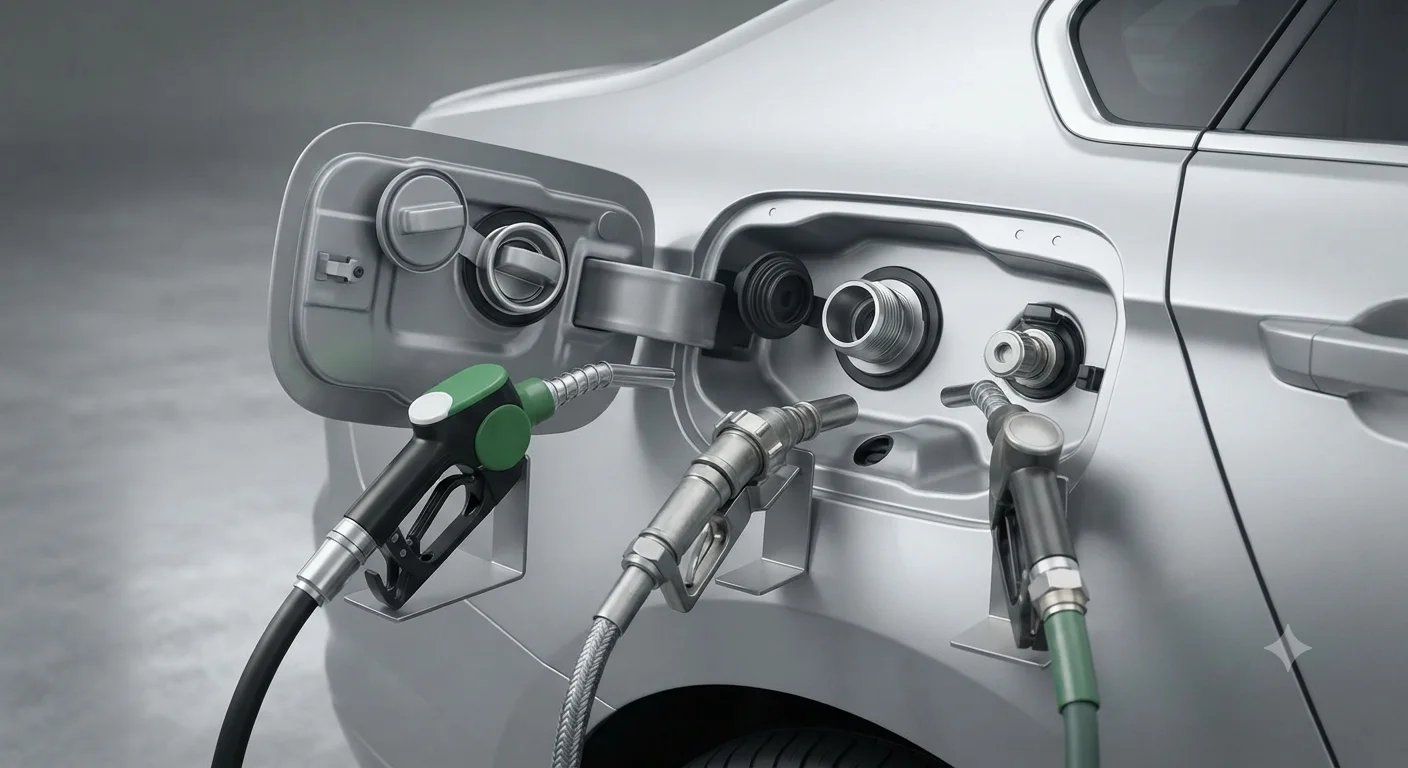
If you’ve ever wondered why some engines feel far more powerful than their size suggests, the answer is usually forced induction. Turbochargers and superchargers both force extra air into the engine to boost power, but they get there in very different ways and that difference affects performance, reliability, and running costs.
This guide explains how forced induction engines work, breaks down the turbo vs supercharger difference in plain English, and covers the costs, common problems, and buying advice UK drivers actually need.
What Is Forced Induction?
Quick answer: Forced induction is a system that compresses air and forces it into an engine’s cylinders at higher pressure than normal atmospheric intake, allowing more fuel to be burned and producing more power from a smaller engine.
A naturally aspirated engine relies purely on atmospheric pressure to draw air in. Forced induction engines whether turbocharged or supercharged push extra air in under pressure, known as boost. More air means more fuel can be burned per cycle, which means more power without needing a larger, heavier engine.
This is why so many modern UK cars, from small hatchbacks to performance saloons, now use turbocharged engines instead of the larger naturally aspirated units of the past.
How Forced Induction Engines Work?

Quick answer: Forced induction engines work by compressing incoming air using either exhaust gases (turbocharger) or a belt-driven compressor (supercharger), then feeding that compressed air into the engine to increase power output.
The basic principle, step by step:
- Air intake – Air is drawn from outside the car through the intake system.
- Compression – A turbocharger or supercharger compresses this air, increasing its density.
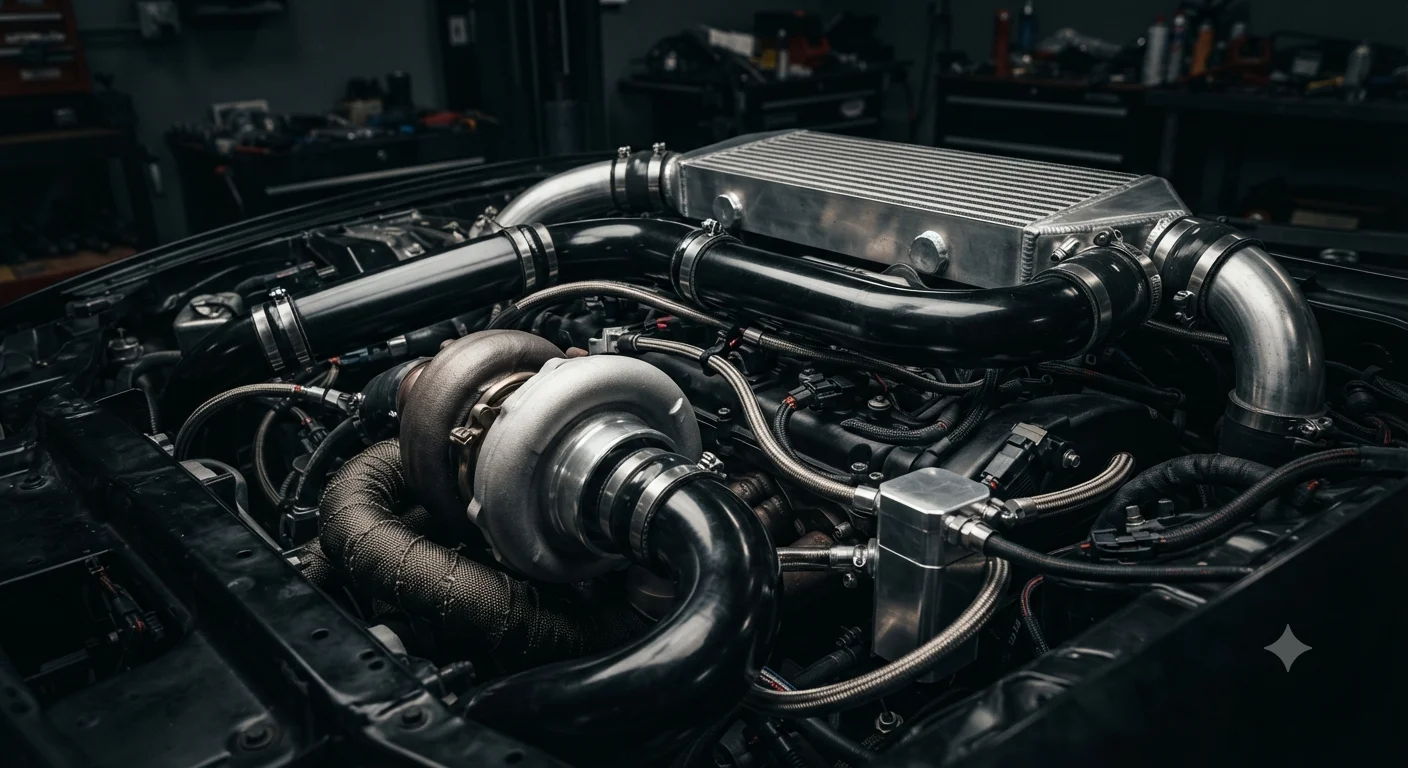
- Intercooling (most systems) – Compressed air heats up, so an intercooler cools it before it enters the engine, improving density further.
- Combustion – The denser, oxygen-rich air mixes with fuel and burns more powerfully in the cylinders.
- Power delivery – The extra combustion energy translates into greater engine output, often from a smaller displacement engine.
Key Components
| Component | Role |
|---|---|
| Turbocharger or supercharger | Compresses incoming air (boost) |
| Intercooler | Cools compressed air before it enters the engine |
| Wastegate (turbo) | Regulates boost pressure to prevent overboost |
| Bypass valve/clutch (supercharger) | Controls how much drive the compressor receives |
| Engine control unit (ECU) | Manages fuelling and timing to match the extra airflow |
Types of Forced Induction

Quick answer: The main types are turbochargers (exhaust-driven), superchargers (belt-driven), and twin-charged systems that combine both technologies.
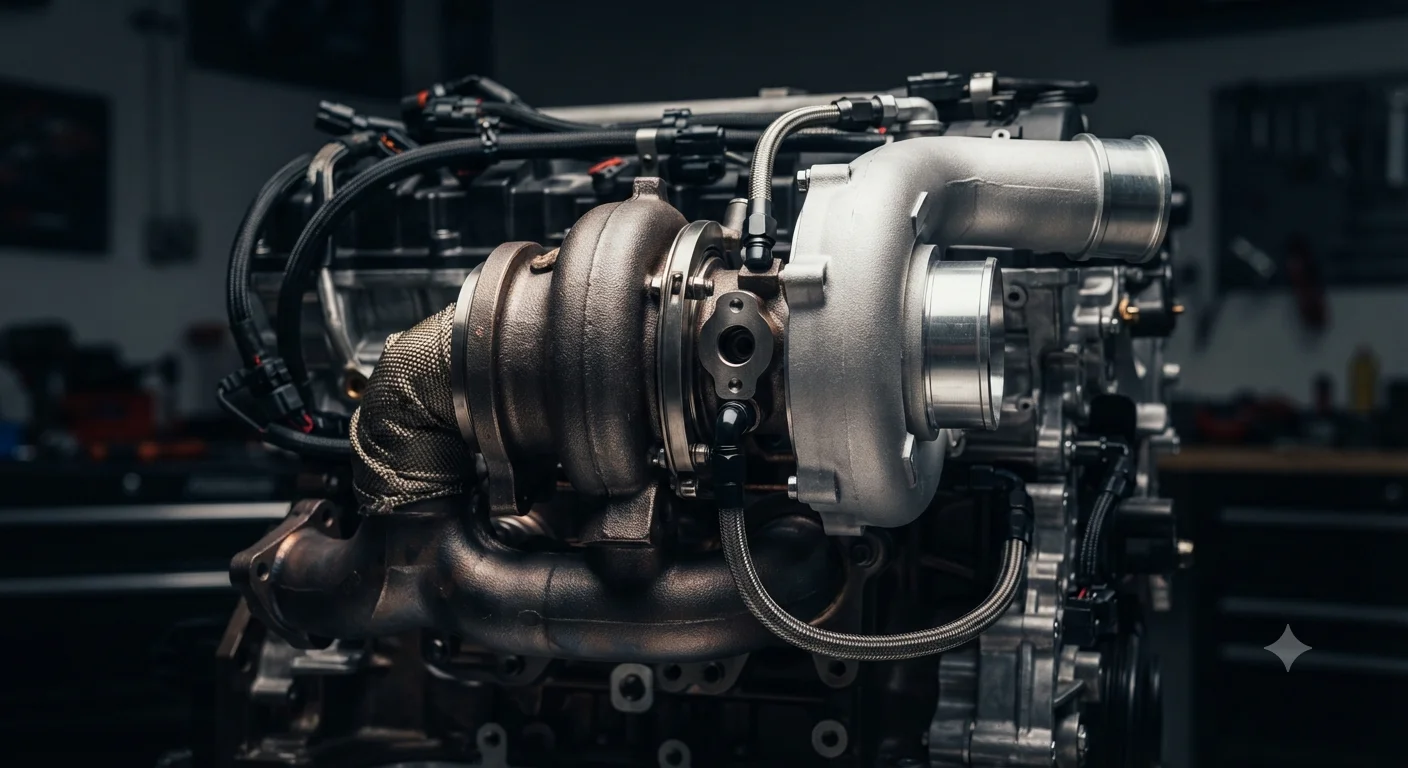
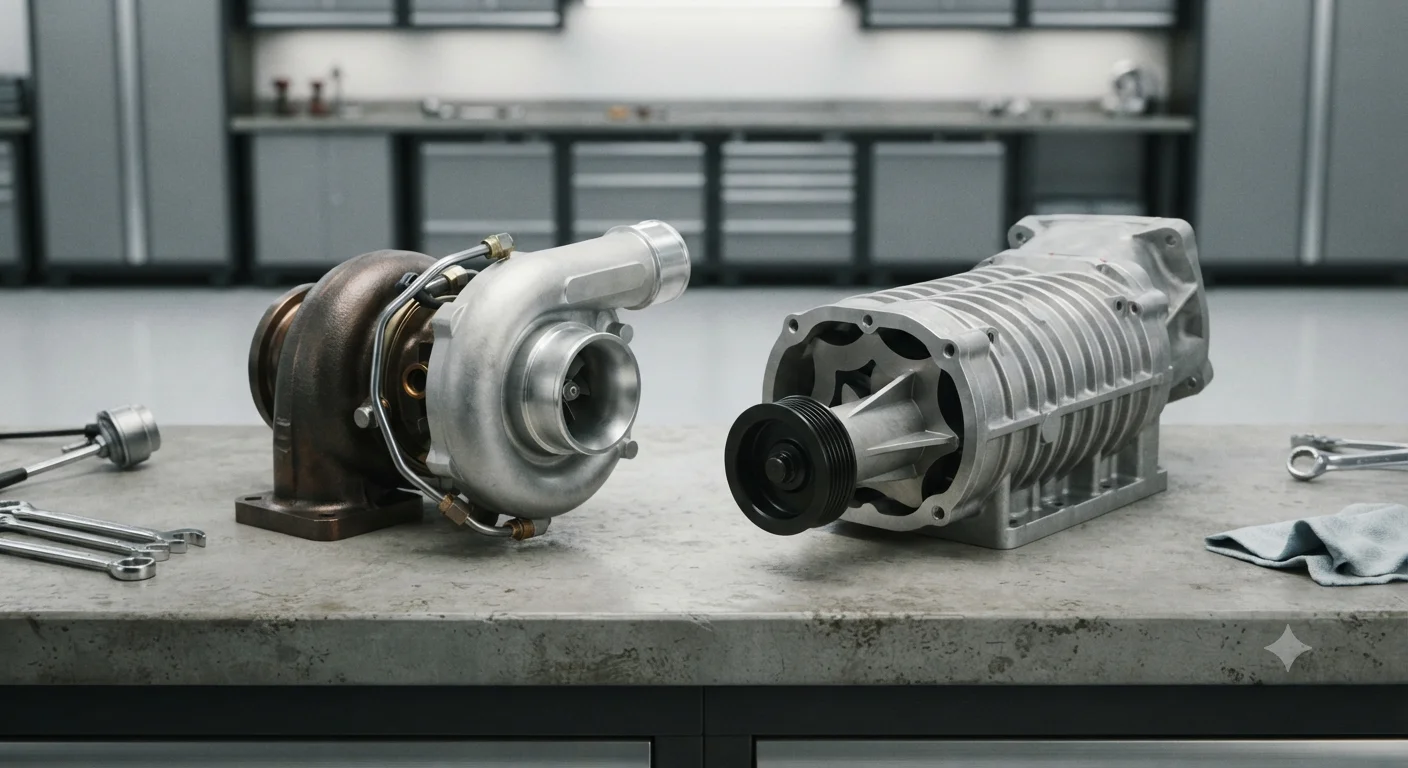
- Turbocharger: Powered by exhaust gases spinning a turbine, which drives a compressor. Highly efficient since it uses otherwise wasted energy.
- Supercharger: Driven directly by a belt connected to the engine’s crankshaft, delivering boost instantly with no delay.
- Twin-turbo: Two turbochargers, often used to reduce lag or provide staged boost across the rev range.
- Twin-charged: Combines a supercharger (for low-end response) with a turbocharger (for high-end power) rare but found in some performance engines.
Turbo vs Supercharger: The Full Comparison
Quick answer: A turbocharger is generally more fuel-efficient and powerful at higher revs but suffers from lag, while a supercharger delivers instant power with no lag but is less efficient and adds more parasitic drag on the engine.
| Feature | Turbocharger | Supercharger |
|---|---|---|
| Power source | Exhaust gas energy | Belt driven directly by engine |
| Throttle response | Slight delay (turbo lag) | Instant power delivery |
| Fuel efficiency | Better, uses waste energy | Lower, draws power from engine |
| Peak power delivery | Stronger at higher RPM | Stronger at low-to-mid RPM |
| Complexity | More complex (exhaust plumbing, wastegate) | Mechanically simpler |
| Heat generation | Higher (exhaust-driven) | Lower |
| Common use | Most modern UK petrol and diesel cars | Performance and muscle cars, some superchargeed V8s |
| Maintenance | Turbo seals, bearings, wastegate wear | Belt, bearings, clutch (if fitted) |
In short: if you want efficiency and strong high-end power, turbocharging is the modern default. If you want immediate, predictable power delivery with fewer electronic complexities, a supercharger has its advantages though it’s now far less common in mainstream UK cars.
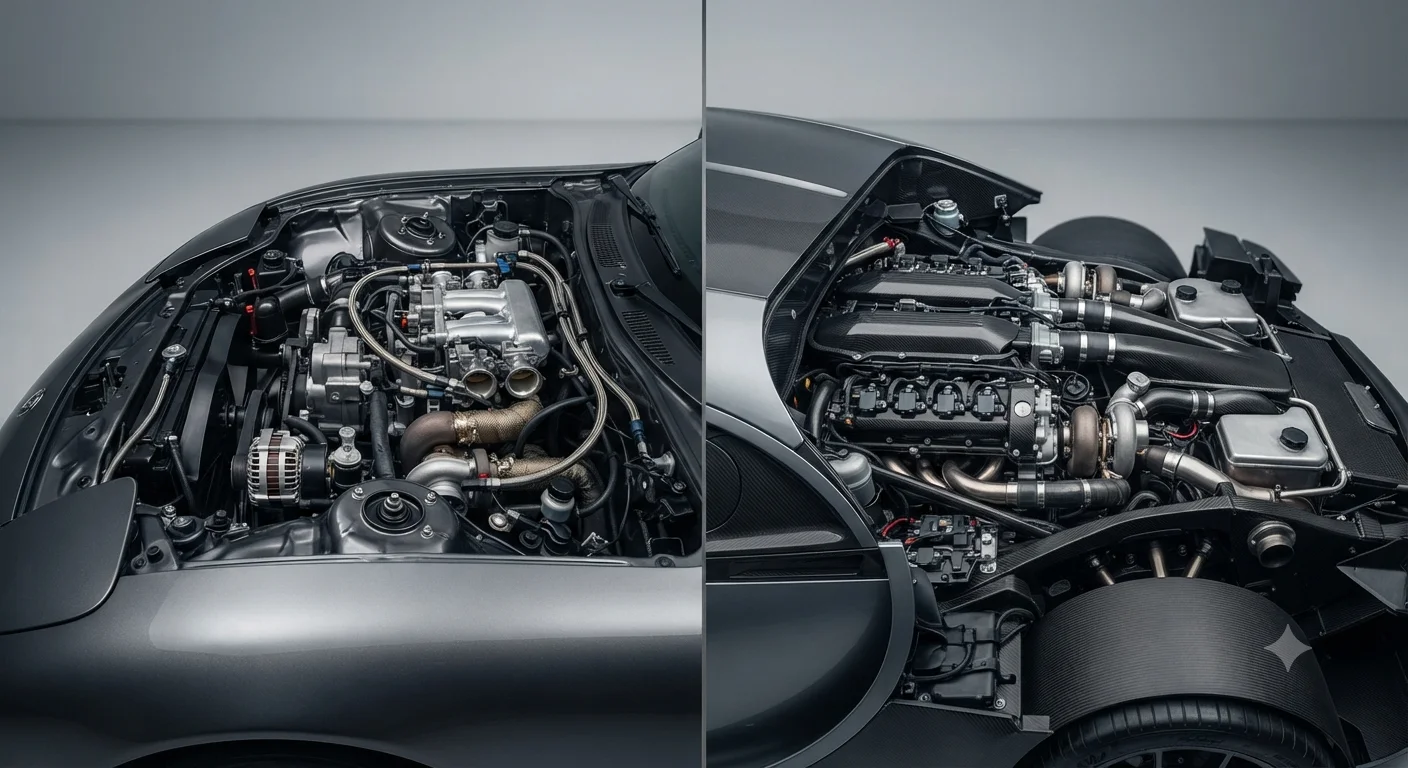
How Forced Induction Works: Turbochargers vs Superchargers

Benefits of Forced Induction
- More power from a smaller engine, improving efficiency and reducing weight
- Better fuel economy compared with a naturally aspirated engine of equivalent power (particularly with turbos)
- Lower emissions per unit of power produced, helping manufacturers meet UK and EU standards
- Strong performance gains without needing to increase engine displacement
- Widely supported by manufacturers, meaning parts and expertise are easy to find in the UK
Common Problems and Warning Signs

Quick answer: Common forced induction problems include turbo lag or whining noises, loss of boost pressure, oil leaks into the intake, excessive exhaust smoke, and reduced power output.
Signs to watch for:
- Whistling, whining, or grinding noise from the turbo or supercharger
- Blue or grey exhaust smoke (often oil burning)
- Noticeable loss of power or boost
- Dashboard warning light for engine or emissions
- Whining that changes pitch with engine revs
- Increased oil consumption
Causes of Turbo and Supercharger Faults
- Oil starvation – insufficient or degraded oil causes premature bearing wear
- Worn seals – allow oil to leak into the intake or exhaust, causing smoke
- Carbon build-up – especially in turbocharged direct-injection engines
- Overboost or aggressive driving – increases wear on internal components
- Failing wastegate or bypass valve – leads to incorrect boost pressure
- Neglected servicing – skipped oil changes accelerate turbo and supercharger wear significantly
Solutions and Repair Options
| Problem | Typical Solution | UK Cost Estimate |
|---|---|---|
| Turbo bearing wear | Turbo rebuild or replacement | £400–£1,200 |
| Supercharger bearing/clutch wear | Repair or unit replacement | £500–£1,500 |
| Wastegate fault | Repair or replacement | £150–£400 |
| Oil seal leak | Seal replacement (often with turbo rebuild) | £300–£800 |
| Intercooler fault | Repair or replacement | £150–£500 |
Costs vary significantly by make, model, and whether a specialist or main dealer carries out the work. Always get a proper diagnostic before committing to a full turbo or supercharger replacement.
Costs in the UK
Quick answer: Turbocharged cars generally cost similar or slightly more to insure and service than naturally aspirated equivalents, but often deliver better fuel economy; superchargeed cars, mostly performance models, tend to carry higher running costs overall.
- Fuel economy: Turbocharged engines typically outperform naturally aspirated engines of similar power, especially at motorway speeds.
- Servicing: Regular oil changes are essential turbo and supercharger components rely heavily on clean, high-quality oil.
- Insurance: Turbocharged performance models can sit in higher insurance groups; superchargeed performance cars often more so.
- Repairs: Specialist parts can be more expensive than standard engine components, particularly for less common supercharged models.
Maintenance Tips
- Use the manufacturer-recommended oil grade forced induction engines are far less forgiving of poor-quality oil
- Don’t switch the engine off immediately after hard driving let a turbo cool slightly where possible
- Service on schedule, particularly oil and filter changes
- Listen for unusual noises and address them early rather than waiting
- Check for oil leaks around the turbo or supercharger housing periodically
- Avoid prolonged idling on cold starts let oil circulate properly before pushing the engine hard
- Use a specialist for diagnostics if performance drops noticeably
Buying Guide
Quick answer: When buying a forced induction car in the UK, check service history for regular oil changes, listen for turbo or supercharger noise on a test drive, and confirm whether any performance modifications have been made.
Key questions to ask before buying:
- Has the car had regular oil changes with the correct specification oil?
- Is there any unusual noise, smoke, or hesitation under acceleration?
- Has the turbo or supercharger ever been replaced or rebuilt?
- Is the car standard, or has it been remapped/modified (which can affect reliability and insurance)?
- Does the model have a strong reliability reputation for its forced induction system?
Mistakes to Avoid
- Skipping oil changes on a turbocharged or supercharged engine
- Buying a heavily remapped car without understanding the added strain on components
- Ignoring early warning signs like whining noises or smoke
- Assuming all forced induction systems are maintained the same way
- Not checking insurance costs before buying a performance turbo or supercharged model
Myths vs Facts
| Myth | Fact |
|---|---|
| Turbos always fail early | With proper maintenance, turbos commonly last well beyond 100,000 miles |
| Superchargers are always faster than turbos | Turbos often produce more peak power; superchargers win on instant response |
| Forced induction always increases fuel consumption | Turbocharging often improves fuel economy versus a larger naturally aspirated engine |
| You can’t maintain a turbo car yourself | Regular oil changes go a long way, though specialist checks are recommended |
| All performance cars use superchargers | Most modern UK performance cars actually use turbocharging |
Expert Tips
- If you want a balance of efficiency and power, a turbocharged engine is usually the smarter modern choice for UK driving conditions.
- If you want instant throttle response with fewer electronic complexities, a supercharged engine can still make sense on certain performance models.
- Always priorities oil quality and change intervals it’s the single biggest factor in forced induction longevity.
- Get a pre-purchase inspection on any turbocharged or supercharged used car, especially if it’s been remapped.
Forced Induction Buying Checklist
- Confirm full service history with correct oil specification
- Listen for unusual turbo/supercharger noise on test drive
- Check for smoke on start-up and under load
- Ask if the car has been remapped or modified
- Check insurance group before purchase
- Confirm availability of specialist servicing nearby
- Get a pre-purchase inspection for used performance models
Frequently Asked Questions
What is forced induction in a car engine?
Forced induction is a system, using a turbocharger or supercharger, that compresses air and forces it into the engine to increase power output.
What’s the main turbo vs supercharger difference?
A turbocharger is driven by exhaust gases and is more fuel-efficient but has slight lag; a supercharger is belt-driven directly by the engine and delivers instant power but is less efficient.
Is a turbo or supercharger better for daily driving?
A turbocharger is generally better for daily driving thanks to improved fuel economy and widespread manufacturer support in the UK.
How much does turbo repair cost in the UK?
Typically £400–£1,200 depending on whether it’s a rebuild or full replacement.
Do turbocharged cars need special maintenance?
Yes regular, high-quality oil changes are essential to protect the turbo’s bearings and seals.
What causes turbo lag?
Turbo lag happens because the turbine needs exhaust gas flow to build up before it can spin fast enough to produce boost.
Can a supercharger be added to any engine?
Not directly supercharger kits are usually designed for specific engines, and fitting one to an unsupported engine isn’t recommended without expert conversion work.
How long do turbos typically last?
With proper maintenance, most turbos last well over 100,000 miles, and often the life of the car.
Are supercharged cars more expensive to insure?
Often yes, since supercharged models tend to be higher-performance cars that sit in higher insurance groups.
What does a whining turbo noise mean?
It can indicate bearing wear, a boost leak, or a failing wastegate, and should be checked by a specialist promptly.
Do turbocharged engines use more fuel than naturally aspirated engines?
Not necessarily turbocharged engines often achieve better fuel economy than a larger naturally aspirated engine producing similar power.
Is it worth buying a remapped turbo car?
It depends on how the remap was done and maintained; a well-documented, professionally tuned car can be fine, but higher stress on components is a risk to weigh up.
Can I drive a turbocharged car normally without damaging it?
Yes modern turbo engines are designed for everyday driving; just avoid harsh cold starts and follow the recommended servicing schedule.
What’s the difference between a turbo and a twin-turbo setup?
A twin-turbo uses two turbochargers, often to reduce lag or provide power across a wider rev range, compared to a single turbo setup.
Are forced induction engines reliable in the UK’s climate?
Yes, modern turbocharged and supercharged engines are well suited to UK conditions, provided servicing and oil changes are kept up to date.
Conclusion
Understanding the turbo vs supercharger difference helps explain why some engines feel effortlessly powerful while others rely on outright size. Turbochargers dominate the modern UK market thanks to their efficiency and strong high-end power, while superchargers still have a place in performance cars that priorities instant response.
Whichever system your car uses, proper maintenance especially oil care is the key to keeping a forced induction engine reliable for the long run.
Call to Action
If you’re buying a turbocharged or supercharged car, check the service history carefully, listen for warning signs on a test drive, and consider a specialist inspection before you commit it could save you a significant repair bill down the line.