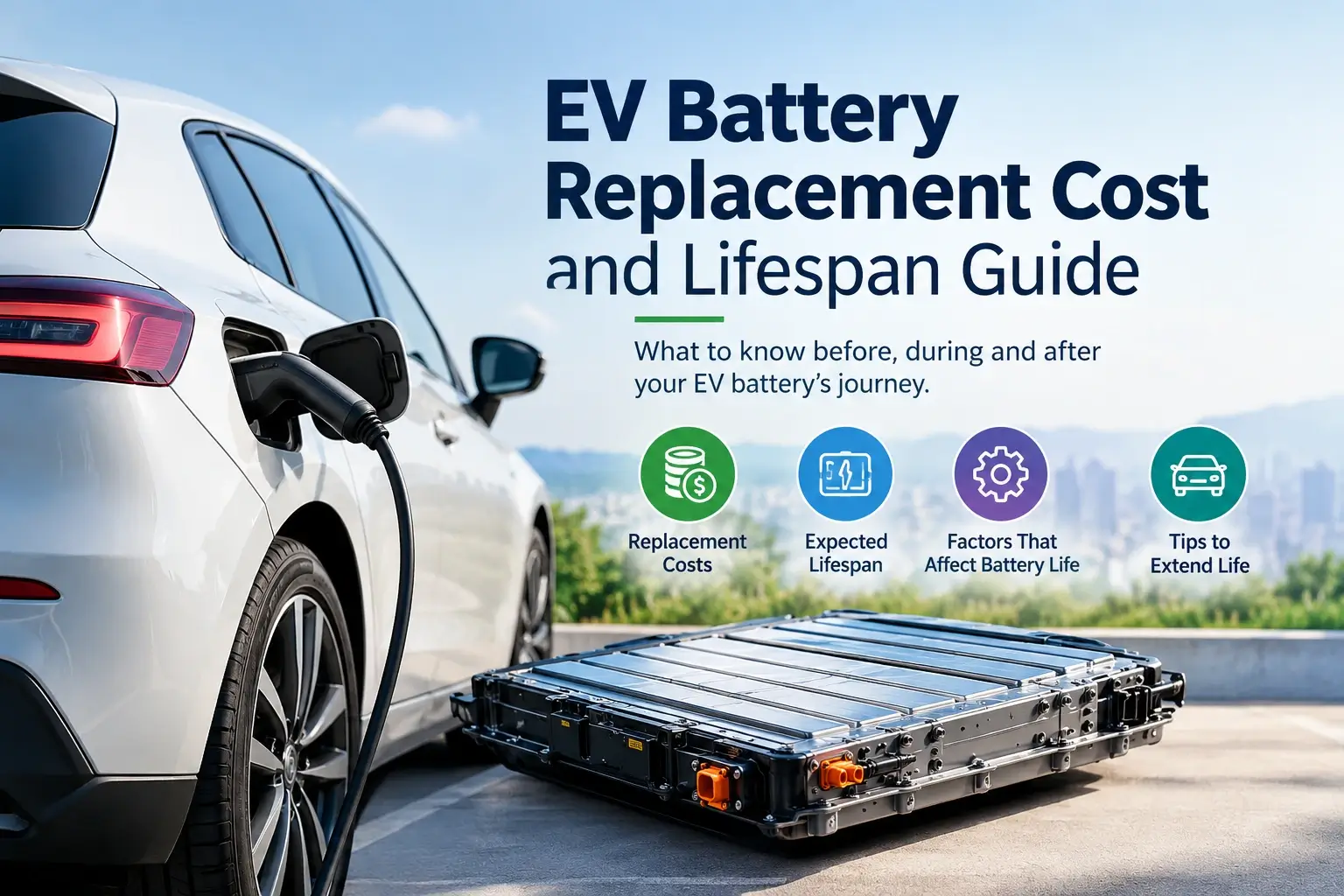
EV Battery Replacement Cost & Lifetime Guide
An electric vehicle battery can last for many years, and replacing it is less common than some buyers fear. However, if a battery pack fails outside its warranty, the bill can be substantial. The actual cost depends on the vehicle, battery capacity, parts availability, labour and whether the entire pack needs replacing.
For many modern electric cars, a battery may remain in service for 8–15 years or longer. That is a broad estimate, not an expiry date. Battery health, climate, charging habits and the manufacturer’s design all affect how long it performs well.
How Much Does EV Battery Replacement Cost?
A full electric vehicle battery replacement can cost roughly $4,000 to more than $25,000 in the United States, depending on the model and repair requirements. Some vehicles fall outside this range. The figure is a broad guide rather than a quote for a particular car. Edmunds provides further cost context.
| Cost factor | Why it matters |
|---|---|
| Battery capacity | Larger packs generally require more battery materials. |
| Vehicle make and model | Pack design, parts supply and replacement procedures differ. |
| Labour | Removing and installing a high-voltage pack requires specialist equipment and training. |
| Fault severity | A repairable component fault may cost less than replacing the complete pack. |
| Parts availability | Imported or discontinued components can affect the final bill. |
| Warranty coverage | An eligible fault may be covered under the manufacturer’s terms. |
These figures should not be converted directly into UK pounds, Canadian dollars, Australian dollars or Pakistani rupees. Local taxes, labour rates, import costs and parts availability can change the price considerably.
Before approving a replacement, ask an authorised service centre or qualified EV specialist for a diagnostic report and an itemised quotation. It should identify the faulty component, parts cost, labour, warranty eligibility and any additional work required.
How Long Do Electric Car Batteries Last?
Many EV batteries can remain useful for 8–15 years, and some last longer. The U.S. Department of Energy’s Alternative Fuels Data Center explains that these batteries are designed for extended service, although their capacity gradually declines.
Battery lifespan is not the same as battery failure. An older EV may have less driving range than it had when new but still be perfectly usable for its owner’s daily journeys.
For example, a car that originally travelled 250 miles on a full charge might deliver a shorter range after several years. Whether that reduction matters depends on the driver’s commute, charging access and journey requirements.
What Affects EV Battery Life?
Temperature: Repeated exposure to high temperatures can accelerate battery ageing. Very cold conditions can also reduce available range temporarily.
Charging habits: Follow the manufacturer’s recommended charging limits. Frequent use of high-power DC fast charging can increase battery stress under some conditions, although modern battery management systems regulate charging to protect the pack.
Battery chemistry: Lithium iron phosphate (LFP) and nickel manganese cobalt (NMC) batteries have different characteristics. Neither chemistry guarantees a particular lifespan in every vehicle.
Thermal management: Cooling and heating systems help maintain suitable battery temperatures. Their design and condition influence long-term performance.
Usage and storage: Driving patterns, time spent at very high or low charge levels, and prolonged storage conditions can affect battery health.
The best approach is to follow the vehicle’s owner’s manual rather than applying one charging rule to every EV.
Does an EV Battery Need Replacing After Eight Years?
No. An eight-year battery warranty does not mean the battery will stop working after eight years. It defines a period during which specified faults or capacity loss may qualify for coverage.
Many manufacturers offer battery warranties of around eight years or 100,000 miles, whichever comes first, although terms vary by vehicle, market and manufacturer. Some offer longer coverage.
Read the actual warranty document before buying a car. Check:
- The warranty’s time and mileage limits.
- Any minimum battery-capacity threshold.
- Whether the warranty covers parts, labour or both.
- Conditions relating to maintenance, accidents and water damage.
- Whether the warranty transfers to a subsequent owner.
A battery that loses capacity gradually does not automatically qualify for free replacement. The manufacturer’s test procedure and warranty conditions determine eligibility.
Signs Your EV Battery May Need Attention
Reduced driving range is one possible sign of battery degradation, but it does not prove the pack is faulty.
Other warning signs include:
- A sudden or unusual reduction in estimated range.
- Battery or high-voltage system warning messages.
- Charging that repeatedly stops unexpectedly.
- Abnormal charging behaviour or battery-temperature warnings.
- A diagnostic report showing a fault or unusually low battery health.
Weather, tyre pressure, driving speed, cabin heating and air conditioning can also affect range. If the change is sudden or accompanied by a warning, arrange a professional diagnosis rather than assuming the battery needs replacement.
Can an EV Battery Be Repaired Instead of Replaced?
Sometimes. The correct repair depends on the vehicle’s design and the fault identified during diagnosis.
A problem with a sensor, wiring connection, cooling component or battery management system may not require a complete battery pack replacement. Some packs allow qualified technicians to repair or replace individual modules. Others have more restrictive repair procedures.
A damaged or severely degraded pack may require a larger repair or complete replacement.
Never attempt to open or repair a high-voltage battery yourself. These systems can present serious electric-shock and fire hazards. Use a qualified technician with the appropriate equipment and vehicle-specific training.
How to Check EV Battery Health Before Buying a Used Car
Battery condition is particularly important when comparing used electric vehicles.
- Request a battery health report. Ask for the state of health (SoH), which estimates remaining capacity relative to the battery’s original or defined reference capacity.
- Check the service history. Look for battery-related repairs, warning messages and relevant software updates.
- Verify the warranty. Confirm remaining coverage directly with the manufacturer or authorised distributor.
- Compare expected range. Consider the model’s original range, current conditions and the seller’s actual driving experience.
- Arrange an independent inspection. A qualified EV technician can check diagnostic data and identify faults that a test drive may not reveal.
- Check for accident or flood damage. High-voltage battery damage can create serious safety risks even when the exterior looks acceptable.
Do not rely solely on the dashboard’s estimated range or a seller’s verbal assurance. A documented battery assessment provides a stronger basis for negotiation.
How Can You Extend EV Battery Life?
There is no way to prevent battery ageing entirely, but sensible charging and maintenance habits can help:
- Follow the manufacturer’s recommended everyday charging range.
- Use DC fast charging when it suits your journey, while relying on the charging method recommended for your vehicle.
- Avoid leaving the battery at an extremely high or low state of charge for extended periods unless the manufacturer specifies otherwise.
- Keep the vehicle’s battery cooling system maintained according to its service schedule.
- Install relevant manufacturer software updates.
- Follow the owner’s manual for long-term storage and extreme-weather conditions.
Electric vehicles generally require less routine maintenance than petrol cars because they have fewer moving parts and fewer fluids to change. However, they still need appropriate inspections and occasional repairs.
Final Thoughts
EV battery replacement can be expensive, but the risk should be assessed in context. Battery degradation is gradual in many vehicles, and a reduction in driving range does not automatically mean the pack has failed.
If you own an EV, follow its maintenance guidance and investigate unusual changes in performance. If you are shopping for a used electric car, prioritise a reliable battery health assessment, a clear warranty history and a model-specific repair quotation.
Those checks can help you make a more informed decision about the vehicle’s long-term ownership costs.
How Can You Extend EV Battery Life?
Regular maintenance helps you identify potential problems before they become expensive repairs. Follow a consistent car maintenance checklist and your EV manufacturer’s service recommendations to keep the vehicle in good condition.
How to Check EV Battery Health Before Buying a Used Car
Battery condition is only one part of choosing the right vehicle. If you are comparing different models, our guide to the best cars to buy in the UK can help you continue your research.
What Affects EV Battery Life?
Cold weather can temporarily reduce an electric car’s driving range. Understanding seasonal vehicle care is useful too, so read our guide to winter car maintenance for additional maintenance advice.
How much does an EV battery replacement cost?
A broad US estimate is $4,000 to more than $25,000, depending on the vehicle, battery pack, labour and repair requirements. Obtain a model-specific quotation.
How many years does an electric car battery last?
Many EV batteries remain useful for around 8–15 years or longer. Actual lifespan depends on battery design, climate, charging habits and usage.
Do EV batteries need replacing after eight years?
No. Eight years is a common warranty duration, not a fixed battery expiry date. The battery may continue operating well beyond the warranty.
Can a damaged EV battery be repaired?
Some faults can be repaired or addressed by replacing individual components or modules. The available options depend on the battery design and the diagnosed fault.
How can I check a used EV battery’s health?
Request a battery state-of-health report, review service and warranty records, and arrange an inspection by a qualified EV technician.
Does fast charging reduce EV battery life?
Frequent high-power DC charging can increase battery stress under some conditions. The effect varies by vehicle and charging conditions, so follow the manufacturer’s guidance.
Will an EV battery warranty cover reduced driving range?
Not necessarily. Coverage depends on the manufacturer’s capacity threshold, warranty duration, mileage limit and other stated conditions.
Kelley Blue Book EV Battery Health
Additional context on battery degradation and used-car ownership.