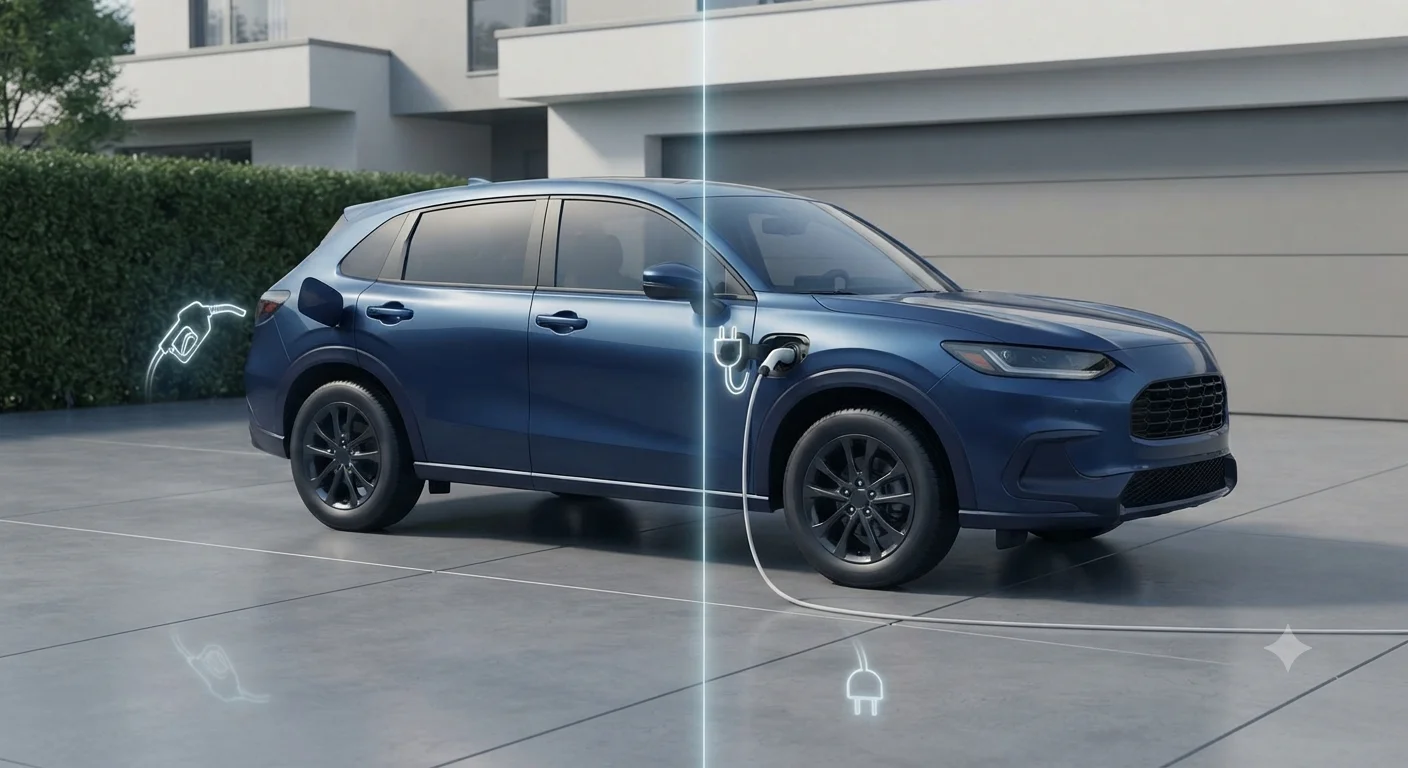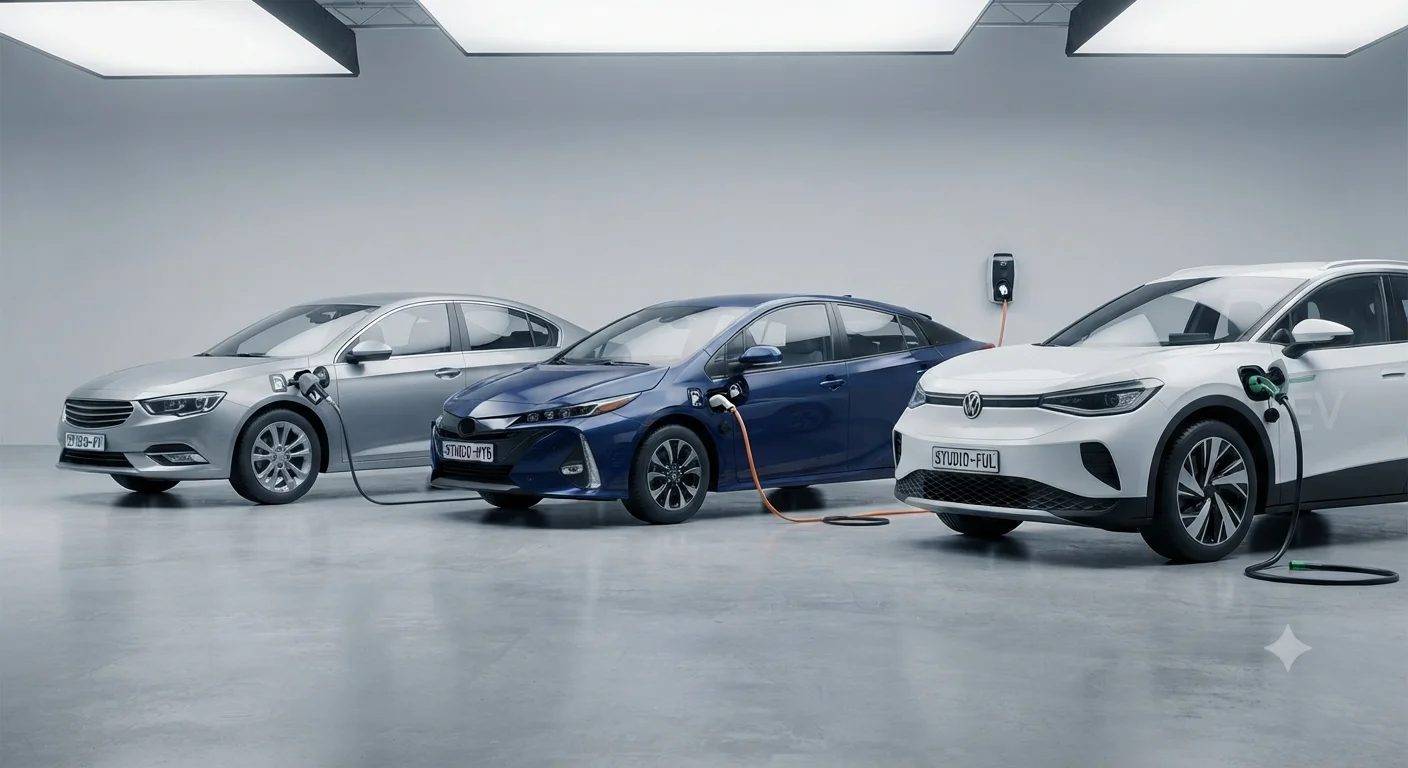
Car fuel types available in the UK has never been more complicated. Petrol and diesel remain common, but hybrid powertrains now come in several distinct forms, fully electric cars are becoming mainstream, and lesser-known options like CNG, LPG, flex-fuel, and hydrogen still have a role for specific drivers. Government policy on new car sales keeps shifting too.
This guide breaks down exactly how an internal combustion engine works including modern common rail diesel injection what a hybrid powertrain actually is (there’s more than one kind), how CNG, LPG conversions, and E85 flex-fuel compare, and the real difference between a hydrogen fuel cell and a hydrogen internal combustion engine (HICE). Whether you’re replacing a family car or trying to understand what the 2030 rules mean for you, this article covers it all in plain English.
What Are the Main Car Fuel Types?

Quick answer: UK drivers can currently choose from petrol, diesel, full hybrid, plug-in hybrid, mild hybrid, fully electric, LPG, CNG, flex-fuel (E85), and in very small numbers hydrogen-powered vehicles, either fuel cell or combustion-based.
- Petrol – the most common fuel type for new UK cars, powering a conventional internal combustion engine.
- Diesel – still common, particularly for higher-mileage and towing use, almost universally using common rail direct injection on modern models.
- Full hybrid (HEV) – combines a petrol engine with a battery and electric motor that can briefly drive the car alone, without external charging.
- Plug-in hybrid (PHEV) – similar to a full hybrid but with a larger battery that’s charged externally, giving a genuine electric-only range.
- Mild hybrid (MHEV) – uses a small electric motor to assist the engine rather than drive the car independently.
- Battery electric (BEV) – no internal combustion engine at all; powered entirely by a battery and electric motor.
- LPG – a cheaper, lower-emission alternative fuel used in a small but persistent niche of the UK market, either factory-fitted or added via aftermarket conversion.
- CNG (Compressed Natural Gas) – a gaseous fuel burned in a modified internal combustion engine; more common in vans, taxis, and fleet vehicles than private cars in the UK.
- Flex-fuel (E85) – a petrol engine adapted to run on a blend of up to 85% ethanol; common in the US and Brazil but a very small niche in the UK.
- Hydrogen fuel cell (FCEV) – converts hydrogen to electricity via an electrochemical reaction to power an electric motor, emitting only water vapour.
- Hydrogen internal combustion engine (HICE) – burns hydrogen directly in a modified combustion engine rather than converting it to electricity first; still an emerging, low-volume technology.
What Is an Internal Combustion Engine?
Quick answer: An internal combustion engine (ICE) generates power by burning fuel inside enclosed cylinders, converting the resulting expansion of hot gases into mechanical motion that drives the wheels.
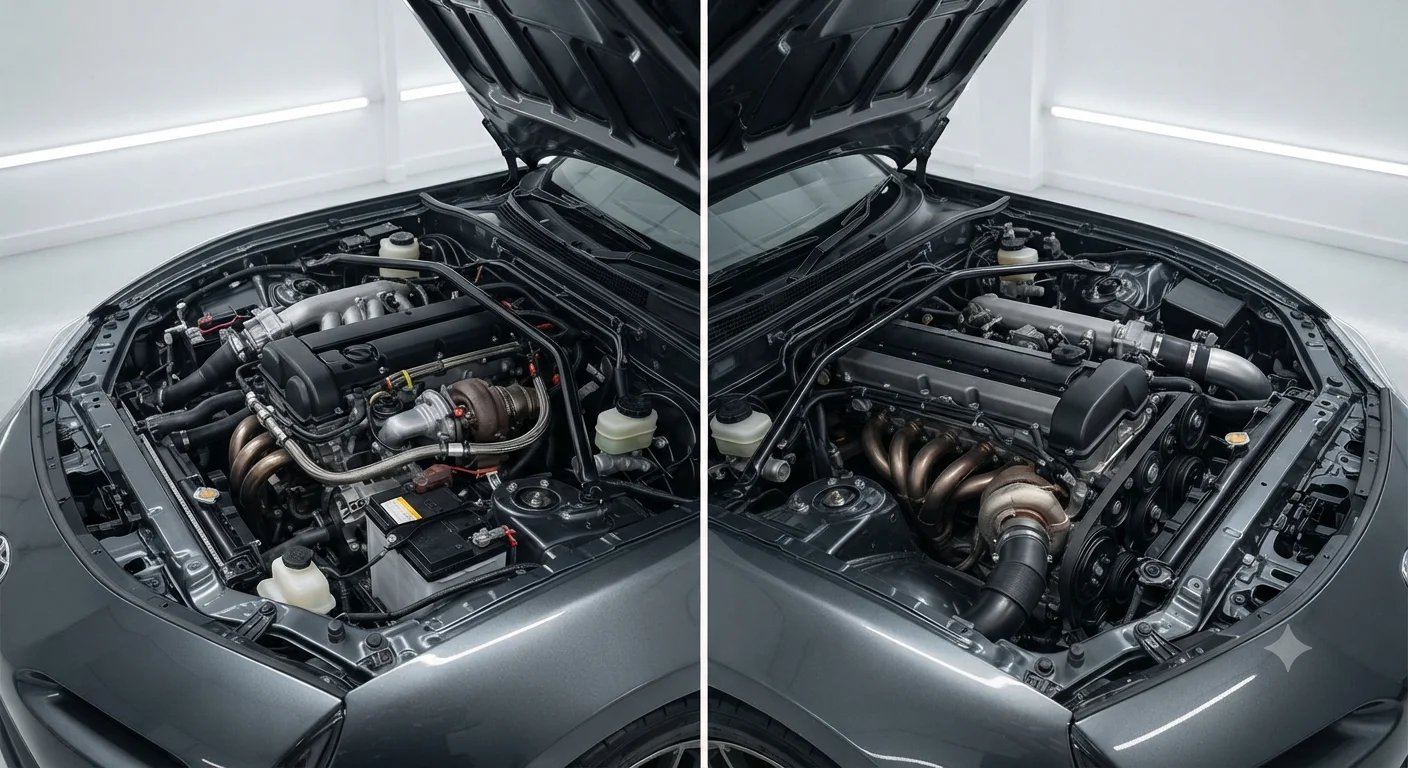
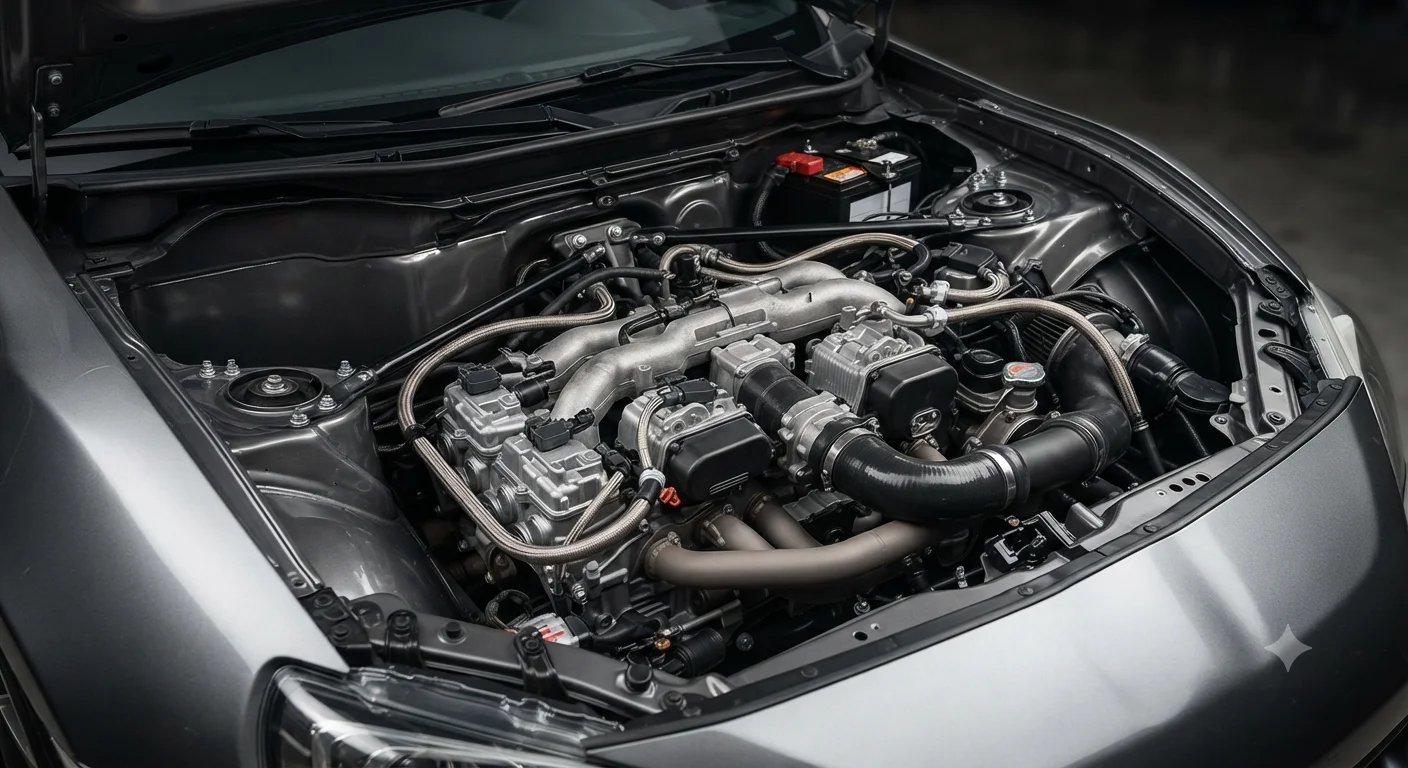
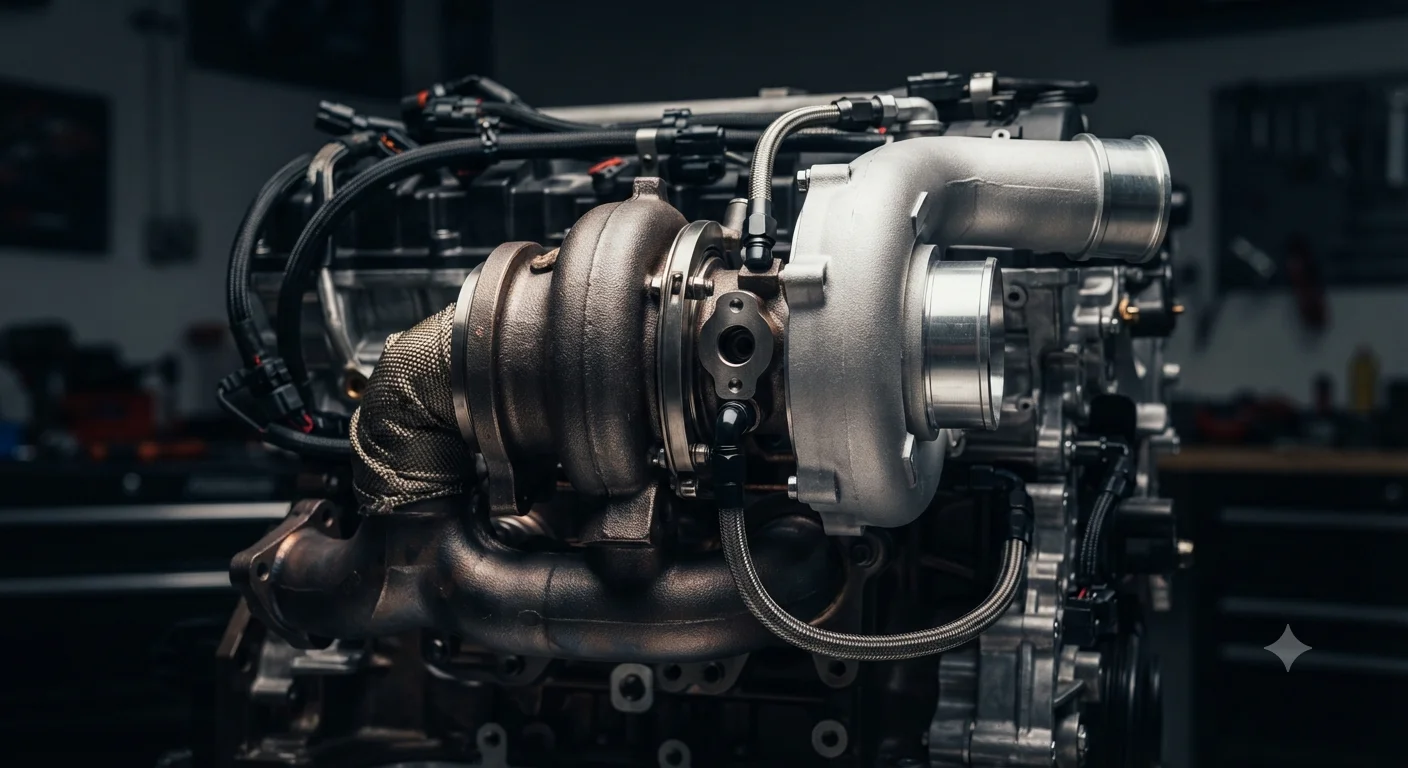
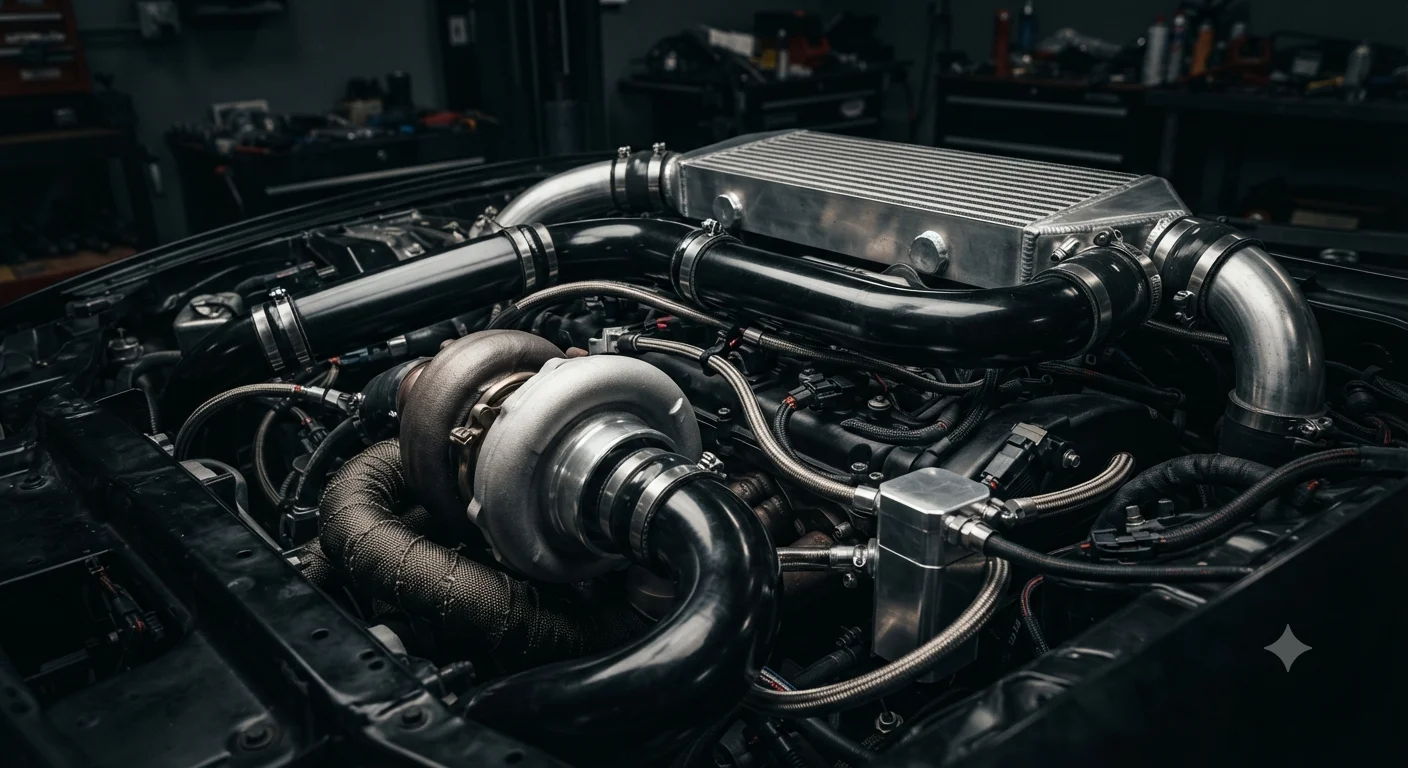
This is the technology that has powered the vast majority of cars for over a century, whether running on petrol, diesel, LPG, CNG, E85, or even hydrogen. It remains the core of most hybrid powertrains too the difference with a hybrid is what else is added alongside it, not a replacement of the basic combustion principle.
How an Internal Combustion Engine Works

Quick answer: Most petrol and diesel engines run on a four-stroke cycle intake, compression, combustion, and exhaust repeated thousands of times per minute to generate continuous rotational power.
- Intake – The piston moves down, drawing air (and fuel, in port-injection petrol engines) into the cylinder.
- Compression – The piston moves up, compressing the air-fuel mixture.
- Combustion (power stroke) – In petrol engines, a spark plug ignites the mixture; in diesel engines, the fuel self-ignites under high compression. The resulting explosion forces the piston back down.
- Exhaust – The piston moves up again, pushing spent gases out through the exhaust valve.
Key difference between petrol and diesel combustion: petrol engines rely on spark ignition at lower compression ratios, while diesel engines use much higher compression to ignite fuel without a spark, generally producing more torque but running at lower peak revs.
Common Rail Diesel Technology Explained

Quick answer: Common rail is the fuel injection system used in virtually all modern diesel engines, storing diesel at very high pressure in a shared (“common”) rail and injecting it directly into each cylinder through electronically controlled injectors, allowing far more precise and efficient combustion than older diesel systems.
How it differs from older diesel injection?
- Older mechanical/indirect injection systems delivered fuel at lower, less precise pressures, controlled mechanically rather than electronically, resulting in noisier running and higher emissions.
- Common rail systems hold fuel under very high pressure and use an engine control unit (ECU) to fire each injector multiple times per combustion cycle, splitting injection into small, precisely timed pulses.
Why this matters for drivers?
- Quieter, smoother running multiple small injection pulses reduce the harsh “diesel knock” associated with older engines.
- Better fuel economy precise fuel metering reduces waste.
- Lower emissions more complete combustion reduces particulate output, though NOx remains a diesel characteristic regardless of injection type.
- More complex and costly to repair common rail injectors are precision components; a single injector failure can be an expensive repair, and fuel contamination or poor-quality diesel can cause disproportionate damage compared to older systems.
Common rail-specific maintenance point: using contaminated or poor-quality diesel is far more damaging to common rail injectors than it was to older mechanical injection systems, since the injectors operate to much tighter tolerances.
What Is a Hybrid Powertrain?
Quick answer: A hybrid powertrain combines a conventional internal combustion engine with an electric motor and battery, using the electric side to improve efficiency, reduce emissions, or provide short bursts of electric-only driving.
Not all hybrids work the same way, which is where a lot of buyer confusion comes from. The amount of electric-only driving you actually get depends entirely on which hybrid type you’re looking at.
Types of Hybrid Powertrains Explained

| Hybrid Type | Electric-Only Driving? | Needs External Charging? | Typical UK Use Case |
|---|---|---|---|
| Mild Hybrid (MHEV) | No motor only assists engine | No | Efficiency boost on everyday petrol/diesel cars |
| Full/Self-Charging Hybrid (HEV) | Yes, for short distances at low speed | No | City driving, stop-start traffic |
| Plug-in Hybrid (PHEV) | Yes, typically 25–50 miles | Yes | Commuters with home charging and occasional long trips |
How each one works, briefly?
- Mild hybrid (MHEV): A small electric motor (often built into the alternator/starter) assists acceleration and enables smoother stop-start, but cannot drive the car on its own.
- Full hybrid (HEV): A larger battery and motor allow genuinely engine-off driving at low speeds for short stretches, recharged automatically through braking and engine use no plug required.
- Plug-in hybrid (PHEV): Combines a full hybrid system with a much bigger battery, charged from a wall socket or charge point, giving a meaningful electric-only commute range before the petrol engine takes over.
Alternative Fuel Engines: CNG, LPG Conversion, and E85 Flex-Fuel
Quick answer: CNG and LPG both run in modified combustion engines using gaseous fuel that’s cheaper per mile than petrol, while flex-fuel (E85) vehicles burn a petrol-ethanol blend in an adapted petrol engine all three remain UK niches, but each suits a specific type of high-mileage or cost-conscious driver.
CNG (Compressed Natural Gas) Cars
- How it works: Natural gas is stored in a pressurised tank and injected into a modified combustion engine, either as a CNG-only vehicle or a bi-fuel system that can switch between CNG and petrol.
- UK relevance: Far more common in vans, taxis, and commercial fleets than private cars, largely due to limited public refuelling infrastructure.
- Pros: Lower fuel cost per mile than petrol, lower CO2 and particulate emissions than diesel.
- Cons: Very limited refuelling network in the UK, reduced boot space due to the gas tank, and a shrinking pool of specialist servicing garages.
LPG Conversion: Pros and Cons
Most LPG cars on UK roads aren’t factory-built they’re existing petrol cars converted by an aftermarket LPG installer, running on a dual-fuel system that can switch between petrol and LPG.
Pros of an LPG conversion:
- Significantly cheaper fuel cost per litre than petrol
- Lower CO2 emissions than an equivalent petrol-only engine
- Can switch back to petrol at any time if LPG isn’t available
- Conversion cost is often recouped over time through fuel savings on high-mileage use
Cons of an LPG conversion:
- Upfront conversion cost, only worthwhile if annual mileage is high enough
- Reduced boot space due to the LPG tank
- Slightly reduced performance/economy compared to running on petrol alone
- Requires a specialist LPG technician for servicing, and a shrinking number of UK refuelling stations stock it
- Can affect warranty or insurance if not installed and declared correctly
E85 Flex-Fuel
- How it works: A flex-fuel engine has modified fuel system components and engine mapping that let it run on any blend from pure petrol up to E85 (85% ethanol, 15% petrol), automatically adjusting for whatever blend is in the tank.
- UK relevance: Very limited E85 flex-fuel is far more established in the US and Brazil than in the UK, where E85 pumps are rare and most UK petrol is capped at a much lower ethanol blend (E10) as standard.
- Pros: Ethanol is a renewable fuel component and can reduce net CO2 output; flex-fuel vehicles retain full petrol compatibility.
- Cons: Ethanol has a lower energy density than petrol, so fuel economy typically drops when running on higher ethanol blends; UK refuelling availability makes E85 impractical for most drivers outside a small enthusiast or converted-vehicle niche.
Hydrogen Explained: Fuel Cell vs Hydrogen Internal Combustion (HICE)

Quick answer: A hydrogen fuel cell vehicle (FCEV) converts hydrogen into electricity through an electrochemical reaction to power an electric motor, emitting only water vapour, while a hydrogen internal combustion engine (HICE) burns hydrogen directly in a modified combustion engine much like petrol or diesel both use hydrogen as the energy source, but they’re fundamentally different technologies.
| Hydrogen Fuel Cell (FCEV) | Hydrogen Combustion (HICE) | |
|---|---|---|
| How it generates power | Electrochemical reaction produces electricity, which drives an electric motor | Hydrogen is burned directly in cylinders, like a modified petrol/diesel engine |
| Tailpipe emissions | Water vapour only | Small amounts of NOx, since it’s still a combustion process |
| Mechanical complexity | Electric drivetrain, no traditional engine | Closer to a conventional engine, easier to adapt existing manufacturing |
| UK/global availability | Very limited, mostly trial fleets and a handful of models | Still largely experimental/prototype stage |
| Refuelling | Hydrogen pump, similar speed to petrol | Hydrogen pump, similar speed to petrol |
Why HICE technology exists alongside fuel cells: Hydrogen combustion engines can reuse much of the manufacturing knowledge and componentry from conventional ICE production, which is why some manufacturers see it as a potentially faster or lower-cost route to hydrogen-powered transport than building electric fuel cell drivetrains from scratch.
However, because it’s still combustion, it doesn’t reach the zero-tailpipe-emission status of a fuel cell vehicle or a battery electric car.
UK relevance in 2026: Both hydrogen technologies remain a very small part of the UK market, held back primarily by limited hydrogen refuelling infrastructure rather than the vehicles themselves.
Car Fuel Types Compared: Full Table
| Fuel Type | Typical Fuel Economy | CO2 Emissions | Best For | UK Purchase Trend |
|---|---|---|---|---|
| Petrol | Moderate | Moderate–high | General everyday driving | Still the most common new car fuel |
| Diesel (common rail) | Good on long journeys | Lower CO2, higher NOx | High-mileage, motorway, towing | Declining but still relevant for high-mileage drivers |
| Full Hybrid (HEV) | Very good in town | Lower than petrol/diesel | Urban and mixed driving | Growing steadily |
| Plug-in Hybrid (PHEV) | Excellent if charged regularly | Low if charged; high if not | Commuters with home charging | Growing quickly |
| Battery Electric (BEV) | N/A (measured in miles/kWh) | Zero tailpipe emissions | Regular charging access, shorter/medium journeys | Fastest-growing segment |
| LPG (conversion) | Slightly lower mpg than petrol | Lower CO2 than petrol | Budget-conscious high-mileage petrol drivers | Small, stable niche |
| CNG | Good, cheaper per mile | Lower than petrol/diesel | Fleets, taxis, vans | Small commercial niche |
| Flex-fuel (E85) | Lower on higher ethanol blends | Lower net CO2 (fuel-dependent) | Enthusiast/converted vehicles | Very small UK niche |
| Hydrogen Fuel Cell (FCEV) | N/A (measured in miles/kg H2) | Zero tailpipe emissions | Trial fleets, specific use cases | Very limited |
| Hydrogen Combustion (HICE) | Comparable to a modified ICE | Low CO2, some NOx | Emerging/prototype use | Experimental |
Benefits and Drawbacks of Each Fuel Type
Petrol
- Widely available, familiar servicing network
- Generally cheaper to buy used
- Higher CO2 emissions than diesel or hybrid equivalents
- Fuel costs can add up on high-mileage use
Diesel
- Strong fuel economy on long motorway journeys
- Good torque for towing
- Higher NOx emissions, relevant for city clean air zones
- Diesel particulate filter (DPF) issues on short-journey use; common rail injectors are costly if damaged by poor-quality fuel
Full Hybrid (HEV)
- No charging required, works like a normal petrol car
- Strong fuel economy in town driving
- Higher purchase price than an equivalent petrol car
- Less benefit on long, steady motorway runs
Plug-in Hybrid (PHEV)
- Can cover most short commutes on electric power alone
- Lower Benefit-in-Kind tax for company car drivers
- Real-world economy drops significantly if not charged regularly
- Heavier than an equivalent petrol car due to battery weight
Battery Electric (BEV)
- Zero tailpipe emissions, lower running costs per mile if charged at home
- Fewer moving parts, generally lower routine maintenance
- Charging infrastructure still inconsistent in some UK regions
- Higher upfront purchase price, though this gap is narrowing
LPG (Conversion)
- Cheaper fuel cost per mile, can switch back to petrol anytime
- Lower emissions than petrol-only running
- Reduced boot space, needs specialist servicing
- Shrinking UK refuelling network
CNG
- Low fuel cost per mile, cleaner-burning than diesel
- Well-suited to high-mileage fleet/commercial use
- Very limited private refuelling access in the UK
- Reduced boot space, fewer specialist garages
Flex-Fuel (E85)
- Renewable fuel component, full petrol compatibility retained
- Lower energy density means reduced economy on higher blends
- E85 pumps are rare in the UK, making it impractical day-to-day
Hydrogen (FCEV and HICE)
- Fast refuelling compared to BEV charging; FCEV has zero tailpipe emissions
- HICE can reuse existing ICE manufacturing knowledge
- Hydrogen refuelling infrastructure is extremely limited in the UK
- HICE still produces some NOx, unlike a true fuel cell
UK Rules: The 2030 Petrol and Diesel Sales Change
Quick answer: From 2030, new purely petrol and diesel cars will no longer be sold in the UK, but full hybrids and plug-in hybrids capable of a meaningful electric-only range will still be available to buy new until 2035.
This policy has changed direction more than once, so it’s worth being precise about where things stand.
- The Zero Emission Vehicle (ZEV) Mandate sets rising annual targets for the proportion of new cars each manufacturer must sell as zero-emission, with the requirement set at roughly a third of sales in 2026, rising toward 80% by 2030.
- Manufacturers that miss their targets face financial penalties per non-compliant vehicle, though the government has recently made the scheme more flexible for manufacturers, including reduced fines and extended flexibility on offsetting shortfalls.
- The separate new car sales rule confirms that purely petrol and diesel models will stop being sold new from 2030, while hybrids remain available until 2035, at which point only zero-emission vehicles can be sold new.
- Crucially, this only affects new car sales. Existing petrol, diesel, LPG, and CNG cars remain completely legal to own, drive, insure, and sell for as long as you like there’s no requirement to scrap or replace a car you already own.
- Exact rules for which hybrid types qualify for the 2030–2035 window (particularly around minimum electric-only range) are still being finalised by the government.
Snippet-ready summary: The 2030 rule bans new sales of pure petrol/diesel cars only it does not affect cars already on the road, and hybrids remain a legal new-car option until 2035.
Common Problems by Fuel Type
| Fuel Type | Common Issue | Typical Cause |
|---|---|---|
| Petrol | Carbon build-up on direct-injection engines | Short journeys, low-quality fuel |
| Diesel (common rail) | DPF blockages, injector failure | Frequent short trips preventing regeneration; contaminated fuel damaging precision injectors |
| Full/Plug-in Hybrid | Hybrid battery degradation over time | Age, extreme temperatures, high mileage |
| Battery Electric | Reduced range in cold weather | Battery chemistry performing less efficiently in low temperatures |
| LPG (Conversion) | Reduced performance if system poorly maintained | Infrequent servicing of LPG-specific components |
| CNG | Reduced range, harder cold starts | Gas system needing specialist servicing; limited refuelling access |
| Flex-Fuel (E85) | Reduced economy, fuel system wear on older conversions | Ethanol’s lower energy density and its corrosive effect on non-flex-rated components |
| Hydrogen (HICE) | Still largely undocumented at scale | Emerging technology with limited real-world fleet data |
Signs Your Engine or Hybrid System Needs Attention
Quick answer: Warning signs include a lit engine management light, unusually poor fuel economy, hesitant acceleration, reduced electric-only range on a hybrid, or unusual noises during engine start-stop transitions.
- Engine management or hybrid system warning light illuminated
- Noticeably worse fuel economy than usual
- Rough or hesitant transitions between electric and petrol power on a hybrid
- Reduced electric-only range compared to when the car was new
- DPF warning light on diesel models
- Rough running or difficulty switching fuel modes on an LPG or CNG bi-fuel car
- Unusual smoke, smell, or noise on startup
Causes of Common Faults
- Carbon build-up (petrol direct injection): fuel is injected directly into the cylinder rather than over the intake valves, meaning there’s no fuel wash to keep valves clean over time.
- DPF blockages (diesel): short journeys don’t get the exhaust hot enough for the filter’s automatic regeneration cycle to burn off trapped soot.
- Common rail injector failure (diesel): injectors operate at very high pressure and tight tolerances, so contaminated or low-quality fuel causes disproportionate wear compared to older diesel systems.
- Hybrid battery degradation: like all lithium-ion batteries, hybrid packs naturally lose some capacity over years of charge cycles and heat exposure.
- Cold-weather EV range loss: battery chemistry is simply less efficient at converting stored energy at low temperatures, and cabin heating draws additional power.
- LPG/CNG system faults: gaseous fuel systems need specialist servicing; neglecting this leads to poor switching between fuel modes and reduced performance.
Repair Options and UK Running Costs
Quick answer: Routine servicing costs are broadly similar across fuel types at £150–£300, but hybrid battery replacement can cost several thousand pounds, common rail injector replacement is a costly diesel-specific repair, and LPG/CNG conversions carry their own upfront and servicing costs.
| Repair/Cost Item | Estimated UK Cost |
|---|---|
| Routine annual service (any fuel type) | £150–£300 |
| DPF cleaning (diesel) | £300–£600 |
| DPF replacement (diesel) | £1,000–£2,000+ |
| Common rail injector replacement (per injector) | £150–£450+ depending on model |
| Hybrid battery replacement | £1,500–£4,500+ depending on model |
| EV battery replacement (out of warranty) | Several thousand pounds, highly model-dependent |
| LPG conversion (aftermarket) | £1,500–£2,500 depending on system and vehicle |
| Home EV charger installation | £800–£1,200 (often subsidised by some providers) |
Costs are indicative UK averages for 2025–2026 and vary by manufacturer, model, and location. Always request a written quote from an approved garage or manufacturer dealer before committing to major repair work.
Maintenance Tips for Each Powertrain Type
- Petrol: Use quality fuel and take occasional longer drives to help keep direct-injection valves cleaner.
- Diesel: Regularly complete a longer motorway-speed journey to allow the DPF to regenerate fully, and always use good-quality diesel to protect common rail injectors.
- Full/Plug-in hybrid: Avoid letting the battery sit at very low or very high charge for extended periods where possible.
- Battery electric: Where your vehicle allows it, avoid frequent rapid charging to 100% for daily use, as this can add extra strain over time.
- LPG/CNG: Have the gas-specific components serviced by a qualified specialist alongside your normal service.
- Flex-fuel (E85): Only run higher ethanol blends in a vehicle explicitly rated for flex-fuel use, since non-rated fuel systems can corrode over time.
- All types: Keep to the manufacturer’s recommended service intervals and use an approved garage familiar with your specific powertrain.
Buying Guide: Which Fuel Type Suits You?
Quick answer: High-mileage motorway drivers still often suit diesel or a plug-in hybrid with a long commute, city and mixed drivers usually benefit most from a full hybrid or electric car, LPG/CNG can suit high-mileage budget-conscious drivers with access to servicing, and anyone with reliable home charging access should seriously consider a plug-in hybrid or full EV.
Ask yourself these questions before choosing:
- Do you have access to home or workplace charging?
- Is most of your driving short urban trips, or long motorway journeys?
- Do you tow, or carry heavy loads regularly?
- What’s your realistic annual mileage?
- Are you a company car driver concerned with Benefit-in-Kind tax bands?
- Would an LPG or CNG conversion’s fuel savings actually offset the upfront cost at your mileage?
- Do you plan to keep the car beyond 2030–2035, when new petrol/diesel sales rules fully apply?
Mistakes to Avoid
- Buying a diesel for mostly short journeys this is one of the most common causes of DPF and injector problems.
- Choosing a plug-in hybrid without a realistic charging plan without regular charging, real-world economy can be worse than a standard hybrid.
- Assuming all hybrids work the same way mild, full, and plug-in hybrids behave very differently in daily use.
- Ignoring hybrid or EV battery health checks when buying used battery condition affects both performance and resale value significantly.
- Overlooking home charging costs and installation logistics before committing to an EV or PHEV.
- Getting an LPG or CNG conversion without checking local refuelling access the fuel savings mean little if you can’t easily refuel.
- Assuming hydrogen combustion (HICE) is the same as a zero-emission fuel cell car — it isn’t; HICE still produces some tailpipe NOx.
Myths vs Facts
| Myth | Fact |
|---|---|
| “The 2030 ban means I have to scrap my petrol car.” | No the rule only affects new car sales; existing petrol and diesel cars remain legal to own and drive indefinitely. |
| “All hybrids need to be plugged in.” | Only plug-in hybrids (PHEVs) require external charging; full hybrids (HEVs) charge themselves through braking and engine use. |
| “Diesel is always worse for the environment than petrol.” | Diesel typically produces less CO2 per mile but more NOx emissions, so the comparison depends on which pollutant matters most for the context (climate vs local air quality). |
| “EVs can’t handle UK winters.” | EVs perform fine in UK winters, though range can reduce noticeably in cold weather, similar to how petrol/diesel economy also drops in cold conditions. |
| “Hydrogen cars are all zero-emission.” | Only fuel cell hydrogen vehicles (FCEV) are zero-tailpipe-emission; hydrogen combustion engines (HICE) still produce some NOx because they’re still burning fuel. |
| “LPG and CNG are basically the same thing.” | Both are gaseous alternative fuels burned in a modified combustion engine, but they’re chemically different fuels (LPG is propane/butane, CNG is compressed methane) with separate infrastructure and conversion requirements. |
Car Fuel Type Checklist (Quick Reference)
- Estimate your realistic annual mileage and journey type
- Check home/workplace charging access if considering PHEV or EV
- Compare Benefit-in-Kind tax if it’s a company car
- Ask about hybrid or EV battery health/warranty on used cars
- Factor in DPF and common rail injector health if buying a used diesel
- Check local LPG/CNG refuelling access before converting
- Consider resale value trends given the 2030–2035 policy timeline
- Get a full service history regardless of fuel type
Conclusion and Recommendation
There’s no single “best” answer among today’s car fuel types the right choice depends on your mileage, driving pattern, and access to charging or refuelling infrastructure, not just headline efficiency figures. The internal combustion engine remains at the heart of most cars on UK roads, including modern common rail diesels and the majority of hybrid powertrains, and it isn’t disappearing overnight even after 2030, hybrids will still be sold new until 2035, and existing petrol and diesel cars will remain perfectly legal for years beyond that.
Niche options like LPG, CNG, E85 flex-fuel, and hydrogen (whether fuel cell or combustion) remain relevant for specific high-mileage or early-adopter drivers, even if they’re not mainstream choices.
If you drive mostly short, local journeys, a full hybrid or electric car will likely serve you well. If you regularly cover long motorway distances or tow, diesel or a plug-in hybrid with strong motorway range may still make more sense. The most important step is matching the powertrain to your actual driving pattern, not just following the headlines.
Call to Action: Not sure which fuel type fits your driving? Work out your average weekly mileage and charging/refuelling access first, then compare total running costs not just the purchase price before making your decision.
Frequently Asked Question
What are the main car fuel types available in the UK?
Petrol, diesel, mild hybrid, full hybrid, plug-in hybrid, battery electric, LPG, CNG, flex-fuel (E85), and hydrogen (fuel cell or combustion).
What is an internal combustion engine?
It’s an engine that generates power by burning fuel inside enclosed cylinders, using the resulting expanding gases to drive the pistons and, ultimately, the wheels.
What is common rail diesel?
It’s the fuel injection system used in virtually all modern diesel engines, storing fuel at very high pressure in a shared rail and injecting it directly into each cylinder through electronically controlled injectors for more precise, efficient combustion than older diesel systems.
What is a hybrid powertrain?
A hybrid powertrain combines a conventional combustion engine with an electric motor and battery to improve efficiency and, in some types, allow short periods of electric-only driving.
What’s the difference between a mild, full, and plug-in hybrid?
A mild hybrid only assists the engine and can’t drive alone; a full hybrid can drive short distances on electric power without charging; a plug-in hybrid has a larger battery charged externally for a genuine electric-only range.
Is an LPG conversion worth it?
It can be, if your annual mileage is high enough for the fuel savings to offset the conversion cost, and if you have reliable local access to LPG refuelling and a specialist for servicing.
What is a CNG car and is it available in the UK?
A CNG car runs on compressed natural gas in a modified combustion engine; it’s mostly used in UK vans, taxis, and commercial fleets rather than private cars, due to limited public refuelling infrastructure.
What is E85 flex-fuel and can I use it in the UK?
E85 is a petrol-ethanol blend (up to 85% ethanol) used in specially adapted flex-fuel engines; it’s common in the US and Brazil but very hard to find at UK pumps, making it impractical for most UK drivers.
What’s the difference between a hydrogen fuel cell car and a hydrogen combustion engine (HICE)?
A fuel cell car converts hydrogen into electricity to power an electric motor and emits only water vapour; a hydrogen combustion engine (HICE) burns hydrogen directly like a modified petrol or diesel engine and still produces some NOx emissions.
Will I have to get rid of my petrol or diesel car after 2030?
No. The 2030 rule only stops the sale of new purely petrol and diesel cars existing cars remain legal to own, drive, and sell.
Can I still buy a new hybrid after 2030? ZXCVDFV
Yes, full hybrids and plug-in hybrids with sufficient electric-only range are expected to remain available to buy new until 2035.
Is diesel worth buying in 2026?
It can still make sense for high-mileage motorway drivers or those who tow regularly, though short-journey drivers should be cautious due to DPF and common rail injector issues.
How much does a hybrid battery replacement cost in the UK?
Typically between £1,500 and £4,500 or more, depending on the model and battery type, though many hybrid batteries last well beyond 100,000 miles with normal use.
Do electric cars lose range in cold weather?
Yes, cold temperatures reduce battery efficiency and cabin heating draws extra power, so noticeably reduced range in winter is normal, not a fault.
What is the Zero Emission Vehicle (ZEV) Mandate?
It’s UK legislation requiring manufacturers to sell a rising percentage of zero-emission vehicles each year, with penalties for those that fall short of the annual target.
Is a plug-in hybrid worth it if I don’t charge it regularly?
Generally no without regular charging, a PHEV often returns worse real-world fuel economy than a standard full hybrid, due to carrying the extra battery weight unused.
What causes a diesel particulate filter (DPF) to block?
Frequent short journeys that don’t let the exhaust reach the temperature needed for the filter’s automatic self-cleaning (regeneration) cycle.
Are electric cars cheaper to maintain than petrol or diesel cars?
Generally yes, since EVs have fewer moving parts and no oil changes, though tyre wear and eventual battery health remain relevant long-term cost factors.
What’s the cheapest fuel type to run day-to-day?
For most UK drivers with home charging access, electric or plug-in hybrid running costs per mile tend to be lowest, though upfront purchase price and charging setup costs should be factored in. LPG and CNG can also be very cheap per mile for high-mileage drivers with local access.
How do I know which fuel type is right for me?
Base the decision on your realistic annual mileage, typical journey length, charging or refuelling access, and whether you tow or carry heavy loads regularly, rather than choosing based on price alone.