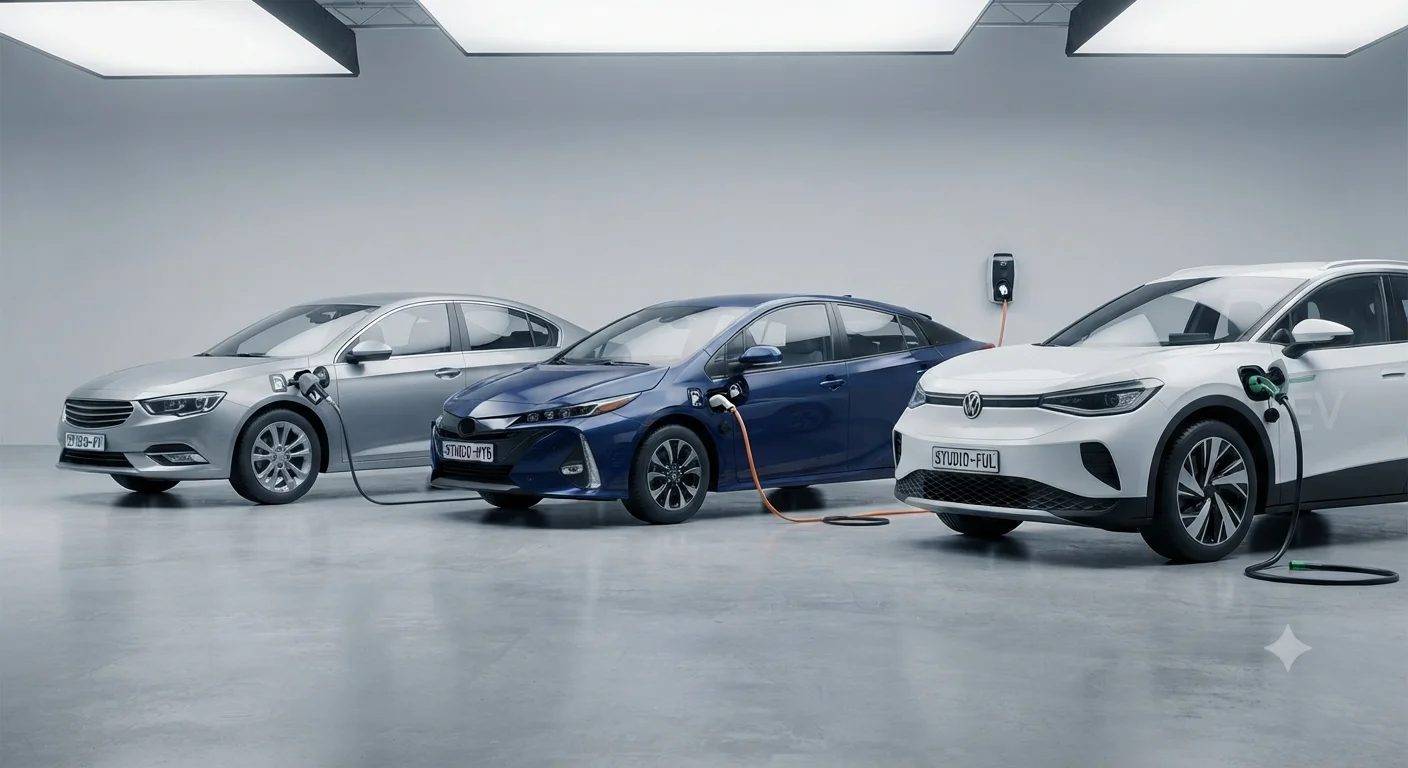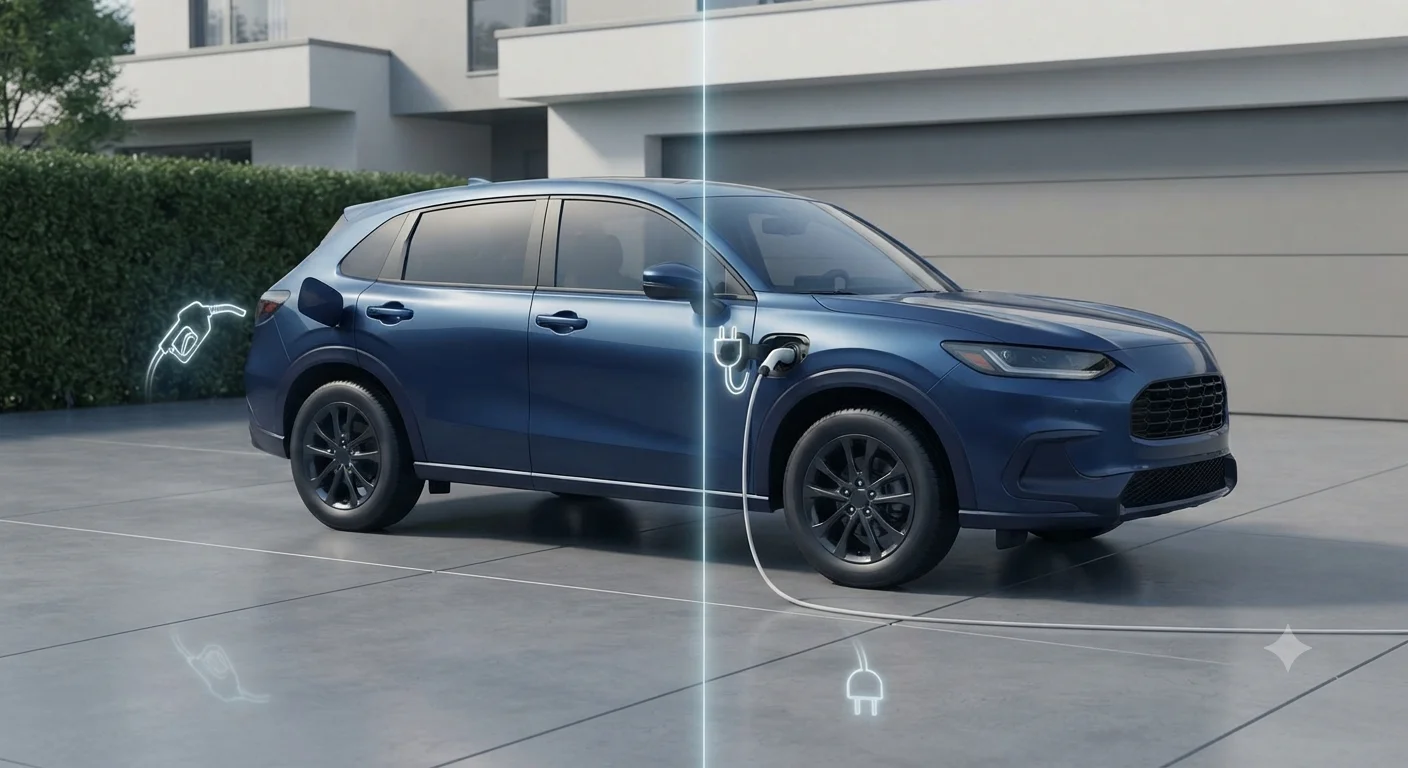
Choosing between a full hybrid and a plug-in hybrid is one of the most common questions UK drivers ask when they start looking at greener cars. Both use a petrol engine paired with an electric motor, but they’re built for different driving habits, and that difference affects everything from your fuel bill to how you charge the car.
This guide breaks down how hybrid car engines actually work, compares PHEV vs HEV in plain English, and covers the costs, maintenance, and buying decisions that matter most to UK owners.
What Is a Hybrid Car Engine?
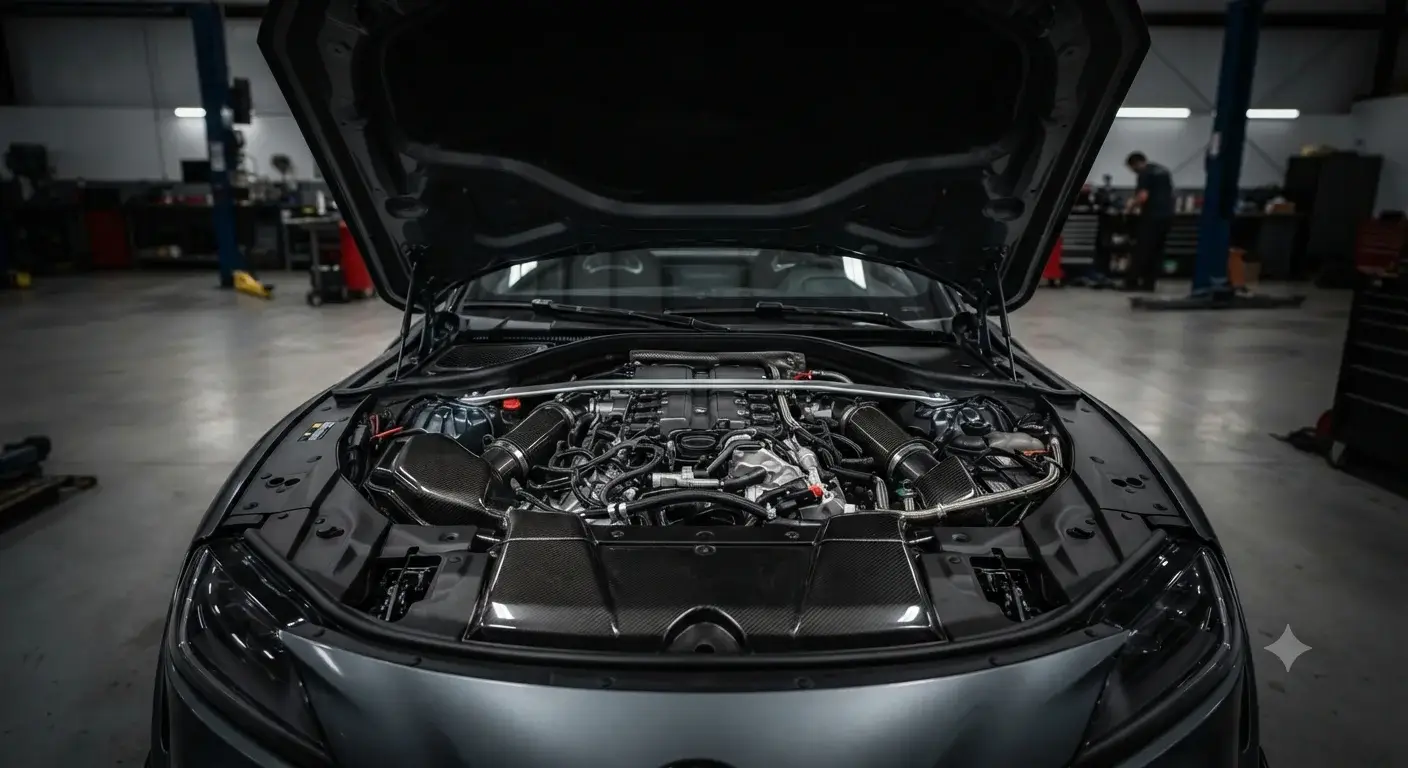
Quick answer: A hybrid car engines combines a traditional petrol (or occasionally diesel) internal combustion engine with one or more electric motors and a battery, working together to reduce fuel use and emissions.
Unlike a fully electric vehicle, a hybrid never needs to be plugged in to drive (with the exception of plug-in hybrids, covered below). The petrol engine and electric motor share the workload, switching between power sources or combining them depending on driving conditions.
This setup is what allows hybrids to sip less fuel in town driving, cut CO2 output, and still offer the range and refuelling convenience of a conventional car a big reason they’ve become so popular across the UK new car market.
How Hybrid Cars Engines Work?

Quick answer: Hybrid cars engines work by using regenerative braking and the petrol engine to recharge a small battery, which then powers an electric motor to assist or replace the engine at low speeds, in traffic, or during acceleration.
Here’s the process step by step:
- Starting off – At low speed, many hybrids run on electric power alone, since electric motors deliver strong torque instantly without burning fuel.
- Accelerating – The petrol engine kicks in to work alongside the electric motor, giving combined power for overtaking or motorway joins.
- Cruising – The car’s control system decides whether the engine, motor, or both should drive the wheels, based on efficiency.
- Braking or coasting – Regenerative braking captures energy that would otherwise be lost as heat and stores it in the battery.
- Idling or stationary – The petrol engine typically shuts off completely, saving fuel that would be wasted idling at traffic lights.
This constant switching happens automatically and seamlessly; drivers don’t need to do anything differently behind the wheel.
Main Components of a Hybrid Powertrain

| Component | Role |
|---|---|
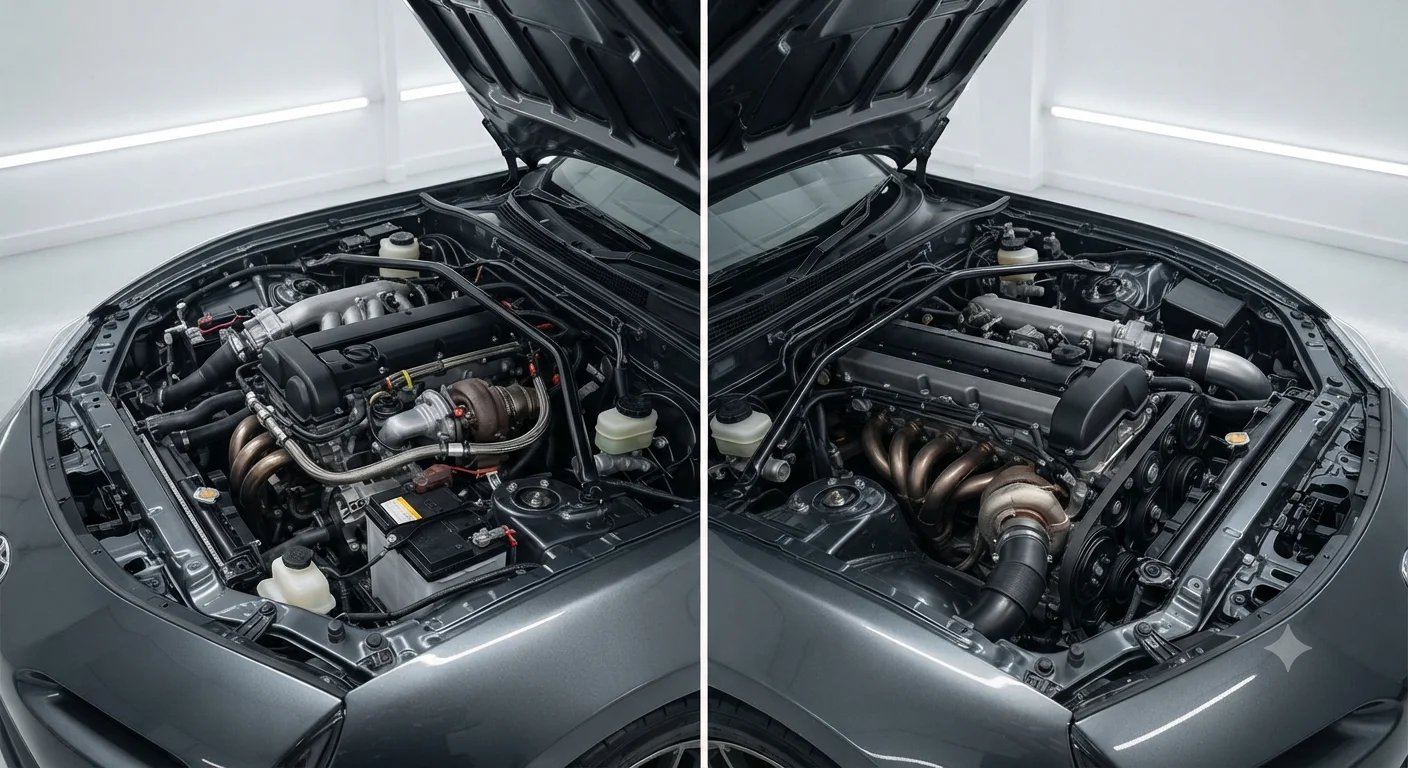
| Petrol engine | Provides primary power and recharges the battery in HEVs |
| Electric motor(s) | Assists or drives the wheels, especially at low speed |
| Battery pack | Stores electrical energy for the motor to use |
| Power control unit | Manages energy flow between engine, motor and battery |
| Regenerative braking system | Converts braking energy into stored electricity |
Types of Hybrid Cars Engines
Quick answer: There are four main types: mild hybrid (MHEV), full/self-charging hybrid (HEV), plug-in hybrid (PHEV), and range-extender hybrid (REx) each offering a different balance of electric-only driving and reliance on petrol.
- Mild Hybrid (MHEV): Small electric motor assists the engine but can’t drive the car on its own. Cheapest and simplest form of hybrid tech.
- Full Hybrid / Self-Charging Hybrid (HEV): Can drive short distances on electric power alone (usually 1–2 miles) without plugging in. Popular with brands like Toyota and Lexus.
- Plug-in Hybrid (PHEV): Larger battery that can be charged from the mains, offering 20–50+ miles of electric-only range before the petrol engine takes over.
- Range-Extender Hybrid (REx): The petrol engine only generates electricity rather than driving the wheels directly; rare in current UK models.
PHEV vs HEV: The Full Comparison

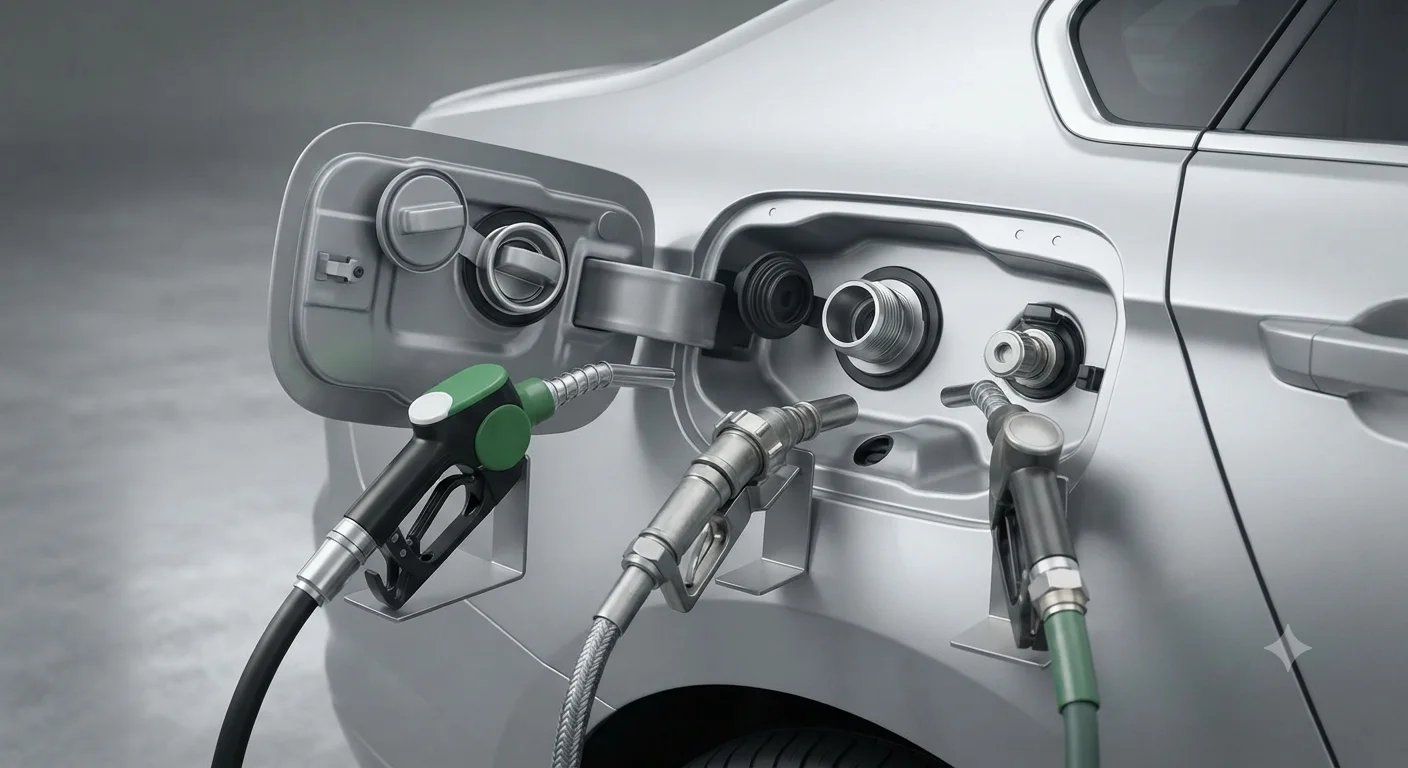
Quick answer: A PHEV can be charged externally and drives further on electric power alone, making it better for short commutes and drivers with home charging. An HEV never needs plugging in and suits drivers who cover longer distances or can’t charge at home.
| Feature | PHEV (Plug-in Hybrid) | HEV (Full/Self-Charging Hybrid) |
|---|---|---|
| Charging | Plug into mains or wallbox | Never needs plugging in |
| Electric-only range | 20–50+ miles | 1–2 miles |
| Battery size | Larger (8–20 kWh typical) | Smaller (1–2 kWh typical) |
| Best for | Short daily commutes, home charging access | Mixed or longer driving, no home charger |
| Fuel economy (short trips) | Excellent, often near-electric | Good, but engine kicks in sooner |
| Fuel economy (long motorway trips) | Similar to HEV once battery depletes | Consistently efficient |
| Purchase price | Generally higher | Generally lower |
| Company car tax (BiK) | Lower, especially with long electric range | Higher than PHEV, lower than petrol-only |
| Weight | Heavier due to bigger battery | Lighter |
In short: if you can plug in at home or work and your daily journey is under 40 miles, a PHEV can dramatically cut fuel use. If you can’t charge regularly or drive longer distances often, an HEV is the more practical, lower-maintenance choice.
Benefits of Hybrid Cars
- Lower fuel bills in stop-start UK traffic and urban driving
- Reduced CO2 emissions compared with petrol or diesel-only cars
- No range anxiety refuel at any petrol station
- Smoother, quieter driving at low speeds
- Lower Benefit-in-Kind (BiK) tax for company car drivers, particularly PHEVs
- Strong resale value, especially for well-known hybrid models like the Toyota Prius or RAV4 Hybrid
Common Hybrid Problems and Warning Signs
Quick answer: The most common hybrid issues involve battery degradation, warning lights on the dashboard, reduced electric range, and occasional inverter or cooling system faults.
Signs to watch for:
- Dashboard hybrid warning light illuminated
- Noticeably reduced electric-only range
- Engine running more often than usual, even at low speed
- Unusual whining or humming from the motor/inverter
- Reduced fuel economy over time
- Battery not holding charge as long as before (PHEVs)
None of these are common on well-maintained hybrids, but they’re worth knowing so problems can be caught early.
Causes of Hybrid Faults
- Battery age and degradation – like any battery, hybrid packs lose some capacity over years of use
- Extreme temperatures – very hot or cold conditions can affect battery performance
- Poor maintenance history – skipped servicing can hide developing issues
- Cooling system faults – hybrid batteries need cooling; failures here accelerate wear
- Software/control unit glitches – rare, but can trigger warning lights unnecessarily
Solutions and Repair Options
| Problem | Typical Solution | UK Cost Estimate |
|---|---|---|
| Reduced battery range | Battery reconditioning or replacement | £800–£3,000+ |
| Warning light (minor sensor fault) | Diagnostic check and reset | £50–£120 |
| Cooling fan/system fault | Repair or replacement | £150–£400 |
| Inverter fault | Specialist repair or replacement | £600–£1,500 |
| 12V auxiliary battery failure | Battery replacement | £80–£180 |
Costs vary by make, model and garage. Always get diagnostics from a hybrid-trained technician before agreeing to major repairs.
Hybrid Running Costs in the UK
Quick answer: Hybrid running costs in the UK are typically lower than petrol-only cars for fuel, similar or slightly higher for insurance, and favourable for road tax and company car tax depending on emissions and electric range.
- Fuel: HEVs typically return 50–65 mpg in mixed UK driving; PHEVs can achieve much higher figures if charged regularly and driven mostly on short trips.
- Road tax (VED): Based on CO2 emissions at registration; hybrids generally sit in lower bands than petrol-only equivalents, though the current VED system means most cars now pay a standard rate after the first year.
- Insurance: Broadly comparable to equivalent petrol models, sometimes marginally higher due to specialist parts.
- Servicing: Similar interval to petrol cars, though hybrid-specific checks add a modest cost.
- Charging (PHEV only): A full home charge typically costs a few pounds, far cheaper than the equivalent in petrol.
Maintenance Tips
- Service on schedule – don’t skip hybrid-specific battery and cooling checks
- Keep the 12V battery healthy – it powers the car’s electronics even in EVs and hybrids
- Charge PHEVs regularly if you own one, rather than relying on the engine
- Avoid extreme temperature exposure where possible to protect battery longevity
- Use a manufacturer-approved or hybrid-specialist garage for diagnostics
- Keep tyres correctly inflated hybrids are sensitive to rolling resistance for efficiency
- Monitor dashboard warnings and get them checked promptly rather than ignoring them
Buying Guide

Quick answer: When buying a hybrid in the UK, check battery health, service history, electric-only range (for PHEVs), and whether you have realistic access to home or workplace charging.
Key questions to ask before buying:
- Can I charge at home, work, or nearby or would an HEV suit me better than a PHEV?
- What’s my average daily mileage?
- Has the battery been tested, and is there a warranty remaining?
- Is the full service history available, including hybrid-specific checks?
- Does the model have a strong reliability reputation (Toyota, Lexus, Honda and Kia hybrids are well regarded in the UK)?
Mistakes to Avoid
- Buying a PHEV without a realistic way to charge it regularly you’ll rarely see the fuel savings
- Ignoring hybrid battery health checks on used cars
- Assuming all hybrids are the same MHEV, HEV and PHEV behave very differently
- Skipping hybrid-specific servicing at a non-specialist garage
- Choosing based on price alone without checking battery warranty terms
Myths vs Facts
| Myth | Fact |
|---|---|
| Hybrid batteries need replacing every few years | Most last well beyond 10 years with proper care |
| You must plug in all hybrids | Only PHEVs need plugging in; HEVs self-charge |
| Hybrids are much slower than petrol cars | Many hybrids match or beat petrol equivalents on acceleration due to instant electric torque |
| Hybrid servicing is much more expensive | Costs are broadly similar to petrol servicing, with minor extra checks |
| Hybrids aren’t worth it for high-mileage drivers | HEVs and PHEVs can still offer strong savings, especially in town driving |
Expert Tips
- If most of your driving is under 40 miles a day and you can charge at home, a PHEV will likely save you the most money.
- If you regularly drive motorways or can’t charge reliably, an HEV is the more sensible, lower-hassle option.
- Always ask for a hybrid battery health report on used cars reputable dealers can provide this.
- Look at total cost of ownership (fuel, tax, insurance, depreciation) rather than just the purchase price.
Hybrid Buying Checklist
- Confirm charging access (PHEV) or accept self-charging only (HEV)
- Check battery health report and remaining warranty
- Review full service history
- Compare BiK tax band if it’s a company car
- Test drive in both electric and engine-assisted modes
- Check insurance quotes before committing
- Confirm availability of hybrid-trained servicing nearby
Frequently Asked Questions
What is a hybrid car engines?
A hybrid car engine pairs a petrol engine with an electric motor and battery, sharing the driving workload to reduce fuel use and emissions.
How do hybrid cars work without plugging in?
Self-charging hybrids (HEVs) recharge their battery using the petrol engine and regenerative braking, so they never need to be plugged in.
What’s the difference between PHEV and HEV?
A PHEV has a larger battery that can be charged externally for 20–50+ miles of electric range; an HEV self-charges and offers only 1–2 miles of electric-only driving.
Is a PHEV worth it if I can’t charge at home?
Generally no without regular charging, a PHEV mostly runs on its petrol engine while carrying extra weight, reducing efficiency.
How much does a hybrid battery replacement cost in the UK?
Typically £800–£3,000+ depending on the model and whether reconditioned or new parts are used.
Do hybrid cars need special servicing?
Yes, hybrid-specific checks (battery, cooling, inverter) are added to a standard service, though intervals are similar to petrol cars.
How long do hybrid batteries last?
Most hybrid batteries are designed to last 8–15 years or more with proper care, often outlasting the warranty period.
Are hybrid cars cheaper to run than petrol cars in the UK?
Yes, particularly in town and stop-start driving, where hybrids can significantly reduce fuel consumption.
Can I drive a PHEV like a normal petrol car?
Yes if the battery is depleted, it drives like a regular hybrid, using the petrol engine as needed.
Do hybrids need less brake maintenance?
Often yes, since regenerative braking reduces wear on the physical brake pads and discs.
Is hybrid car insurance more expensive?
It’s usually comparable to equivalent petrol models, with only minor differences in some cases.
What’s the best hybrid for high-mileage UK drivers?
An HEV, such as a Toyota Corolla Hybrid or RAV4 Hybrid, is generally better suited to consistent, longer-distance driving.
Do hybrid cars qualify for lower road tax in the UK?
Hybrids with lower CO2 emissions can benefit from reduced first-year VED rates, though standard rates apply from year two.
Can I convert a petrol car into a hybrid?
Aftermarket hybrid conversions exist but are rare, costly, and not officially supported by most manufacturers.
Is now a good time to buy a hybrid in the UK?
With rising fuel costs and improving hybrid technology, many UK drivers find hybrids offer a practical middle ground between petrol and fully electric cars.
Conclusion
Hybrid car engines aren’t a one-size-fits-all technology the right choice between PHEV and HEV comes down to your charging access and daily driving pattern. PHEVs reward drivers who can plug in regularly with genuinely low running costs, while HEVs offer a simpler, self-charging solution for those who can’t.
Either way, understanding how hybrid cars engines work puts you in a stronger position to buy confidently and maintain your car properly for years to come.
Call to Action
Thinking about switching to a hybrid? Compare your driving habits against the PHEV vs HEV breakdown above, get a battery health check on any used hybrid you’re considering, and speak to a hybrid-specialist garage before you buy.