Winter car maintenance is the set of checks and preparations covering the battery, tyres, fluids, brakes, and lights that keep a vehicle safe and reliable during cold, wet, and icy UK conditions. Skipping these checks is one of the most common reasons drivers get stranded in the colder months, and most of the issues involved are entirely preventable with a bit of planning before the temperature drops.
This guide walks through exactly what to check, how to do it, what it costs in the UK, and the mistakes most drivers make when they leave winter prep too late.
What Is Winter Car Maintenance?
Direct answer: Winter car maintenance means checking and servicing the parts of your car most affected by cold weather the battery, tyres, coolant/antifreeze, brakes, lights, and wiper system before temperatures regularly drop below freezing.
In the UK, this typically means starting preparation in October or early November, before the first frosts arrive, rather than waiting until a cold snap catches drivers out. The RAC and AA both report a sharp rise in winter breakdown call-outs each year, and the majority trace back to flat batteries, worn tyres, or antifreeze that hasn’t been checked in years.
How Winter Affects Your Car?

Direct answer: Cold weather reduces battery performance, stiffens tyre rubber, thickens engine oil, and increases strain on the cooling system all of which raise the risk of a breakdown if left unaddressed.
- Batteries lose a significant portion of their effective power output in freezing temperatures, exactly when the engine needs more current to start.
- Tyres lose grip as rubber compounds harden below around 7°C, which is why winter or all-season tyres exist as a defined category.
- Engine oil thickens in the cold, making it work harder to circulate and lubricate properly during cold starts.
- Coolant/antifreeze that’s too diluted can freeze, potentially cracking the engine block a genuinely expensive repair.
Benefits of Preparing Your Car for Winter
- Fewer breakdowns a proactive check catches problems before they leave you stranded on a cold morning.
- Better fuel/energy efficiency correctly inflated tyres and a well-maintained engine perform more efficiently in cold conditions.
- Improved safety working lights, brakes, and tyres directly reduce accident risk on wet or icy roads.
- Lower long-term costs small preventative checks avoid larger repair bills later (a flat battery call-out is far cheaper than a replacement alternator).
- Peace of mind knowing the car is winter-ready removes one less thing to worry about on a cold commute.
Types of Winter Car Checks

| Check Type | What It Covers | Recommended Frequency |
|---|---|---|
| Battery test | Voltage, age, terminal corrosion | Annually, before winter |
| Tyre check | Tread depth, pressure, winter tyre fitting | Monthly through winter |
| Fluid check | Antifreeze/coolant, screen wash, oil | Before winter, then monthly |
| Lights check | Headlights, fog lights, indicators | Weekly through winter |
| Brake check | Pad wear, disc condition, handbrake | Annually or at MOT |
| Wiper check | Blade condition, washer jets | Before winter |
Common Winter Car Problems
Direct answer: The most common UK winter car problems are flat or weak batteries, reduced tyre grip, frozen door locks or windscreens, and coolant that has frozen or degraded.
Signs Your Car Isn’t Ready for Winter
- Engine cranks slowly or takes longer than usual to start
- Tyre tread below 3mm (legal minimum is 1.6mm, but 3mm is the safer working threshold for winter grip)
- Windscreen washer fluid freezes instead of clearing the glass
- Dashboard battery or charging warning light appears
- Visible corrosion on battery terminals
- Heater takes longer than usual to produce warm air
Causes of Winter Breakdowns
- Battery age most car batteries last 3–5 years; cold weather exposes batteries already near the end of their life.
- Low tread depth worn tyres lose grip much faster in wet or icy conditions than tyres with healthy tread.
- Diluted antifreeze coolant that’s been topped up with plain water over time loses its freeze protection.
- Ignored warning lights many winter breakdowns follow a warning light that was noticed but not acted on.
- Short journeys frequent short trips don’t let the battery fully recharge, which is worse in cold weather when the battery is already under more strain.
Solutions and Repair Options
Direct answer: Most winter car problems have straightforward fixes a battery test and replacement if needed, a tyre check with tread and pressure correction, a coolant top-up or full antifreeze change, and a basic bulb and wiper check.
| Problem | Solution | Typical UK Cost |
|---|---|---|
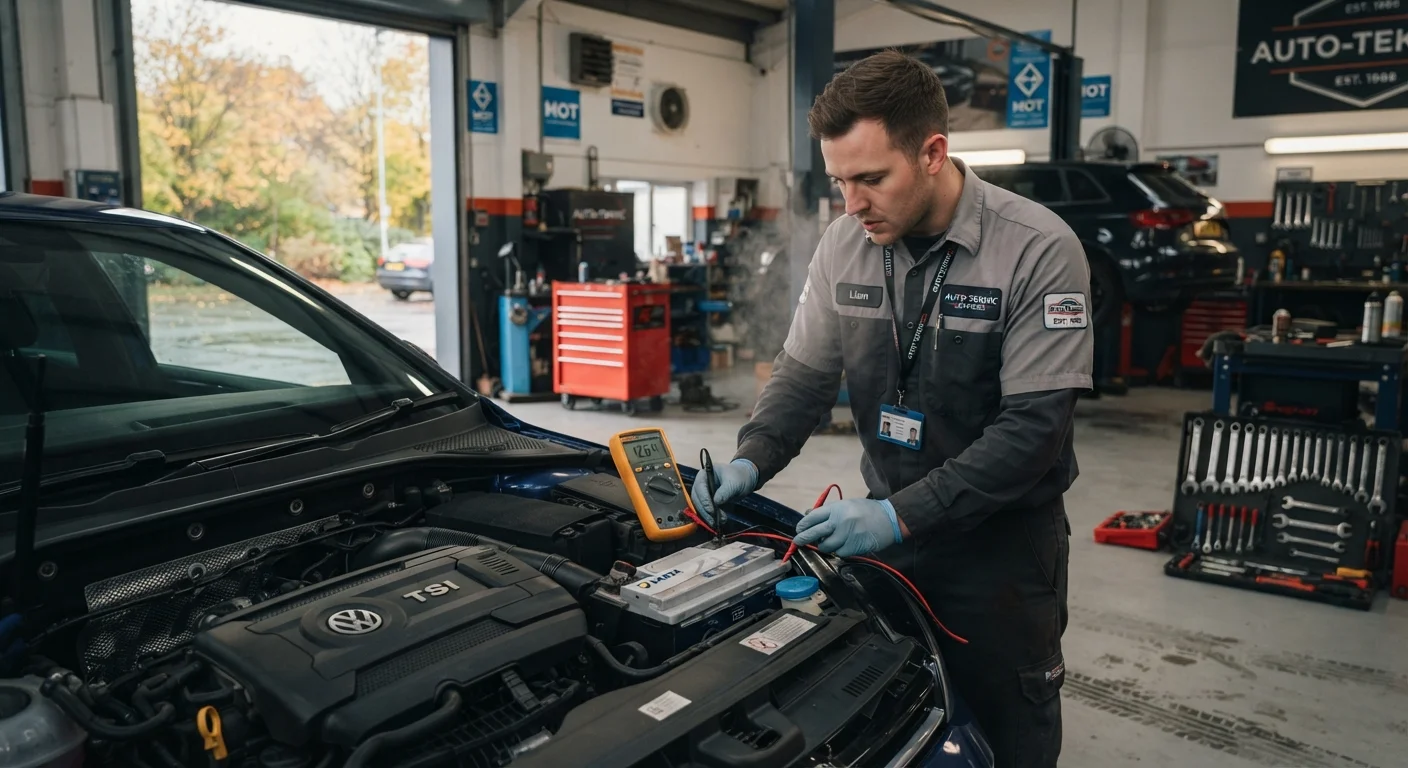
| Weak battery | Battery test, replace if under 12.4V resting | £70–£150 supplied and fitted |
| Low tread depth | Fit winter or all-season tyres | £60–£150 per tyre depending on size/brand |
| Diluted antifreeze | Flush and refill coolant system | £60–£120 |
| Worn wiper blades | Replace blades | £15–£40 for a pair, fitted |
| Faulty bulb | Replace headlight/fog light bulb | £10–£40 depending on bulb type |
These are general UK estimates and vary by garage, region, and vehicle make/model always confirm with a quote before booking work.
UK Costs for Winter Preparation
Direct answer: A full winter car check in the UK covering battery, tyres, fluids, and lights typically costs between £30 and £60 for the inspection alone, with any repairs or replacements charged on top.
Many garages, including Halfords and Kwik Fit, offer a dedicated “winter check” service, and some run it free or discounted as a seasonal promotion it’s worth checking before paying for a standalone inspection.
Winter Maintenance Checklist
- Test battery voltage and check terminals for corrosion
- Check tyre tread depth (minimum 1.6mm legally, 3mm recommended for winter)
- Check tyre pressure, which drops in cold weather
- Top up or replace antifreeze/coolant
- Refill screen wash with a winter-strength (freeze-resistant) mixture
- Check all exterior lights and replace any faulty bulbs
- Replace worn wiper blades
- Check brake pads, discs, and handbrake function
- Pack an emergency winter kit (torch, blanket, ice scraper, de-icer, phone charger)
- Check the spare tyre or tyre repair kit is usable
Buying Guide: Winter Tyres And Equipment

Direct answer: Winter tyres are worth considering for drivers in rural, hilly, or consistently cold parts of the UK, while all-season tyres suit drivers who want year-round convenience without swapping tyres twice a year.
- Winter tyres best grip below 7°C, ideal for consistently cold regions (Scotland, northern England, rural areas)
- All-season tyres a compromise option, reasonable performance year-round without needing to swap tyres
- Summer tyres not recommended through winter in the UK; grip drops noticeably in cold and wet conditions
- Snow socks/chains a lower-cost backup option for occasional heavy snow, rather than a full winter tyre replacement
Mistakes to Avoid
- Waiting until the first cold snap to check the battery, rather than testing it in October
- Using summer-strength screen wash, which can freeze in the reservoir and crack the bottle
- Ignoring a slow-cranking engine, assuming it will “sort itself out”
- Driving on tyres below 3mm tread through winter to save money on replacement
- Skipping the coolant/antifreeze check, especially on older vehicles
- Forgetting to check the spare tyre or repair kit before winter, when a puncture is more likely
Expert Tips
- Test your battery’s actual voltage rather than just relying on how the engine sounds many garages will do this for free.
- Keep your fuel or charge level above a quarter tank through winter; this reduces condensation risk in fuel tanks and gives you a buffer if you’re delayed in traffic or snow.
- If you drive mostly short trips, consider an occasional longer drive to let the battery fully recharge, particularly in an older vehicle.
- Store an emergency kit in the boot from October through to March, not just when snow is forecast.
Pros And Cons Of DIY Vs Garage Winter Checks
DIY Winter Check
- Pros: Free or low-cost, quick for basic checks (tyres, lights, fluids)
- Cons: Battery testing needs proper equipment; easy to miss less obvious issues
Garage Winter Check
- Pros: Professional battery/tyre testing, catches issues a visual check might miss
- Cons: Costs money (though often discounted or free as a seasonal offer)
Myths vs Facts
| Myth | Fact |
|---|---|
| “New batteries never fail in winter” | Even a battery under a year old can struggle in extreme cold if it’s been weakened by short journeys or a fault. |
| “Winter tyres are only useful in snow” | Winter tyres improve grip in any temperature below roughly 7°C, including cold, wet, non-snowy conditions common across the UK. |
| “You only need to check your car once before winter” | Conditions change through the season tyre pressure and battery condition are worth re-checking monthly. |
| “Antifreeze lasts forever once topped up” | Coolant loses its freeze-protection properties over time and needs periodic checking or replacing. |
Conclusion

Winter car maintenance in the UK comes down to a handful of consistent checks
battery, tyres, fluids, lights, and brakes done before the cold weather arrives rather than after a problem shows up. None of these checks are complicated or expensive on their own, but skipping them is one of the most common reasons UK drivers end up stranded roadside in winter. A short seasonal check-up, whether done yourself or at a garage, is a small investment against a much more costly and inconvenient breakdown.
Call to Action: Book a winter car check today, or browse our full seasonal car care guides to keep your vehicle ready for whatever the UK winter brings.
Frequently Asked Questions Winter Car Maintenance
What is winter car maintenance?
It’s the set of seasonal checks battery, tyres, coolant, lights, and brakes that prepare a vehicle for cold, wet, and icy UK driving conditions.
How much does winter car maintenance cost in the UK?
A basic winter check typically costs £30–£60, with additional charges for any parts or repairs needed, such as a new battery or tyres.
Is winter car maintenance worth it?
Yes it’s generally far cheaper than dealing with a breakdown, and it directly improves safety on cold, wet, or icy roads.
How often should I check my car battery in winter?
Test it once before winter begins, and again if you notice slow starting, since cold weather significantly reduces battery performance.
Do I need winter tyres in the UK?
They’re not legally required, but they’re worth considering if you drive regularly in rural, hilly, or consistently cold areas, since grip improves noticeably below 7°C.
What antifreeze mix should I use in winter?
Most UK vehicles need a 50/50 mix of antifreeze and water, though you should check your owner’s manual for the manufacturer’s exact recommendation.
Why does my car struggle to start in cold weather?
Cold temperatures reduce a battery’s effective power output and thicken engine oil, both of which make it harder for the engine to turn over.
How do I know if my tyres are ready for winter?
Check that tread depth is above 3mm (the legal minimum is 1.6mm) and that tyre pressure is correct, since cold weather causes pressure to drop.
Should I warm up my car before driving in winter?
A short warm-up (30–60 seconds) is enough for modern engines; leaving a car idling for a long time wastes fuel and isn’t necessary for the engine itself, though it does help clear windows.
What should be in a winter car emergency kit?
A torch, blanket, ice scraper and de-icer, phone charger, warm clothing, and a basic first aid kit are commonly recommended for UK winter driving.
Can cold weather damage my car if I don’t prepare?
Yes issues like a cracked engine block from frozen coolant, a failed battery, or reduced tyre grip can all result from skipping winter checks.
Is it illegal to drive with worn tyres in the UK?
Yes the legal minimum tread depth is 1.6mm across the central three-quarters of the tyre; driving below this can result in fines and penalty points.
How long do car batteries last in the UK climate?
Most car batteries last around 3–5 years, though cold weather and frequent short journeys can shorten this lifespan.
Do electric cars need different winter maintenance?
EVs need less traditional maintenance (no engine oil or antifreeze in the same sense), but cold weather does reduce range, so battery health checks and pre-conditioning the cabin while plugged in are worth doing.