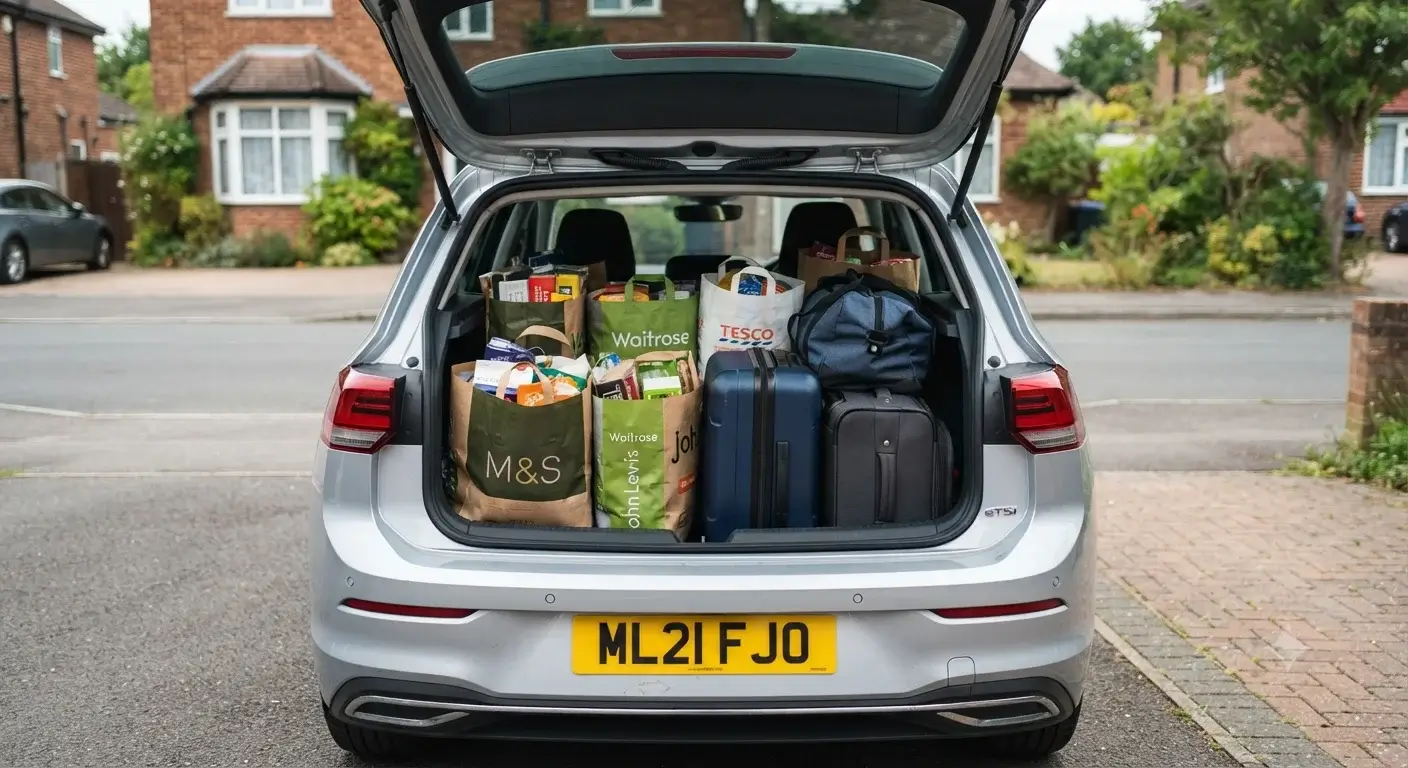
In the UK, most people call it a boot, but “car trunk” is the term used worldwide and it’s exactly the same part of the car. It’s the enclosed storage space at the back of a vehicle, and it’s one of the most-used features on any car, whether you’re doing the weekly shop, packing for a family holiday, or fitting in a pushchair on the school run.
This guide covers everything: how a car trunk works, the different types you’ll find on UK roads, common problems and their fixes, realistic UK repair costs, maintenance tips, and a buying checklist if boot space is a priority for your next car.
What Is a Car Trunk (Boot)?
A car trunk (called a “boot” in the UK) is the enclosed storage compartment at the rear of a vehicle, used for carrying luggage, shopping, tools and other items separately from the passenger cabin.
It’s usually accessed via a hinged lid that lifts upward, though some vehicles particularly hatchbacks and estates use a full tailgate that opens the whole rear section, including the rear window.
The boot isn’t just a storage box. It also plays a role in.
- Vehicle structure it forms part of the car’s crumple zone at the rear.
- Weight distribution where you load your boot affects handling and fuel economy.
- Security a locked boot keeps valuables out of sight and out of reach.
How a Car Trunk Works?

A car trunk works through a hinge-and-latch system, usually supported by gas struts, that allows the lid to open and close securely while sealing out water, dust and noise.
The main components include
| Component | Function |
|---|---|
| Hinges | Allow the boot lid to pivot open and closed |
| Gas struts | Hold the lid open without support, and assist lifting |
| Latch/lock mechanism | Keeps the boot securely shut and integrates with central locking |
| Rubber seal | Prevents water and dust ingress, reduces road noise |
| Release cable or electronic actuator | Opens the boot from inside the car or via the key fob |
| Boot floor/parcel shelf | Covers the spare wheel well and hides contents from view |
On many newer UK cars, boots are opened with a button on the key fob, a switch on the dashboard, or even a foot-swipe sensor under the rear bumper for hands-free opening handy when your hands are full of shopping bags.
Types of Car Trunks
Not all boots are built the same. The main types found on UK roads are conventional boots, hatchback tailgates, estate/tourer boots, and SUV tailgates.
| Type | Common On | Boot Access | Typical Capacity |
|---|---|---|---|
| Conventional boot | Saloons (e.g. Skoda Octavia saloon) | Lid only, separate from cabin | 400–550 litres |
| Hatchback tailgate | Ford Fiesta, VW Golf | Full rear window + boot lid together | 280–400 litres |
| Estate/tourer boot | Skoda Superb Estate, Audi A4 Avant | Full tailgate, extended load area | 500–650+ litres |
| SUV tailgate | Nissan Qashqai, Land Rover models | Full tailgate, often higher load lip | 400–600+ litres |
| Powered/hands-free tailgate | Premium models across all types | Electric opening, foot sensor option | Varies |
Benefits of a Well-Designed Boot
A good boot design isn’t just about size. Key benefits include.
- Practicality — enough space for prams, shopping, sports gear or luggage.
- Flexibility — split-folding rear seats (60/40 or 40/20/40) let you extend the load area when needed.
- Security — a solid, well-sealed boot keeps items hidden and protected from weather.
- Safety — a properly functioning boot forms part of the car’s rear crash structure.
- Convenience features — hands-free tailgates, boot lighting, 12V sockets and load-securing nets make daily use easier.
Common Car Trunk Problems
The most common car trunk problems in the UK are a boot that won’t open or close properly, water leaking into the boot, a faulty release button, and worn gas struts that won’t hold the lid up.
Typical issues include
- Boot lid won’t latch shut
- Boot won’t open from the key fob or interior release
- Water pooling in the boot floor after rain
- Musty smell from trapped moisture
- Boot lid sags or won’t stay open on its own
- Rattling or clunking noises when driving
- Central locking not syncing with the boot lock
Signs & Symptoms of a Faulty Boot
| Symptom | Likely Cause |
|---|---|
| Boot won’t stay open | Worn or gassed-out struts |
| Damp carpet or musty smell | Perished rubber seal letting in water |
| Boot won’t open with fob but works with key | Faulty actuator or wiring fault |
| Rattling from the rear | Loose boot latch, worn hinges, or loose parcel shelf |
| Boot lid slightly misaligned | Worn hinges or previous minor collision damage |
| Central locking beeps but boot stays locked | Software/module fault in some newer cars |
Causes of Boot Faults
- Age and wear — rubber seals and gas struts naturally degrade over 8–12 years.
- Weather exposure — UK winters (salt, rain, freeze-thaw cycles) accelerate corrosion around hinges and locks.
- Overloading — repeatedly loading the boot beyond its intended weight limit stresses hinges and struts.
- Minor accident damage — even a light rear shunt can misalign the boot lid or damage the latch.
- Electrical faults — blown fuses, corroded wiring or a failing central locking module.
Solutions & Repair Options
Most car trunk problems can be fixed by replacing gas struts, resealing the rubber gasket, or repairing the latch and wiring jobs that a local garage or mobile mechanic can usually complete within a day.
| Problem | Recommended Fix |
|---|---|
| Boot won’t stay open | Replace gas struts (sold in pairs) |
| Water ingress | Replace or reseat the rubber door/boot seal |
| Won’t open via fob | Check fuse, then actuator motor or wiring |
| Rattling | Tighten or replace latch mechanism, check parcel shelf clips |
| Misaligned lid | Adjust hinges, or bodywork repair if accident-related |
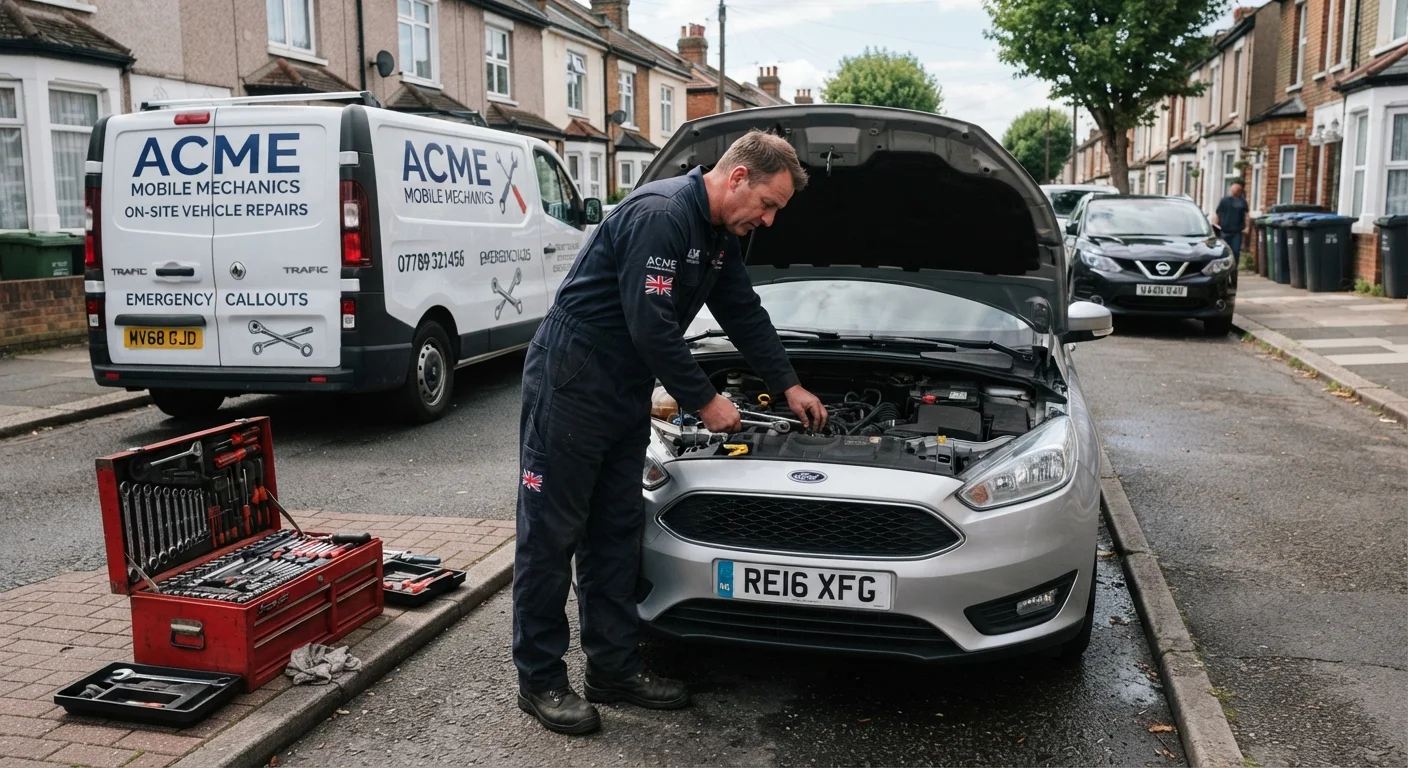
For anyone unsure about a specific fault, it’s worth reading our guide on mobile mechanics near you in the UK many boot repairs can be done at home or work without a garage visit.
UK Repair Costs

In the UK, typical car trunk repair costs range from around £20 for a single gas strut to £150–£300 for latch or actuator replacement, depending on the make and model.
| Repair | Estimated UK Cost (2026) |
|---|---|
| Gas strut (pair, DIY parts) | £20–£60 |
| Gas strut (fitted by garage) | £60–£120 |
| Boot seal replacement | £30–£90 |
| Latch/lock mechanism replacement | £80–£200 |
| Boot actuator motor replacement | £100–£300 |
| Bodywork repair (minor dent/misalignment) | £150–£500+ |
Prices are general estimates and vary by garage, region and vehicle brand. Always get a written quote before authorising work.
Maintenance Tips

Regularly cleaning the boot seal, avoiding overloading, and checking for water ingress after heavy rain will keep a car trunk working properly for years.
- Wipe down and lightly grease rubber seals every few months to keep them supple.
- Don’t slam the boot shut this stresses hinges and latches over time.
- Remove wet items (umbrellas, muddy boots) promptly to avoid trapped moisture.
- Check the spare wheel well isn’t holding water after wet weather.
- Have gas struts checked at MOT time if the boot feels heavy to lift.
- Avoid overloading beyond the manufacturer’s stated boot weight limit.
For general upkeep beyond the boot, our car maintenance tips for UK drivers covers the wider picture, and it’s worth checking boot function as part of your UK MOT test preparation, since a boot that won’t close securely can be flagged.
Buying Guide: Choosing a Car by Boot Space

If boot space is a priority, estate cars and larger SUVs generally offer the most usable volume, while hatchbacks and superminis suit those who value manoeuvrability over capacity.
Consider
- Litre alone don’t tell the whole story — shape matters as much as volume. A boot with a low load lip and square shape is often more usable than a larger but awkwardly shaped one.
- Split-folding seats — 60/40 as standard, but 40/20/40 gives more flexibility for long, narrow items like skis.
- Powered tailgates — useful if you often carry shopping or a pushchair, but add cost and weight.
- Load lip height — lower is easier for lifting heavy items, especially relevant for anyone with back issues.
- Underfloor storage — useful for hiding valuables or storing a first aid kit and warning triangle.
If you’re weighing up a bigger family car, our guides on the Mercedes-Benz S-Class, Mercedes-Benz GLS, and Land Rover model range all include boot capacity comparisons.
Mistakes to Avoid
- Ignoring a slow-closing boot — this usually signals worn struts, not just a “quirky” car.
- Overloading beyond weight limits — can strain hinges and even affect handling and braking distances.
- Leaving wet items in the boot — leads to mould, bad smells and corrosion over time.
- DIY electrical fixes without checking fuses first — often the fault is simpler (and cheaper) than assumed.
- Skipping seal checks before winter — a failing seal becomes far more obvious once the cold, wet weather sets in.
Expert Tips

- A mechanic’s rule of thumb: if a boot lid drops on its own within a few seconds, the gas struts need replacing it’s rarely anything more serious.
- Keep a folding crate or boot organiser in the trunk to stop shopping and loose items sliding around, which reduces rattling and wear on interior boot trim.
- If buying a used car, always test the boot release from both the fob and the interior switch, and check for damp smells a classic sign of a perished seal that sellers may not disclose.
Myths vs Facts
| Myth | Fact |
|---|---|
| “A rattling boot means something is broken.” | Often it’s just a loose parcel shelf or unsecured item check before assuming a costly fault. |
| “All boots are measured the same way.” | Manufacturers use different measuring standards (VDA vs SAE), so litre figures aren’t always directly comparable between brands. |
| “You should always keep the boot completely empty to save fuel.” | A few extra kilos makes negligible difference; overloading well beyond the limit is what affects economy and safety. |
| “Boot repairs always need a main dealer.” | Most gas strut, seal and latch repairs can be done by any competent independent garage or mobile mechanic. |
Checklist: Boot Care & Safety
- Boot opens and closes smoothly from both fob and interior switch
- Rubber seal intact, no cracking or gaps
- No damp smell or water pooling inside
- Gas struts hold the lid open without sagging
- Spare wheel, jack and warning triangle present and secure
- No loose rattles when driving over bumps
- Boot light works (useful for night-time loading/unloading)
Conclusion
The car trunk might not be the most exciting part of a vehicle, but it’s one you’ll use every single day from the weekly shop to family holidays. Understanding how it works, spotting early signs of trouble, and keeping up with simple maintenance can save UK drivers real money on repairs and help the boot last the life of the car. If in doubt, get any unusual noise, leak or fault checked early rather than waiting for it to worsen.
Call to Action: If your boot isn’t opening, closing or sealing properly, don’t wait for it to get worse check out our guide to finding a mobile mechanic near you in the UK for a quick, convenient fix.
FAQs
What is a car trunk called in the UK?
In the UK, a car trunk is called a “boot.” The term “trunk” is mainly used in American English.
How much does it cost to fix a car boot in the UK?
Costs range from around £20 for basic gas struts to £300 or more for actuator or latch replacements, depending on the vehicle.
Why won’t my boot open with the key fob?
This is often due to a blown fuse, a faulty actuator motor, or a wiring fault. Check the fuse box first, as it’s the cheapest and quickest thing to rule out.
Is it normal for a boot to drop suddenly when open?
No this is a clear sign the gas struts have worn out and need replacing, usually an inexpensive fix.
How do I stop water getting into my boot?
Check and replace the rubber seal if it’s cracked, perished or compressed, and make sure drainage channels around the boot aren’t blocked.
What’s the difference between a boot and a hatchback tailgate?
A boot is a separate lid covering a storage area, while a hatchback tailgate opens the entire rear section, including the rear window, as one unit.
Do all cars measure boot space the same way?
No. Manufacturers may use VDA (a German liter-block method) or other methods, so figures between brands aren’t always perfectly comparable.
Can I fix a rattling boot myself?
Often yes check the parcel shelf, boot floor liner and any loose items first before assuming a mechanical fault.
Is it worth buying a car with a powered tailgate?
It’s a genuine convenience, especially for parents or anyone regularly carrying heavy or bulky items, but it adds cost and slightly more to maintain long-term.
How often should I check my boot seal?
Check it at least twice a year, ideally before winter and after any long dry spell, since rubber seals can crack in extreme heat too.
Does overloading the boot affect my car’s safety?
Yes. Overloading beyond the manufacturer’s limit can affect handling, braking distance and tyre wear, and may invalidate insurance in some cases.
What should I keep in my boot for UK driving?
A warning triangle, hi-vis vest, basic first aid kit, torch and a foldable shovel or grit in winter are sensible additions.
Will a faulty boot lock fail an MOT?
A boot that won’t close and latch securely can be flagged during an MOT inspection, since it affects the vehicle’s security and structural integrity.
How long do gas struts typically last?
Most gas struts last 8–12 years, though UK weather and frequent boot use can shorten this slightly.
Is boot space the same as usable load space?
Not always. Litre figures measure volume, but shape, load lip height and floor layout all affect how much you can actually fit in practice.