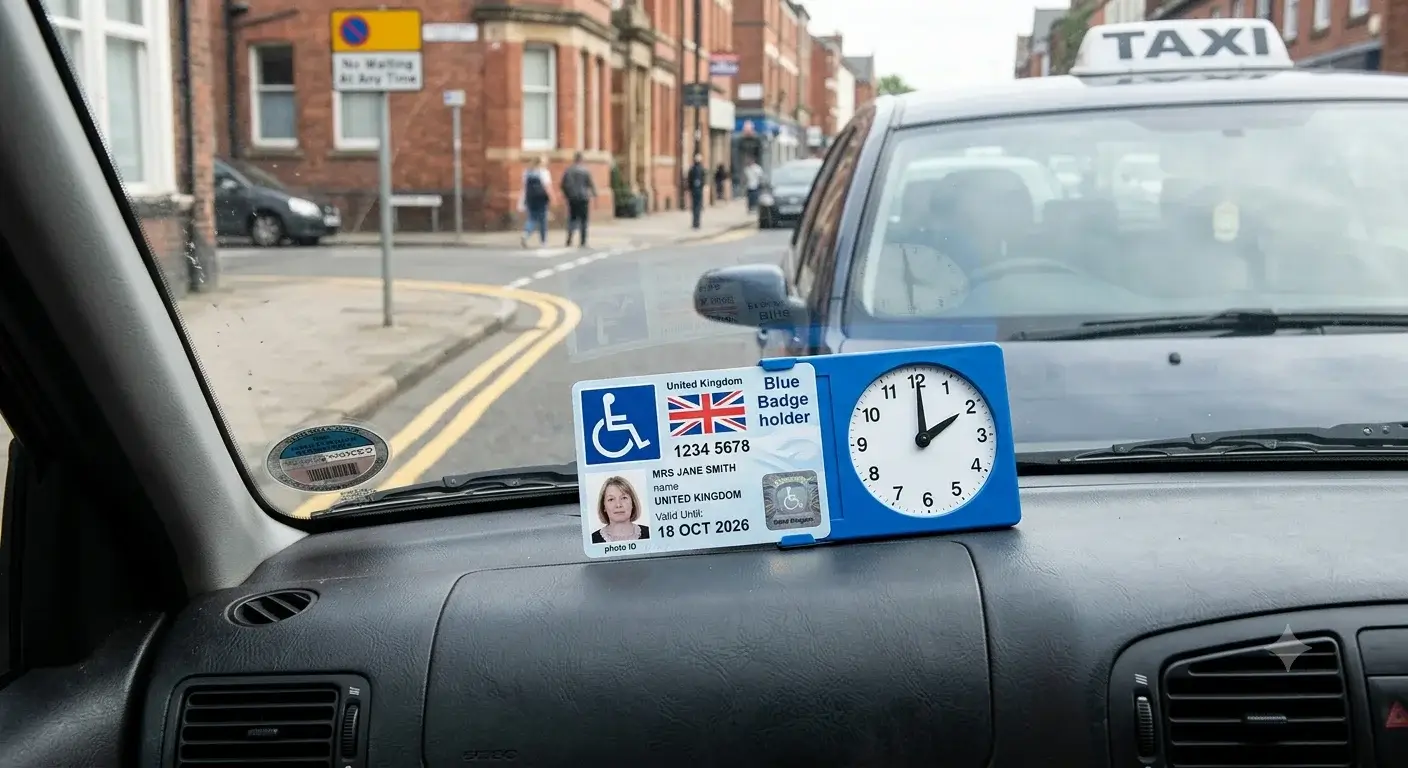
If you drive in the UK, you’ll spend a big chunk of your time on a highway of some kind whether that’s a motorway, a dual carriageway, or a busy A-road. Yet a surprising number of drivers are shaky on the actual rules, the different types of highway, and what it really costs to keep a car running smoothly at speed.
This guide breaks it all down in plain English. We’ll cover what counts as a highway in the UK, how the road network is structured, the rules you must follow, common problems drivers run into, and practical tips for safer, cheaper highway driving in 2026.
1. What Is a Highway?
Quick answer: In the UK, “highway” is a legal term for any public road, path, or way from a motorway to a footpath but in everyday use, people mean the main roads used for fast, long-distance travel, such as motorways and dual carriageways.
Under English law, the Highways Act 1980 defines a highway as any route the public has a legal right to pass over that technically includes pavements and bridleways, not just roads for cars. In everyday conversation, though, “highway” almost always refers to the bigger roads: motorways, dual carriageways, and major A-roads that carry long-distance traffic at higher speeds.
This is why UK drivers often use “highway” loosely to mean any fast, arterial road, while the Highway Code (the official rulebook for all road users) uses the word in its wider, legal sense.
2. How the UK Highway Network Works

Quick answer: The UK highway network is managed by different bodies depending on road type and nation National Highways runs motorways and major A-roads in England, while local councils, Transport Scotland, and Traffic Wales manage the rest.
- National Highways manages motorways and trunk roads in England.
- Local councils maintain most A, B, and unclassified roads.
- Transport Scotland and Traffic Wales manage strategic routes in their nations.
- Network Rail and local authorities jointly handle level crossings and shared infrastructure.
Funding comes from a mix of central government budgets, Vehicle Excise Duty (road tax), and, on a small number of routes, tolls (such as the M6 Toll).
3. Types of Highways in the UK

Quick answer: UK highways range from motorways (fastest, most restricted) down to unclassified local roads (slowest, least regulated).
| Highway Type | Typical Speed Limit | Key Features |
|---|---|---|
| Motorway (M-roads) | 70 mph | Blue signs, no pedestrians/cyclists, hard shoulder or smart motorway |
| Dual Carriageway (A-roads) | 70 mph | Central reservation, two-plus lanes each way |
| Single Carriageway A-roads | 60 mph | One lane each direction, mixed traffic |
| B-roads | 60 mph (often lower in practice) | Narrower, more bends, local traffic |
| Unclassified roads | 30–60 mph | Residential and rural minor roads |
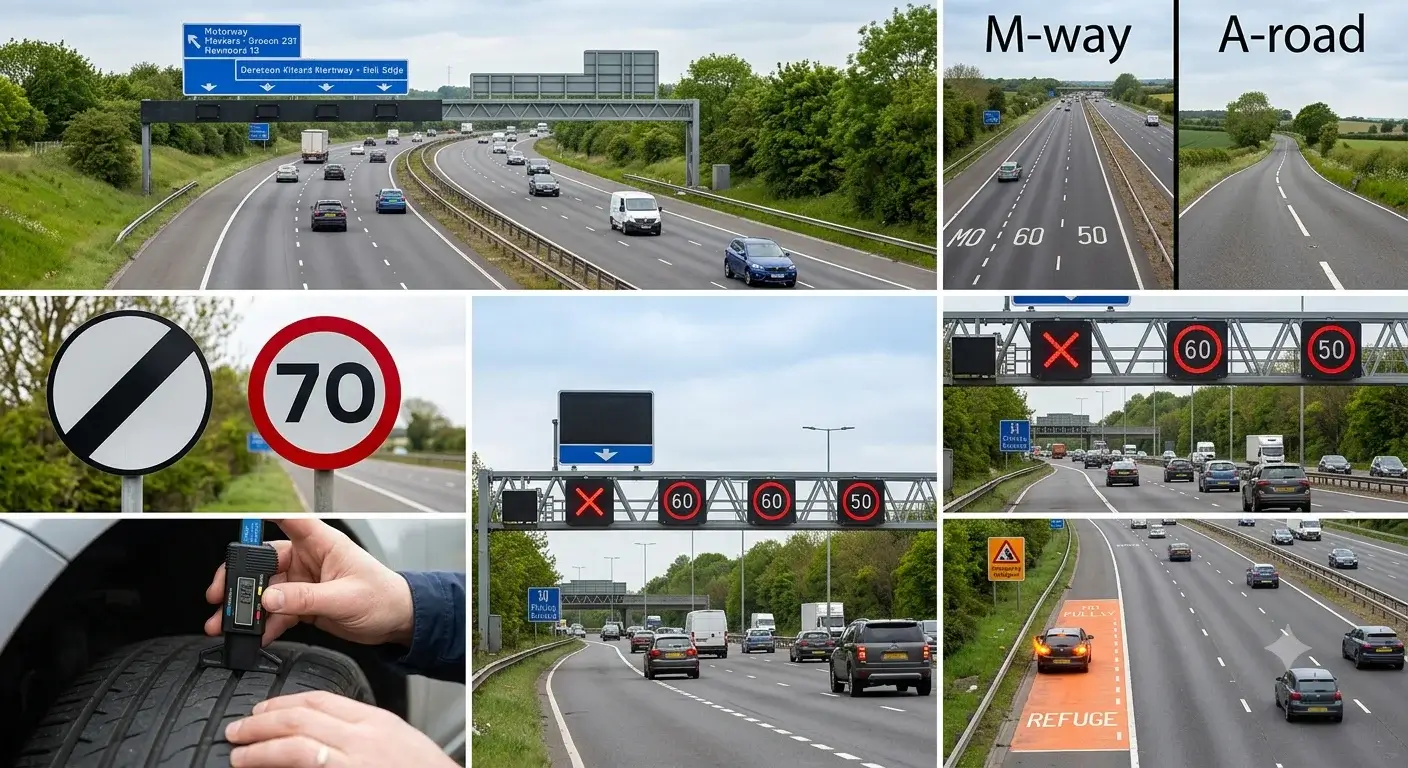
| Smart motorways | Variable (shown on gantry signs) | Active traffic management, some use hard shoulder as a running lane |
Smart motorways deserve a special mention. These use technology variable speed limits, average speed cameras, and electronic signs to manage traffic flow. Following safety concerns, the government paused new all-lane-running smart motorway schemes and has been adding more emergency refuge areas to existing stretches, so always check overhead signs and never sit in a lane marked with a red X.
4. Highway Code Rules Every Driver Must Know
Quick answer: The core highway rules cover speed limits, lane discipline, mobile phone use, and what to do if you break down.
Speed Limits (Rules 124–125)
| Road Type | Cars & Motorcycles | Vans (up to 3.5t) | HGVs (over 7.5t) |
|---|---|---|---|
| Built-up area | 30 mph | 30 mph | 30 mph |
| Single carriageway | 60 mph | 50 mph | 40 mph |
| Dual carriageway / motorway | 70 mph | 60 mph | 50 mph |
The national speed limit sign a white circle with a black diagonal stripe means the default limit for that road type applies unless a different limit is signposted.
Lane Discipline
- Stay in the left-hand lane unless overtaking.
- On a three-lane motorway, HGVs and vehicles towing trailers must not use the right-hand lane except in specific circumstances.
- Move back to the left after overtaking don’t “lane hog.”
Mobile Phones
As of 2026, it’s illegal to hold and use a mobile phone or similar device while driving, including making calls, texting, or using apps even when stationary in traffic with the engine running. Hands-free use through a proper vehicle system remains legal, but the safest approach is to avoid distractions altogether.
Breaking Down

If you break down on a motorway or smart motorway.
- Put your hazard lights on.
- Try to reach an emergency refuge area or the hard shoulder.
- If you can’t get off the road, stay in your vehicle with your seatbelt on if it’s safe, or exit on the passenger side away from traffic.
- Call 999 or use the roadside emergency phone if you can’t reach one safely.
5. Common Highway Driving Problems
Quick answer: The most common issues drivers face on UK highways are heavy congestion, roadworks, poor weather, and driver fatigue.
- Congestion especially around major cities and during holiday periods.
- Roadworks and lane closures often with reduced, enforced speed limits.
- Weather-related hazards standing water, fog, and crosswinds on exposed stretches.
- Fatigue the monotony of long motorway stretches makes drowsiness a real risk.
- Tailgating driving too close at speed, one of the biggest causes of motorway collisions.
6. Signs of an Unsafe Highway or Vehicle

Quick answer: Watch for warning signs in both the road surface and your vehicle potholes, worn road markings, unusual vibration, or dashboard warning lights.
Road-related warning signs:
- Potholes or crumbling road edges
- Faded lane markings, especially in wet or low-light conditions
- Missing or damaged crash barriers
- Poor drainage causing standing water
Vehicle-related warning signs:
- Steering wheel vibration at speed (often a tyre or wheel-balance issue)
- Reduced braking response
- Tyre pressure or temperature warning lights
- Unusual engine noise under sustained high-speed load
7. What Causes Most Highway Accidents
Quick answer: Speeding, tailgating, driver fatigue, and poor weather conditions are consistently the leading causes of motorway and highway collisions in the UK.
- Excessive or inappropriate speed driving at the legal limit in poor conditions can still be dangerous.
- Following too closely, leaving no room to react to sudden braking.
- Undertaking (overtaking on the inside), which catches other drivers off guard.
- Driver fatigue, particularly on long, repetitive stretches of motorway.
- Distraction, including phone use and in-car infotainment systems.
8. Solutions and Safer Driving Habits
Quick answer: Keep your distance, plan rest breaks, check your vehicle before long trips, and adjust your driving to match the conditions rather than just the speed limit.
- Leave at least a two-second gap in good conditions double it in wet weather.
- Take a break every two hours on long motorway journeys.
- Check tyre pressure, tread depth, and fluid levels before any long drive.
- Reduce speed in poor visibility, even if you’re still under the legal limit.
- Use cruise control sensibly to avoid unconsciously creeping over the limit but stay alert, not on autopilot.
9. Highway Repairs and Road Maintenance
Quick answer: Highway maintenance in the UK covers resurfacing, pothole repair, barrier replacement, and smart motorway technology upgrades, funded through government budgets and Vehicle Excise Duty.
Routine maintenance includes
- Resurfacing worn carriageways to restore skid resistance.
- Pothole repairs, usually prioritised by size and location risk.
- Barrier and signage upgrades after collisions or wear.
- Drainage clearing to reduce standing water and aquaplaning risk.
- Smart motorway upgrades, including additional emergency refuge areas.
If you hit a pothole and it damages your car, you can claim compensation from the relevant highway authority, though you’ll need evidence such as photos, location, and repair receipts.
10. Highway Driving Costs in the UK
Quick answer: Highway driving costs in 2026 include fuel, Vehicle Excise Duty, tolls on a small number of routes, insurance, and any speeding penalties or awareness courses.
| Cost Type | Typical UK Figure (2026) |
|---|---|
| Vehicle Excise Duty (road tax) | Varies by vehicle emissions and age |
| Speeding fine (minimum) | From £100 plus penalty points |
| Speed awareness course | Roughly £80–£100 |
| M6 Toll (car, off-peak) | Set by the operator, checked at point of travel |
| Fuel for a 100-mile motorway trip | Depends on vehicle efficiency and current fuel prices |
A speed awareness course usually costs a bit more than the minimum fine, but it avoids penalty points — which matters, since points can push insurance premiums up noticeably for several years. You can generally only attend one course every three years.
11. Vehicle Maintenance Tips for Highway Driving

Quick answer: Before any sustained highway driving, check tyres, brakes, fluid levels, and lights sustained high speed is far less forgiving of vehicle faults than town driving.
- Tyres: Check tread depth (legal minimum is 1.6mm) and pressure, including the spare.
- Brakes: Listen for grinding or squealing, and have pads checked if the car pulls to one side.
- Fluids: Top up screenwash, oil, and coolant before long trips.
- Lights: Confirm all lights work this matters even more on unlit motorway stretches at night.
- Wipers: Motorway spray in wet weather demands wipers in good condition.
12. Buying Guide: Best Cars for Highway Driving
Quick answer: For regular highway driving, prioritise a comfortable, stable car with good cruising economy, strong safety ratings, and reliable adaptive cruise control or lane-keeping assistance.
What to look for:
- Stability at speed a car that feels planted at 70 mph, not floaty.
- Fuel or energy efficiency at a steady cruising speed.
- Driver assistance features adaptive cruise control, lane-keeping assist, and automatic emergency braking.
- Comfortable seating for longer journeys.
- Boot space if the highway driving is mostly for family trips or commuting with luggage.
Estate cars, larger hatchbacks, and mid-size SUVs tend to be popular choices among UK drivers who spend a lot of time on motorways, thanks to their blend of comfort, visibility, and efficiency.
13. Mistakes to Avoid

- Middle-lane hogging sitting in the middle lane when the left is clear.
- Ignoring gantry signs on smart motorways.
- Skipping vehicle checks before long trips.
- Tailgating to “encourage” a faster driver ahead.
- Driving tired rather than stopping for a proper break.
14. Expert Tips
- Plan fuel or charging stops before you set off, not when the tank or battery gets low.
- In a smart motorway with no hard shoulder, know where the next emergency refuge area is before you need it.
- If towing, leave noticeably more following distance the Highway Code recommends at least double the gap you’d leave in a car alone.
- Recheck tyre pressures when the season changes; cold weather reduces pressure and increases braking distances.
15. Checklist Before a Long Highway Journey
- Tyres checked (pressure and tread)
- Oil, coolant, and screenwash topped up
- Lights and indicators working
- Route and fuel/charging stops planned
- Breakdown cover confirmed and in date
- Rest breaks scheduled every two hours
- Phone stored out of reach, not just on silent
16. Pros and Cons of Highway Driving
| Pros | Cons |
|---|---|
| Faster journey times over long distances | Higher speeds mean less time to react |
| Fewer junctions and traffic lights | Monotony can lead to fatigue |
| Generally smoother road surfaces | Congestion and roadworks can cause delays |
| Clear, consistent signage | Weather has a bigger impact at higher speed |
17. Myths vs Facts
| Myth | Fact |
|---|---|
| “The speed limit is always safe to drive at.” | The speed limit is a legal maximum, not a target conditions can make it unsafe to drive at that speed. |
| “You can sit in any lane on a motorway.” | You should stay left unless overtaking; some lanes are restricted for certain vehicles. |
| “Hands-free phone use is completely safe.” | Hands-free calls still reduce concentration and reaction time, even though they’re legal. |
| “All motorways have a hard shoulder.” | Some smart motorways use the hard shoulder as a running lane, or remove it entirely in places. |
FAQs
What is a highway?
A highway is any public road or route the public has a right to travel on, though in everyday UK usage it usually means major roads like motorways and dual carriageways.
Is a motorway the same as a highway?
A motorway is one specific, high-speed type of highway. All motorways are highways, but not all highways are motorways.
What is the speed limit on a UK highway?
For cars and motorcycles, it’s typically 70 mph on motorways and dual carriageways, 60 mph on single carriageways, and 30 mph in built-up areas, unless signs say otherwise.
How much does a speeding fine cost in the UK?
Fines start from £100 with penalty points, though more serious offences can lead to higher fines, more points, or disqualification.
Is it worth taking a speed awareness course?
For many drivers, yes it typically costs a similar amount to the minimum fine but avoids penalty points, which can otherwise raise insurance costs for years.
What should I do if I break down on a motorway?
Put on hazard lights, try to reach an emergency refuge area or hard shoulder, and call 999 if you can’t get off the road safely.
Are smart motorways safe?
Smart motorways include safety features like variable speed limits and emergency refuge areas, but concerns over reduced hard shoulder availability led the government to pause new all-lane-running schemes and add more refuge areas to existing ones.
Can I use my phone hands-free while driving on a highway?
Yes, hands-free use through a proper in-car system is legal, but holding a phone for any reason while driving is illegal.
What’s the difference between an A-road and a motorway?
Motorways are dedicated high-speed roads with no pedestrians, cyclists, or slow-moving vehicles allowed, while A-roads can be single or dual carriageway and may carry mixed traffic.
How often should I check my tyres before highway driving?
Check tyre pressure and tread depth at least monthly, and always before a long motorway journey.
What’s the legal minimum tyre tread depth in the UK?
1.6mm across the central three-quarters of the tyre, around its full circumference.
Do I need to leave extra space when towing on a motorway?
Yes the Highway Code recommends leaving at least double the following distance you would in a car alone.
What causes most highway accidents?
Speeding, tailgating, fatigue, and distraction are consistently the leading causes of motorway and highway collisions.
Are there tolls on UK highways?
Most UK motorways are toll-free, but a small number of routes, such as the M6 Toll, charge a fee.
What should I do if I hit a pothole on a highway?
Document the location and damage, then contact the relevant highway authority you may be able to claim compensation for vehicle repairs.
Conclusion
Highways carry the bulk of the UK’s long-distance traffic, and understanding how they’re classified, regulated, and maintained makes you a safer, more confident driver. From knowing your speed limits to keeping your vehicle in good shape for sustained high-speed driving, small habits make a big difference over thousands of motorway miles.
Call to Action: Planning a long highway journey soon? Browse our car reviews and buying guides on IdealVehicals to find a vehicle built for comfortable, efficient motorway driving.